
Strait of Hormuz: Strategic chokepoint in shadow of geopolitics
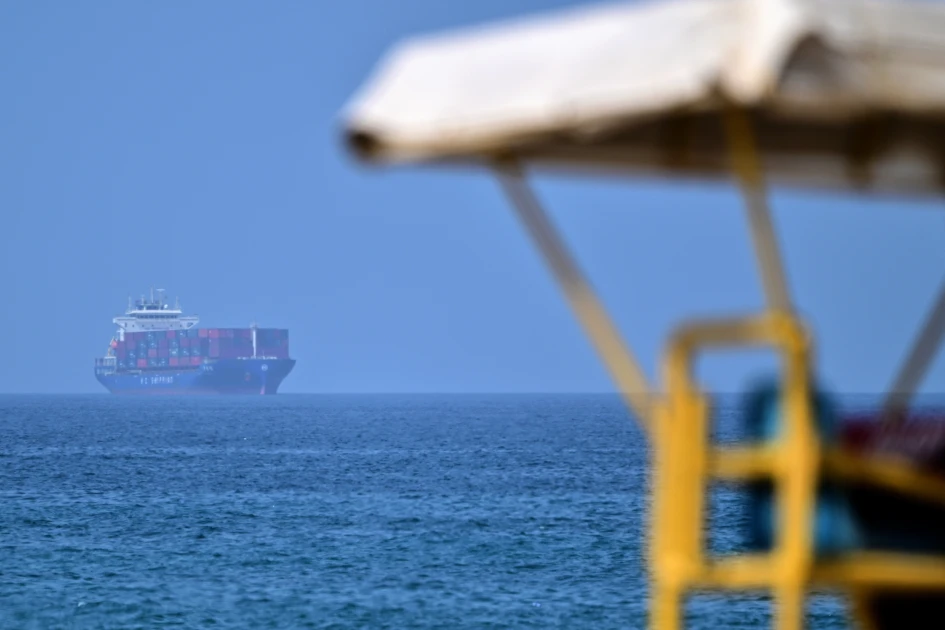
A cargo ship is pictured off coast of the Khor Fakkan Container Terminal, the only natural deep-sea port in the region and one of the major container ports in Sharjah Emirate, along the Gulf of Oman on June 28, 2026. Photo by - / AFP

Audio By Vocalize
For weeks, Iran has insisted, despite US opposition, that there will be no return to the pre-war status of the crucial waterway when shipping passage was free.
Here is what we know about the role of Hormuz in international maritime traffic and what international law says about the strait.
Gulf gateway
The strait links the Gulf to the Indian Ocean and is situated between Iran and Oman's Musandam exclave at the tip of a thin peninsula.
Its narrowness, at around 50 kilometres (30 miles), and shallow waters of no more than 60 metres (200 feet), make it vulnerable to military intervention.
The strait is dotted with sparsely inhabited or desert islands that are strategically important, notably the Iranian islands of Hormuz, Qeshm and Larak.
Also among them are the disputed islands of Greater Tunb, Lesser Tunb and Abu Mussa, which lie between the United Arab Emirates and Iran, providing a vantage point over the Gulf. These have been under Iranian control since 1971.
Crucial for oil
The strait is a vital corridor connecting the oil-rich Gulf with markets in Asia, Europe, North America and elsewhere.
According to the US Energy Information Administration (EIA), it is "one of the world's most important oil chokepoints".
About one-fifth of consumption of global oil and petroleum products flows through the strait, averaging 20 million barrels per day in 2024, according to the EIA.
Around one-fifth of the global liquefied natural gas trade also transited the waterway that year, primarily from Qatar, the EIA says.
Iran's blockade of the strait since the start of the war, triggered on February 28 by Israeli-American attacks, caused oil prices to skyrocket. They have since fallen back to their pre-war levels.
Legal status
More than three months after the conflict began, Tehran and Washington signed a memorandum of understanding on June 17 that provided for the reopening of the strait.
Maritime traffic has tentatively resumed, but control of the waterway remains at the heart of disputes between the US and Iran, as both sides accuse each other of ceasefire violations.
Iran and Oman claim sovereignty over transit through the strait and are considering charging ships to pass through it.
Tehran only authorises transit through a single corridor along its coastline and has threatened to take action against any vessel that violates this rule.
Attacks on commercial vessels have been reported in recent days, prompting retaliatory strikes by the United States.
The United Nations Convention on the Law of the Sea -- which was adopted in 1982 and came into force in 1994 -- guarantees a right to navigate through straits such as Hormuz.
Although Iran has never ratified the convention, "the transit passage regime is widely regarded as part of customary international law", Marco Roscini, international law professor at Westminster Law School, told AFP in March.
Tehran, seeking financial revenue after decades of international sanctions and a conflict that has further ravaged its infrastructure and economy, now refers to "service fees" or the payment of "insurance", rather than a toll.
This change in terminology "may be an attempt to frame the demand in a more legally defensible way", said Dimitris Ampatzidis, an analyst at the maritime tracking platform Kpler.
"Under international maritime law, there may be room for charges linked to specific services actually provided, such as pollution response, navigation assistance or emergency support," he said.
Oman has also said such service fees, modelled on similar charges elsewhere, would be in accordance with international law.
The country "is likely referring, at least by analogy, to the IMO Co-operative Mechanism for the Straits of Malacca and Singapore", launched in 2007, added Ampatzidis.
However, this mechanism "is based on cooperation and voluntary cost-sharing for navigation safety and environmental protection", he said.
"It is not a precedent for a coastal state unilaterally imposing a toll on vessels transiting an international strait."
US Secretary of State Marco Rubio has warned of "total chaos" if a toll is implemented in the strait.
"If in fact we accepted that you can charge money to use an international waterway because it happens to be near your territorial space, well then this will spread throughout the world like a contagion," he said last week.
Join the Discussion
Share your perspective with the Citizen Digital community.
No comments yet
This discussion is waiting for your voice. Be the first to share your thoughts!