
Hustler Fund has saved Kenyans from CRB and unfair borrowing - Ruto
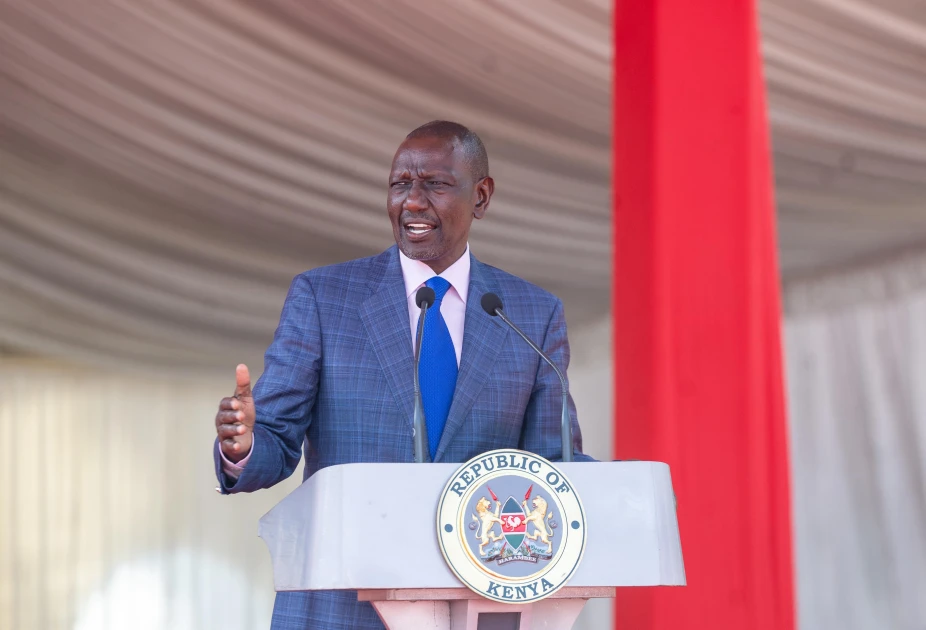
President William Ruto speaking during the 2026 World MSME Day celebrations at the Kenyatta International Convention Centre (KICC) in Nairobi on June 27, 2026.

Audio By Vocalize
According to President Ruto, the Hustler Fund has played a pivotal role in providing cheap credit to “hustlers” as part of a credit repair plan to have them delisted from the Bureaus.
He intimated that there were 7 million people on the blacklist, and the credit standing for 2 million was significantly improved.
"I removed all those people from the CRB, gave them a second chance to borrow and pay. Two million have repaired their credit rating. They are off the CRB list. Another 960,000 people have even graduated and are borrowing upto 150,000," he said in an interview with Dr. King'ori.
Under the government fund, borrowers access a minimum of Ksh.100 to a maximum of Ksh.50,000 for personal accounts.
Those with a good credit score and a trusted repayment history can access enhanced limits up to Ksh.150,000 or even Ksh.300,000 through the Bridge Loan or higher-tier personal products.
President Ruto said that most Kenyans could not advance their economic needs since they were operating at the behest of the banks, but the government incentive provided a viable solution.
"They now have a credit score. They have been borrowing for the last one year and have been paying. Collateral is not necessarily a title deed, payslip or a log book. It can be your behaviour. If you borrow and pay, it becomes your log book," added Mr. Ruto.
He said that through the improved credit scores, many have been delisted by CRBs and can now access higher loans from banks.
The fund has, however, been dogged by record default rates.
President Ruto, during the 2026 World MSME Day celebrations on June 27, said that close to Ksh.90 billion has been disbursed to more than 27 million Kenyans and over Ksh.6 billion has been mobilised in savings.
The Head of State further said that the government is eyeing to reduce borrowing and utilize domestic resources to fund its projects, among them Housing and the Universal Health Coverage.
"All I am doing now is to reduce borrowing. We are trying to see how we can raise resources rather than borrow. We have 1.2 trillion contracts on housing and markets with zero borrowing," he said.
At the end of April 2026, Kenya's domestic debt stock amounted to Ksh.7,185.77 billion, or 38.8 percent of GDP.
Of the amount, Ksh.2.57 trillion was borrowed from the banking sector through Treasury bills and bonds, as revealed by the Central Bank of Kenya (CBK).
Join the Discussion
Share your perspective with the Citizen Digital community.
No comments yet
This discussion is waiting for your voice. Be the first to share your thoughts!