
OPINION: New Enziu Bridge to save lives, improve connectivity and promote inclusive growth

Audio By Vocalize
Some infrastructure projects are built to grow local economies. Others connect communities, open markets and shorten journeys. Then there are projects whose first purpose is much simpler: to keep people alive.
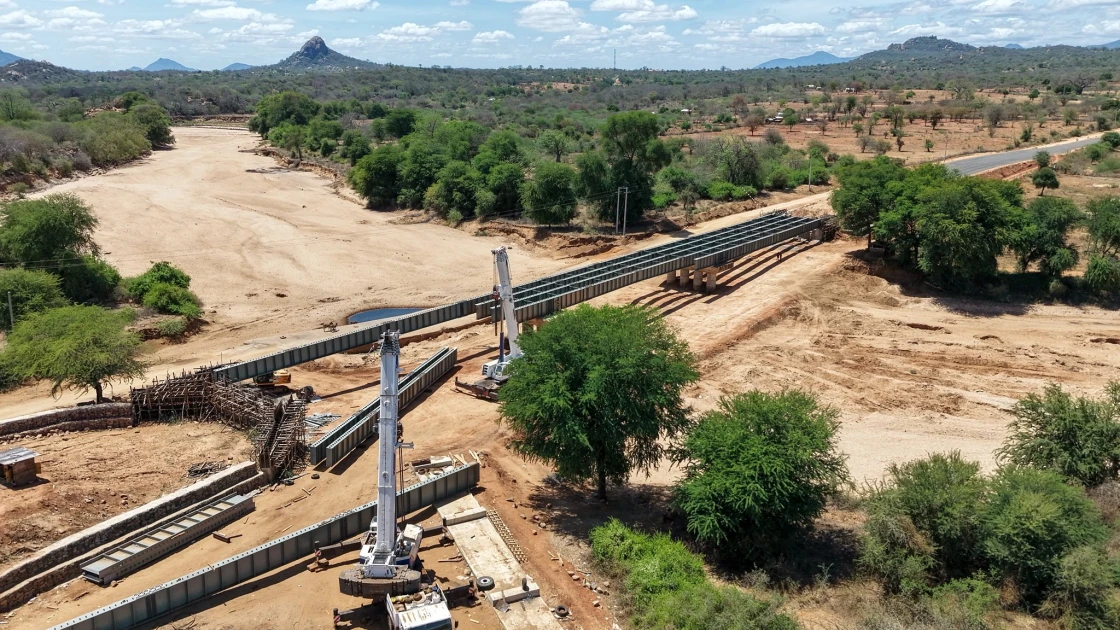
The revival and completion of emergency works on the Enziu Bridge in Kitui County belong in that category.
On December 4, 2021, 32 people tragically lost their lives when a bus attempting to cross the flooded Enziu River was swept away by raging waters. May their souls rest in eternal peace.
The tragedy exposed something that should trouble us whenever we speak about development: sometimes, the absence of infrastructure is not merely an inconvenience. It is a risk carried by ordinary people every day.
For communities that have depended on the Enziu crossing since independence, the danger was long known. Villages and markets were separated by the river, particularly during the rainy season.
The tragedy brought into sharp focus a reality that development planning must confront. When safe infrastructure is absent, marginalisation is not an abstract concept; it is experienced in people’s daily lives.
In the aftermath of the tragedy, the promise of a safer, modern bridge came quickly. A permanent crossing would replace the dangerous river passage, provide a reliable route regardless of the season and improve access to markets, schools, healthcare and other essential services.
It would also strengthen the ability of security and other government agencies to reach communities when they need public services most.
Construction eventually began in April 2022, with completion initially expected in October 2023. However, the works stalled because of funding challenges.
Through a Presidential directive, the works resumed, and the project is approaching completion. That progress matters to mwananchi. It is a promise moving from paper to reality.
But Enziu, like Mwachande in Kwale, Dhogoye in Siaya, Malakisi in Bungoma, and other critical bridge projects across the country, should make us think differently about infrastructure.
The easiest way to describe a bridge is by what it brings: easier movement, increased trade, better access to markets and services, and stronger connections between communities.
All that is true.
But the most important thing a bridge like Enziu delivers is safety.
When the rains come and the river rises, a bridge removes a dangerous calculation from people’s lives. A driver should not have to look at a swollen river and decide whether the journey is worth the risk. A parent should not have to wonder whether a child will make it across safely. A trader should not have to choose between losing a day’s income and attempting a hazardous crossing.
And a community should not have to wait for another tragedy before safe passage becomes an urgent development priority.
This is why the story of Enziu Bridge should not end with its completion and that of its approach roads. It should change how we think about infrastructure.
We often measure development by what is visible: kilometres of roads constructed, bridges completed, billions invested and projects commissioned.
Such measures tell us what has been built. But infrastructure also has an invisible return — the accident that does not happen, the life that is not lost, the emergency that never occurs and the family that gets home safely.
These outcomes are difficult to photograph and impossible to inaugurate. Yet they may be the clearest evidence that infrastructure is doing its job: transforming lives.
The Enziu Bridge will eventually become part of the landscape. Children will grow up knowing the river as something they cross over rather than something they fear crossing through. Vehicles will pass where people once had to negotiate floodwaters. Commerce will move with greater certainty.
Over time, the bridge may become unremarkable. And that would be a good thing.
The greatest success of safety infrastructure is often that, eventually, we stop noticing the danger it has removed.
But before that happens, we should remember why the bridge was needed in the first place. Thirty-two people died. Their deaths should not become merely the opening paragraph in the history of a completed project. They should remain a permanent reminder that infrastructure is ultimately about people. Development priorities are local, and the best development intervention is often the one that prevents tragedy before it occurs.
When Enziu Bridge finally opens, it will carry vehicles, goods, livestock and people. But its most important cargo will be something far less visible: the lives that will make it safely to the other side.
That may be the most important measure of infrastructure of all — not simply how much we build, but how many people we carry along towards greater opportunity, dignity, safety and shared prosperity.
That is the essence of inclusive development and the promise at the heart of President William Ruto's Bottom-Up Economic Transformation Agenda: development must ultimately be felt in the lives of ordinary people.
Sitati Olando is a Delivery and PPP Expert and a Senior Director at the Government Delivery Unit in the Executive Office of the President, Kenya. (sitatiolando@gmail.com).
Join the Discussion
Share your perspective with the Citizen Digital community.
No comments yet
This discussion is waiting for your voice. Be the first to share your thoughts!