
OPINION: Is FKF's Leagues and Competitions Committee undermining confidence in league governance?
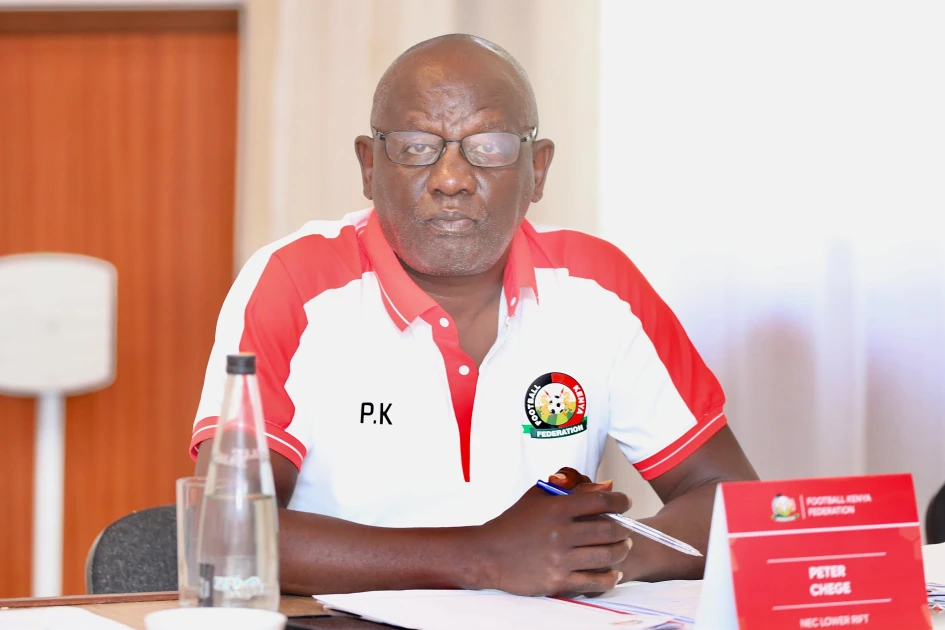
Football Kenya Federation's (FKF) Leagues and Competitions Committee (LCC) Chairman Peter Kamau Chege during a past FKF function. Photo/Handout.

Audio By Vocalize
The ongoing dispute over promotion, relegation, and league restructuring has brought the competence and consistency of the Football Kenya Federation's (FKF) Leagues and Competitions Committee (LCC) under intense scrutiny.
At the center of the controversy is a growing contradiction between the committee's previous recommendations and its current position on the matter.
Recent correspondence from LCC Chairman Peter Kamau Chege, popularly known as KasKas in a letter dated June 8 2026, suggests that decisions relating to promotion, relegation, and play-offs were never conclusively determined by the National Executive Committee (NEC). Yet, official NEC minutes from September 19, 2025 appear to indicate otherwise.
According to those minutes, the LCC itself presented proposals on league restructuring, including the abolition of the promotion-relegation playoff between the FKF Premier League and the National Super League.
The record further shows that NEC adopted the promotion and relegation criteria as presented by the committee.
If the official NEC minutes are an accurate reflection of what transpired on September 19, 2025, then the record shows that the LCC proposal was presented, debated and adopted. Any attempt to suggest otherwise raises legitimate concerns about transparency, consistency and governance within Kenyan football.
For a chairman entrusted with safeguarding the integrity of competitions, the burden of explaining these contradictions now rests squarely on Peter Kamau Chege.
The only restructuring matters deferred for further consultation were those affecting lower leagues, particularly Division Two and Regional League reforms. The top-tier promotion and relegation framework was clearly separated from those discussions and recorded as passed.
This means the argument currently being advanced by KasKas appears to selectively combine deferred lower-league reforms with already adopted Premier League and NSL decisions.
This apparent inconsistency raises legitimate questions about the effectiveness of the committee's decision-making processes. If recommendations were formally tabled and approved, why is there now uncertainty over whether those same decisions were validly adopted?
For any competitions committee, competence is measured not only by the quality of its decisions but also by its ability to provide clarity, predictability, and confidence to stakeholders. Clubs, players, sponsors, and supporters rely on competition rules being clear from the beginning of the season.
Any perception that regulations can be revisited after the fact risks damaging the credibility of the competition itself.
The situation has become even more complicated following the intervention of the Sports Disputes Tribunal (SDT), which has temporarily suspended promotion, relegation, and the implementation of new league structures pending the hearing of a legal challenge.
The Tribunal's orders suggest there are genuine concerns regarding whether the federation attempted to apply new regulations retrospectively rather than relying on the rules that governed the season when it began.
While the final determination rests with the SDT, the dispute has exposed deeper governance concerns within Kenyan football.
Effective administration requires accurate record-keeping, clear communication, and consistency between policy proposals and their implementation.
Ultimately, the issue extends beyond the fate of individual clubs. It is about whether football governance structures can inspire confidence in their decisions.
The Leagues and Competitions Committee has a responsibility to ensure that competition rules are transparent, coherent, and beyond dispute.
The current controversy suggests that standard has not been fully met, and that alone should concern everyone invested in the integrity of Kenyan football.
Brian Ouma is a Nairobi-based journalist, with keen interest in football. Thoughts expressed here are exclusively his own.
Join the Discussion
Share your perspective with the Citizen Digital community.
No comments yet
This discussion is waiting for your voice. Be the first to share your thoughts!