
Maduro ouster was like 'chemotherapy' for Venezuela: opposition figure
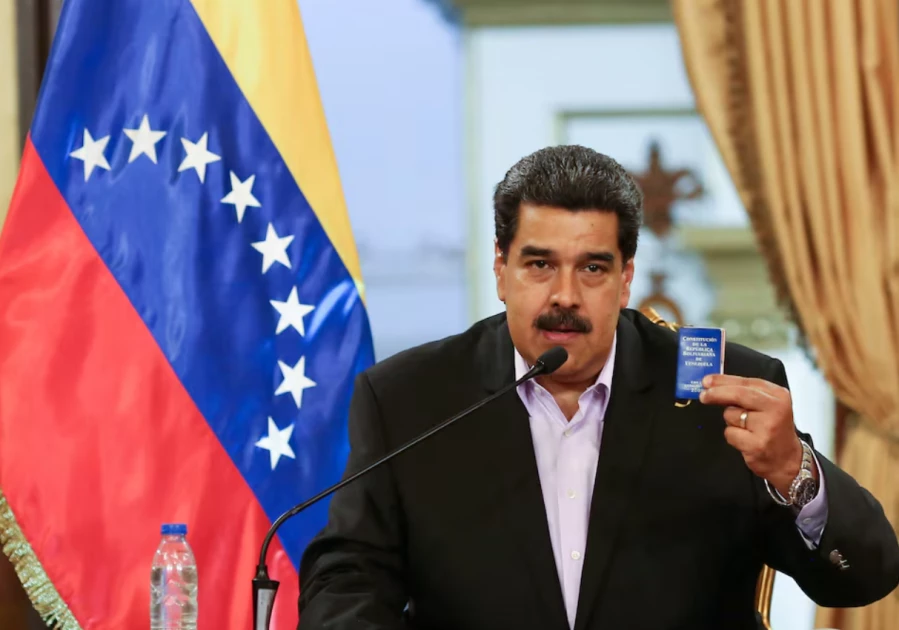
Venezuela's President Nicolas Maduro holds a copy of the Venezuelan constitution while he speaks during a meeting with members of the Venezuelan diplomatic corp after their arrival from the United States, at the Miraflores Palace in Caracas, Venezuela January 28, 2019. Miraflores Palace/Handout via REUTERS/File Photo

Audio By Vocalize
The opposition's legal advisor, close associate of Nobel Peace Prize laureate Maria Corina Machado and former Supreme Court judge also called for swift elections.
Days after Machado herself voiced resolve to make a vote happen in Venezuela -- currently governed by interim leader Delcy Rodriguez -- Rocha told AFP there was "no reason to wait" for an election.
"On January 3, there was a surgical procedure similar to chemotherapy," Rocha told AFP on Monday, referring to the US raid on Caracas that resulted in president Maduro's abduction.
Around 100 people died in the assault. No US service members were killed.
Maduro, along with his wife, was brought to New York to face drug trafficking charges.
The intervention "pleased no one, but it was necessary to save the body," Rocha said.
"Now the task is to give a soul back to that body, and the soul of this body that is still breathing is the democratic aspiration. The bypass is the elections."
- Venezuela's 'tutor' -
The 63-year-old was arrested in August 2024 following presidential elections in July, which saw Maduro emerge victorious while the opposition denounced a fraudulent ballot.
Rocha spent almost two years in the notorious Helicoide prison before being moved to house arrest in February following US pressure. His request for amnesty has been rejected.
Rocha criticized reforms ushered in by Rodriguez and called for Venezuela's "tutor" -- without explicitly referring to the United States -- to accompany the South American nation towards democracy.
Washington has closely watched Rodriguez, who has opened the country's oil and mining sectors to foreign investors and pushed through a historic amnesty law.
Adopted in February, the legislation enabled the release of hundreds of political prisoners.
But Rocha expressed reservations.
"It is a very bad law, never mind the fact that it supposedly allowed the release of many Venezuelans who were unjustly detained," he said.
In his view, subsequent prisoner releases are "more the result of international pressure than of the (amnesty) law."
The former judge was imprisoned on terrorism charges, which he describes as having "sought to ensure respect for popular sovereignty... That is my crime."
Rocha believes Venezuela is on an "absolutely irreversible" course towards democracy.
"We are in an interim period that is hard to define in politico-constitutional terms, but it is a prerequisite for the true transition," he said.
Join the Discussion
Share your perspective with the Citizen Digital community.
No comments yet
This discussion is waiting for your voice. Be the first to share your thoughts!