
Laikipia MPs call for review of Kenya-UK defence deal over accountability concerns
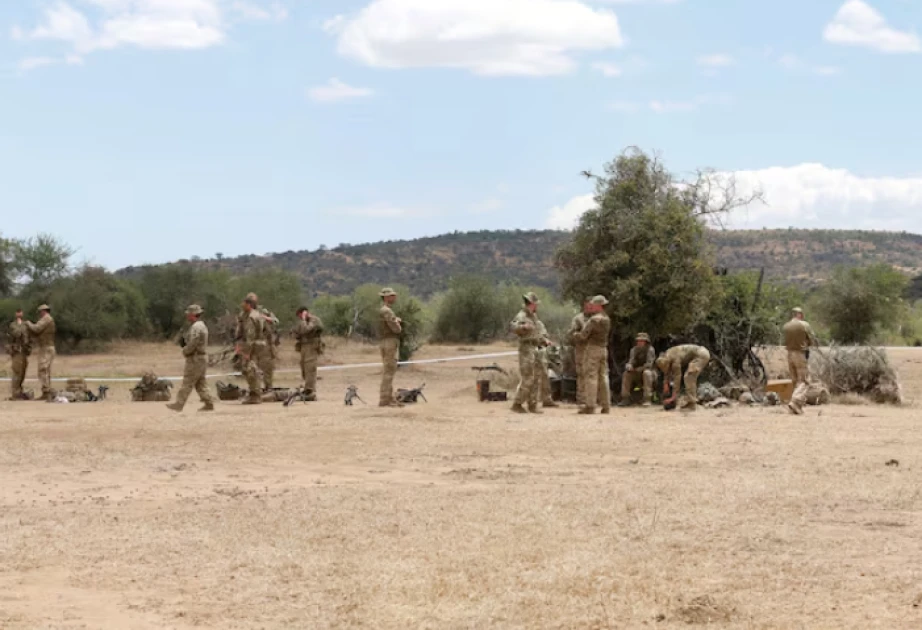
Soldiers are seen during a training session under the British Army Training Unit Kenya (BATUK), at a camp in Laikipia, Kenya September 30, 2018. Picture taken September 30, 2018. Photo: REUTERS

Audio By Vocalize
Laikipia Members of Parliament have called for the revision of Kenya’s Defence Cooperation Agreement (DCA) with the United Kingdom, citing concerns over jurisdiction, accountability and compensation for victims of alleged abuses involving British troops.
The MPs said the
agreement, signed in 2021, should not proceed to ratification in its current
form, arguing that it must guarantee the application of Kenyan law to British
military personnel operating in the country.
Their position
comes after a petition submitted to Parliament on August 12 by victims and
their representatives, who called for a halt to the defence arrangement until
outstanding cases involving alleged sexual violence, abandoned children and
unresolved deaths are addressed.
The DCA remains
unratified, with Parliamentary scrutiny exposing disagreements over which
country should exercise jurisdiction when British soldiers are accused of
committing serious offences in Kenya.
Laikipia Women
Representative Jane Kagiri, whose constituency hosts the British Army Training
Unit Kenya (BATUK), said the central issue was whether British soldiers accused
of crimes in Kenya should face Kenyan courts or British military courts.
“Kenyans deserve
fair and financial reparations from the UK government. There should be no
compromise about that,” she said.
The petition raised allegations of rape and sexual assault, deaths involving unexploded ordnance, environmental destruction and mistreatment of Kenyan employees.
Petitioners also alleged that British soldiers had fathered hundreds of
children and subsequently abandoned them without support.
Kagiri said any
agreement granting foreign troops immunity from prosecution for criminal acts
committed on Kenyan soil would conflict with Kenya’s constitutional framework.
“Any international
agreement, treaty, or Visiting Forces Agreement (VFA) that purports to give
foreign troops total immunity for criminal acts on Kenyan soil is inconsistent
with the Constitution and is void to the extent of that inconsistency,” she
said.
Laikipia East MP
Mwangi Kiunjuri said the Parliamentary scrutiny presented an opportunity to
address weaknesses in the existing framework.
“Parliamentary
scrutiny has raised concerns around jurisdiction, accountability, public
participation so as to ensure protection and the welfare of communities living
alongside BATUK Operations,” Kiunjuri said.
His Laikipia West
counterpart, Stephen Wachira Karani, said future defence agreements should make
it clear that Kenyan laws apply to activities conducted within the country.
“A foreign soldier
operating in Kenya cannot be more accountable to his government than a Kenyan
victim is to the Kenyan justice system,” Wachira said.
The MPs pointed to
several incidents involving British military personnel as evidence of the
concerns raised by communities around BATUK.
Among them is the
2012 killing of 21-year-old Agnes Wanjiru, whose body was found in a septic
tank at a hotel in Nanyuki after she had reportedly spent an evening with
British soldiers.
They also cited
the 2021 wildfire at Lolldaiga Conservancy, which destroyed more than 12,000
acres and was linked in the script to BATUK personnel.
The MPs further
highlighted paternity cases involving British soldiers and Kenyan women. Human
rights lawyer Kelvin Kubai is said to have documented nearly 100 such cases,
with the High Court in London issuing declarations of parentage in some cases.
The dispute over
the DCA was also brought into focus in July after British authorities announced
that Exercise Haraka Storm, a military exercise scheduled for September to
November, would be moved outside Kenya after the required licences were not
issued.
The licences were
later granted, five days after the announcement, although the process leading
to the reversal was not publicly disclosed.
Kiunjuri said the
government should explain what transpired during the five-day period and
disclose any conditions agreed upon during consultations between Kenya and the
UK.
“Diplomatic
consultation between Kenya and Britain is welcome, but the consultations alone
don't answer the important questions raised by Parliament and affected
communities,” he said.
Kagiri said the
decision to issue the licences did not resolve the substantive issues
surrounding the DCA.
She described the
move as a temporary administrative step intended to maintain bilateral
engagement and protect local economic interests, while arguing that questions
of jurisdiction, accountability and compensation remained before Parliament.
The MPs maintained
that they were not opposed to defence cooperation with Britain but wanted the
relationship to respect Kenya’s sovereignty and the rights of its citizens.
“I am not against
Britain. I am not against defence cooperation. I am against a system where
cooperation comes at the expense of Kenyan sovereignty, transparency and the
rights of Kenyan citizens,” Wachira said.
Kiunjuri similarly
argued that seeking compensation should not be interpreted as opposition to
Britain, but as an attempt to ensure that Kenyan victims have access to
remedies when their rights are violated.
The MPs have
warned that if Britain is unwilling to accept provisions that provide for
accountability under Kenyan law, Kenya should reconsider the framework
governing British military activities in the country and explore a broader
range of defence partnerships.
“If Britain
declines to ratify an understanding or rather stating Kenya insists on
accountability and protection of its citizens, then we should not compromise
important national interests simply to preserve the appearance of partnership,”
Kiunjuri said.
The MPs are
calling for the outstanding concerns to be addressed before the DCA is
ratified, particularly provisions touching on jurisdiction, accountability,
compensation and the protection of communities living alongside BATUK
operations.
Join the Discussion
Share your perspective with the Citizen Digital community.
No comments yet
This discussion is waiting for your voice. Be the first to share your thoughts!