
Kenya Railways begins construction of Naivasha-Malaba SGR project
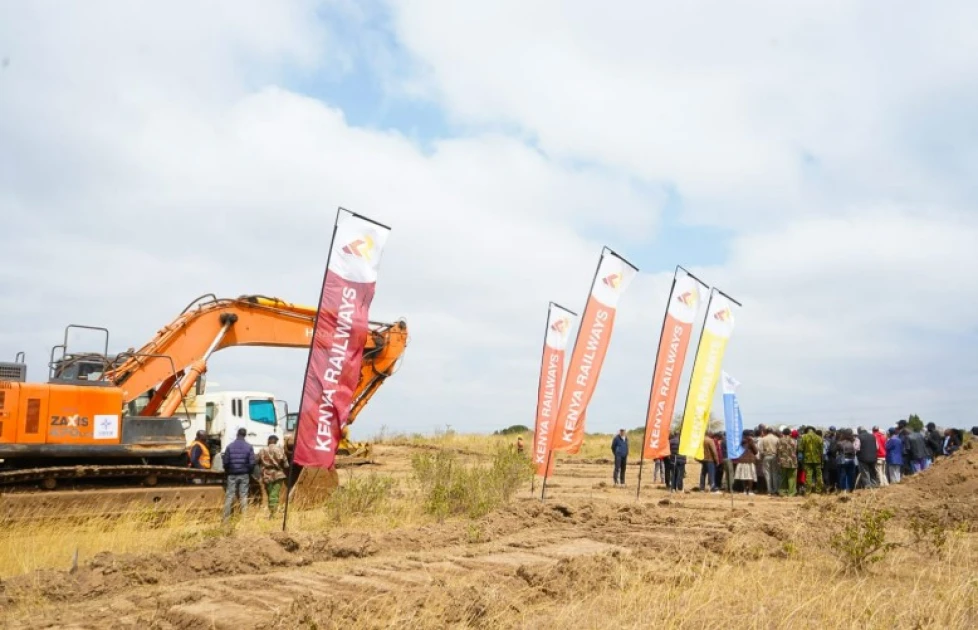
Official construction works commence for the Naivasha-Kisumu-Malaba Standard Gauge Railway (SGR) project. Photo/Kenya Railways

Audio By Vocalize
The Kenya Railways Corporation officially commenced the construction of the Naivasha-Kisumu-Malaba Standard Gauge Railway (SGR) project in Narok County on Wednesday, July 1, 2026.
The project, launched by President William Ruto three months ago, had initially stalled due to China’s slashed funding for large African infrastructure projects under its Belt and Road Initiative.
Officials from the national government,
the National Land Commission, local leaders and community stakeholders, the Narok County Commissioner, as well as the Managing Director for Kenya Railway, Philip Mainga, witnessed the commencement of the project.
Speaking to the press, Mainga called on
all landowners and those affected by the construction to engage with the
National Lands Commission to address concerns related to land acquisition and
compensation.
The Naivasha- Kisumu railway line is expected to have six intermediate stations located in Narok, Mulot, Bomet,Sotik, Sondu and Ahero with 17 crossing sections that traverse through Narok, Bomet, Nyamira, Kericho, and Kisumu Counties and a proposed branch line of 8.69 km to the proposed new Kisumu Port.
Additionally, the Kisumu – Malaba section
will have two intermediate stations in Yala and Mumias and will traverse
through six crossing stations across Kisumu, Siaya, Vihiga, Kakamega and Busia
Counties. The stations include Kisian West, Ramala, Yala, Musanda, Manyulia,
and Amukura.
Each passenger train will have a capacity
of 1,096 passengers, and with a designed speed of 120 kilometres per hour, and
each freight train will have a haulage capacity of 4,000 tonnes (216 TEUS) with
a designed speed of 80 kilometres per hour.
The designed freight carrying capacity of
the railway is 22 million tonnes per annum. Other key features in the extension
project include a uniform design specification, which will permit seamless
operation across borders.
The project is also projected to significantly improve logistics efficiency within the country and the neighbouring countries.
Join the Discussion
Share your perspective with the Citizen Digital community.
No comments yet
This discussion is waiting for your voice. Be the first to share your thoughts!