
From waste to wages: The dangerous trade keeping Mukuru Kwa Ruben families alive

Audio By Vocalize
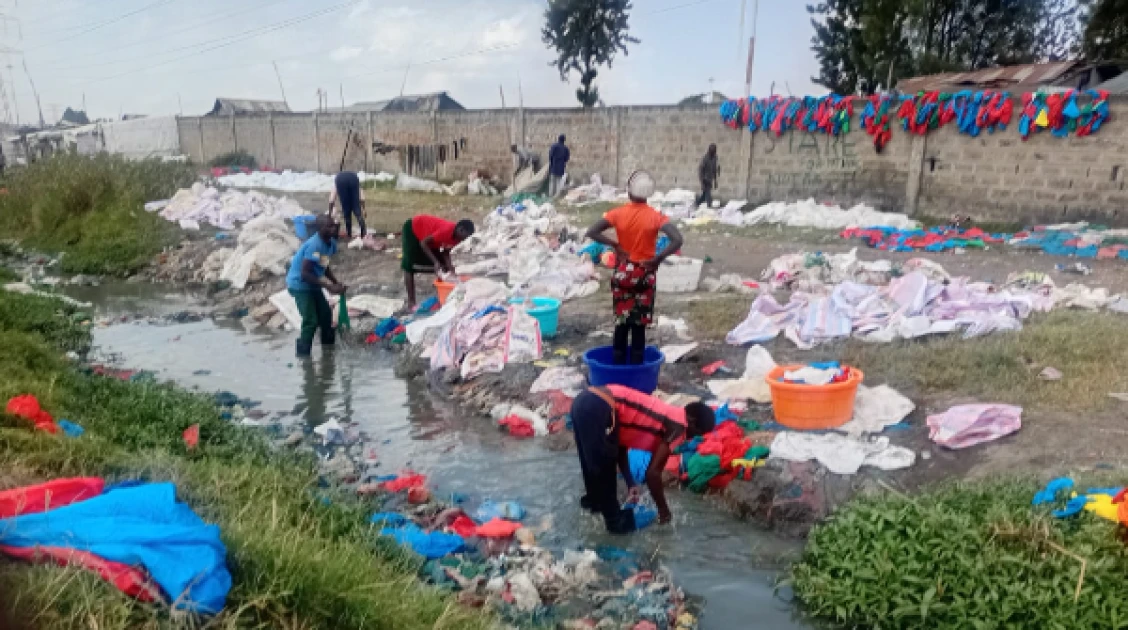
In the narrow alleys of Mukuru kwa Ruben, an informal settlement in Nairobi, rows of soggy paper bags hang from makeshift lines to dry.
Nearby, women stand ankle-deep in murky drainage water, scrubbing the bags one by one before laying them out under the sun.
The paper carrier bags—popularly known as "Uhuru
bags"—have become an unlikely source of income for dozens of families
grappling with unemployment and
rising living costs.
But behind
every cleaned bag lies a difficult reality: survival comes at the expense of
health.
For 42-year-old Roselyn Jedida
Opondo, washing discarded paper bags is the only way she can keep her family
afloat.
Unable to secure formal employment,
the mother of four turned to the trade in 2022.
Every week, she travels to dumping
sites in Kayole to collect used paper bags, then brings them back to clean, dry, and resell them.
The work is physically demanding and
hazardous. Without access to clean water, Roselyn washes the bags in open
drainage channels that carry wastewater through the settlement.
"We wash the bags using water
from the drainage channels because we have no other option," she says.
On a good day, she cleans up to 100
bags, earning about Ksh.2,000—money that pays rent, buys food and keeps her
children in school. Her eldest is in college, while the others are in Form
Three, Grade Six and Grade Five.
"This work pays my rent and
helps me feed my children. I also use the money to pay school fees. Without it,
I don't know how I would survive."
But the job takes a toll. Standing
for hours in contaminated water often leaves her with swollen feet and
recurring health concerns.
"The water is always cold. If
you don't wear gumboots, your feet become swollen. We work in these conditions
every day."
As a single mother, Roselyn says she
has little choice but to continue. Roselyn's story mirrors that of Margaret
Akinyi, another Reuben resident who joined the trade in 2024 after struggling
to find work.
The mother of seven depends entirely
on selling cleaned paper bags to provide for her family.
"This work feeds my family. It
helps me buy food, pay rent and educate my children," she says.
Four of Margaret's children have
already completed school, while she continues to support the younger three.
Getting the bags is often the
hardest part.
She frequently travels to dumping
sites in Kayole and other parts of Nairobi, but transport costs can consume
much of her earnings.
"Sometimes I don't even have
bus fare to collect the bags. If I can't get them, I don't earn anything that
day."
Even after spending hours cleaning
and preparing the bags, there is no guarantee she will make a sale.
Margaret says county enforcement
officers occasionally confiscate the bags while she is selling them, forcing
her to borrow money to recover her merchandise.
"Sometimes county officers take
away the bags before I sell them. I end up borrowing money just to get them
back."
Despite the challenges, she
continues to hope for a better future.
"I pray my children will get
good jobs one day and rescue me from this work."
While the women see the trade as a lifeline,
public health experts warn that it exposes them to serious health risks.
According to public health officer
Dr. Benard Muia, regularly handling waste materials and working in contaminated
water without adequate protective gear puts the workers at risk of infections
such as hepatitis, as well as waterborne diseases including cholera and
diarrhoea.
He also warns that prolonged
exposure to polluted environments may expose them to toxic substances such as
lead and mercury, chemicals that can accumulate in the body and damage vital
organs, including the kidneys and liver.
Inhaling fumes from nearby waste
disposal sites can also increase the risk of respiratory illnesses, including
asthma and other chronic lung conditions.
Dr. Muia further noted that the
trade also endangers the lives of their customers, who unknowingly buy the bags.
Join the Discussion
Share your perspective with the Citizen Digital community.
No comments yet
This discussion is waiting for your voice. Be the first to share your thoughts!