
Cabinet orders DCI probe after Ksh.6.2B payroll fraud uncovered in 12 State departments

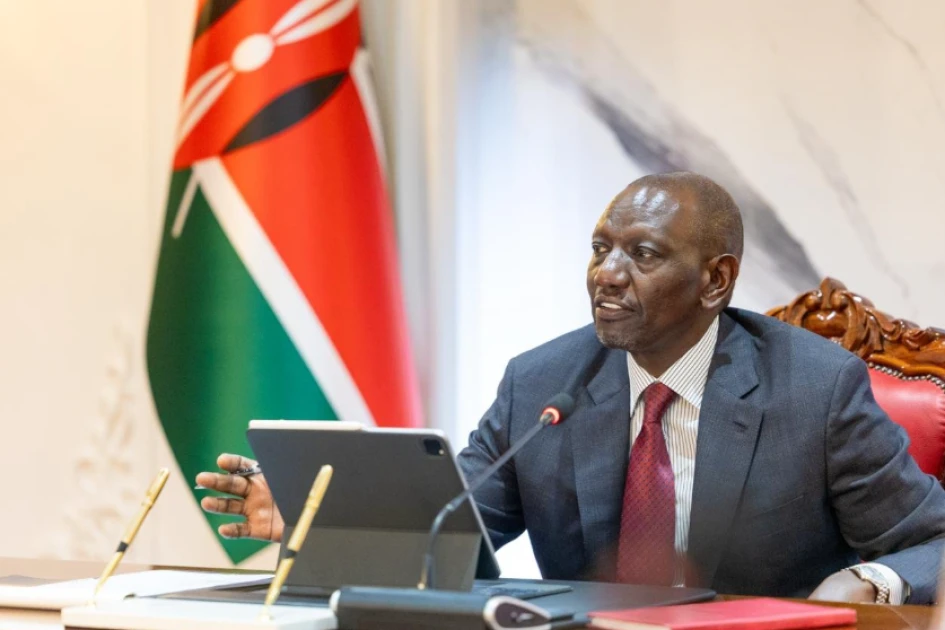
President William Ruto chairs a Cabinet meeting at State House, Nairobi, on June 30, 2026. PHOTO | PCS

Audio By Vocalize
The Cabinet has ordered a sweeping crackdown on payroll fraud across government after an audit uncovered suspected irregularities worth Ksh.6.2 billion in 12 State Departments, prompting criminal investigations.
The decision was
made during a Cabinet meeting chaired by President William Ruto at State House,
Nairobi, on Tuesday.
According to the
Cabinet despatch, the reforms are intended to dismantle "deeply entrenched
and decades-long payroll fraud" in government, restore integrity to the
public wage bill and protect taxpayers' money through a whole-of-government
payroll overhaul.
A comprehensive
payroll audit found widespread weaknesses in payroll governance. A sample
review of 12 out of the country's 53 State Departments revealed suspected payroll
irregularities amounting to Ks.h6.2 billion, including unauthorised alterations
to payroll records, irregular payments, weak controls over statutory
deductions, fragmented payroll management and significant oversight gaps.
“Consequently,
Cabinet directed the Directorate of Criminal Investigations to investigate
payroll fraud, verify personal numbers used in payroll processing, dismantle
criminal networks manipulating Government payroll systems, recover lost public
funds, and ensure the immediate arrest and prosecution of all persons found
culpable,” read the dispatch.
“The meeting also ordered the immediate implementation of a
comprehensive payroll reform programme, including a Governmentwide audit of all
remaining State Departments and public institutions, mandatory migration of all
Ministries, Departments, Agencies and State Corporations onto the newly
revamped Integrated Human Resource and Payroll System, enhanced cybersecurity,
payroll data cleansing and validation, establishment of a disaster recovery
site, and integration of payroll with other public financial management
systems.”
In a separate
cost-cutting measure, Cabinet froze the leasing or hiring of additional office
space pending an audit of government office utilisation while directing the
development of a programme to renovate public offices and improve service
delivery.
The Cabinet also
established a Standing Cabinet Committee on Artificial Intelligence to steer
Kenya's national AI strategy, coordinate policy across government and position
the country as a regional leader in the responsible development and adoption of
artificial intelligence.
The committee will
champion AI-driven innovation, productivity, public service delivery, job
creation and inclusive economic growth while putting in place appropriate governance
and safeguards.
To complement
Kenya's digital transformation agenda, the Cabinet adopted the National
Business Process Outsourcing (BPO) Policy to position the country as a leading
global outsourcing destination by creating thousands of quality jobs for young
people, attracting international investment and expanding digital employment
opportunities.
The policy seeks
to leverage Kenya's skilled English-speaking workforce, strategic time zone and
advanced digital infrastructure to capture a greater share of the global BPO
market, projected to exceed Ksh.68 trillion by 2030.
As the country
braces for forecast moderate-to-strong El Niño rains later this year, the Cabinet
established an Ad Hoc Cabinet Committee on El Niño Preparedness and Response,
chaired by Deputy President Prof. Kithure Kindiki.
“The
committee will immediately activate a National El Niño Contingency Plan covering
flood mitigation, evacuation and shelter arrangements, drainage clearance,
reinforcement of vulnerable roads and bridges, pre-positioning of emergency
equipment and medical supplies, farmer advisories, and a contingency fund for
relief, recovery and rehabilitation,” the dispatch noted.
The Cabinet
further approved several strategic infrastructure projects, including the Ksh.26
billion Judicial Performance Improvement Project Phase II in partnership with
the World Bank.
The project will
fund the construction of a new Supreme Court complex, a dedicated Court of
Appeal, a consolidated Tribunals and Judiciary Administration complex and a
modern Kenya Judiciary Academy.
The meeting also
authorised an additional Ksh.16.6 billion to complete the Mwache Multipurpose
Dam Project in Kwale County.
Once completed,
the dam is expected to supply 186,000 cubic metres of water daily to Mombasa
and Kwale counties, easing chronic water shortages, supporting households and
industry, expanding irrigation and strengthening climate resilience.
Join the Discussion
Share your perspective with the Citizen Digital community.
No comments yet
This discussion is waiting for your voice. Be the first to share your thoughts!