
Over 5,000 patients at risk as NHIF urged to disburse funds owed to dialysis centres
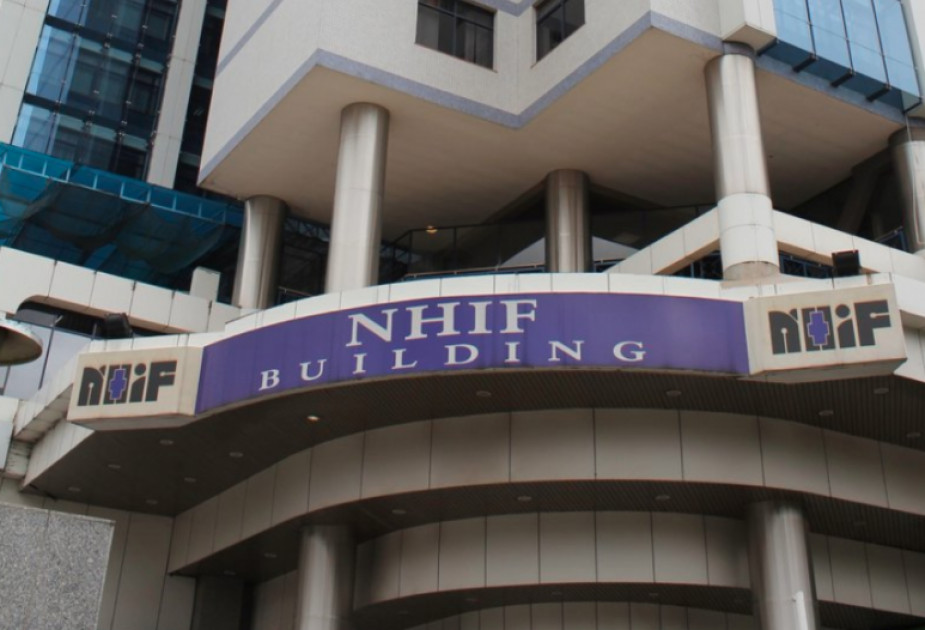
File image of NHIF headquarters in Nairobi.

Audio By Vocalize
The Kenya Renal Association has urged the National Health Insurance Fund (NHIF) to release pending bills owed to dialysis hospitals under the consortium.
In a statement on Saturday, signed by Kenya Renal Association Chair Dr. Jonathan Wala, the federation decried NHIF's reluctance to disburse the funds noting that daily operational expenses incurred by dialysis units rely heavily on funds owed by the insurance fund.
Wala added that NHIF's unwillingness to release the funds is significantly harming the dialysis centres and jeopardizing their ability to provide uninterrupted healthcare to patients requiring dialysis.
"With daily running costs, any delay or failure by NHIF to release funds that are owed to dialysis units is a death blow to these units and puts a serious threat to offering seamless and continuous care to these patients, all of whom are paying contributors to NHIF," Wala said.
"For these patients, missing even a week’s sessions of dialysis may cause serious deterioration in their health and even result in avoidable death. Already several dialysis units have closed down due to severely restricted cash flow and inability to pay suppliers."
While noting that the Rural Hospitals Association of Kenya (RUPHA) has already declared that its member hospitals will ask patients (NHIF contributors) to cover their medical expenses out-of-pocket from January 4, 2024, Wala opined that other hospitals will likely follow suit in order to stay afloat.
"We therefore anticipate a scenario where the lives of more than 5000 dialysis patients in Kenya will be in serious jeopardy. In a week’s time, they will have to transfer to already crowded and poorly resourced government facilities to access the lifesaving treatment of dialysis," said Wala.
"We estimate that at most, these government-run dialysis units can cover 1500 of these patients."
The Kenya Renal Association Chair subsequently advised dialysis patients begin making necessary financial and logistical arrangements needed to ensure they continue smoothly with at least twice a week dialysis.
"Dialysis patients should prepare to make direct payments for dialysis sessions. They should also identify government facilities with dialysis units and book for sessions there in case this crisis is not resolved ," Wala said.
He similarly urged Health Cabinet Secretary (CS) Susan Nakhumicha to personally intervene and address the issue of pending bills owed to the dialysis centres.
"The challenges NHIF has created, the small transition time window given, and the job security threat faced by NHIF employees makes this transition from NHIF to the Social Health Authority an even more precarious one. It needs all hands on deck and we ask that the Cabinet Secretary’s hands may be more prominent and more proactive," said Wala.
Join the Discussion
Share your perspective with the Citizen Digital community.
No comments yet
This discussion is waiting for your voice. Be the first to share your thoughts!