
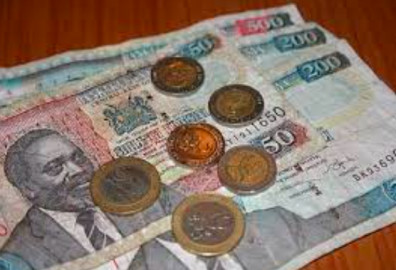
Shilling slides below Ksh.111 mark to the US dollar

Audio By Vocalize
According to tracking by Bloomberg Kenya Shilling Spot, the local unit was quoted at Ksh.111.10 in early trading on Tuesday.
The latest forex exchange valuation widely mirrors a perisistent weakened run for the local unit in recent weeks.
While the weakening of the local unit is not tied to any one factor; rising uncertainities in the global market place owing to the pandemic, a widened current account position and increased dollar demand from oil importers has been tied to the shilling’s dip.
The price of Murban oil for instance rose to $83.39 (Ksh.9256.29) last week signalling a higher cost for oil imports into Kenya.
The local unit is now treading towards an all-time low should weakening persist into the coming weeks.
The shilling hit the floor on December 16 and December 17 last year when it was valued at Ksh.111.59 against the dollar according to data from the Central Bank of Kenya (CBK).
Even so the CBK has remained in open market operations (OMOs) to counter volatility in the local unit to include the sale of dollars from its usable foreign currency reserves.
Subsequently, the stock of the FX reserves has plummeted to $9.261 billion as of Thursday last week from $9.437 billion on September 30.
The reserves however remain above prescribed thresholds and represent an estimated 5.66 months of import cover.
What a weaker shilling means
The impact of a weaker shilling will mainly be seen in foreign trade where one will require more money to meet the value assigned to the same batch of imports bought previously.
For instance, oil imports will be slightly more expensive even while holding prevailing international crude prices at constant.
At the same time, government foreign debt obligations will be costlier with a weaker shilling as will be foreign currency denominated repayment by companies and individuals.
On the opposite side of the coin however, the cost of Kenyan exports will be cheaper in the international market encouraging more sales at the global market place.
Both the International Monetary Fund (IMF) and the World Bank have encouraged Kenya to ‘allow the weakening of the shilling’ seeing it as a shock absorber in the midst of the pandemic.
This by implying a weaker currency will grow the country’s exports by offering them at a bargain at the global market place.
So far in 2021, the Kenya shilling has shed 1.6 per cent of its value against the green buck.
Join the Discussion
Share your perspective with the Citizen Digital community.
No comments yet
This discussion is waiting for your voice. Be the first to share your thoughts!