
World Bank's IFC eyes 6.5% Quickmart stake in Ksh1.94B deal

Audio By Vocalize
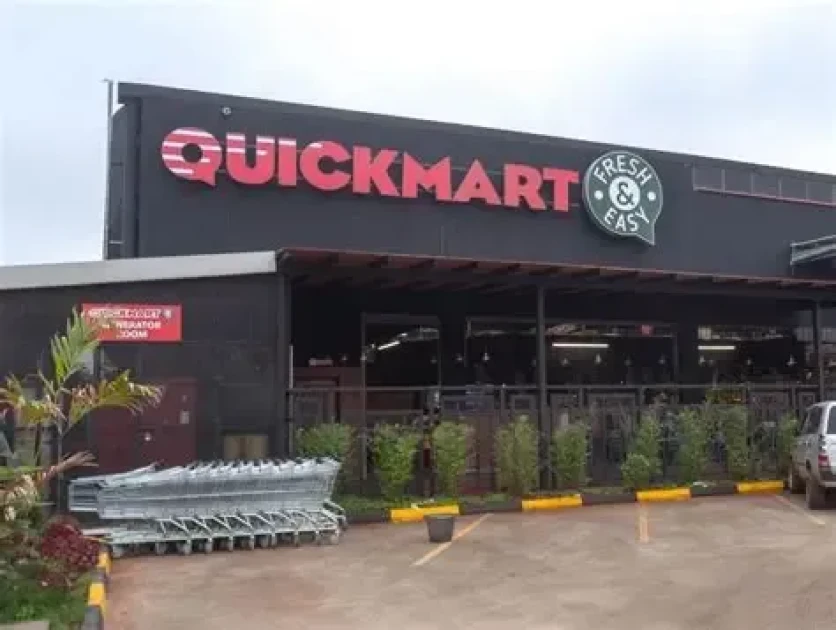
The investment would make IFC a cornerstone investor in the retailer, giving Quickmart significant institutional backing as it seeks to raise KSh15 billion and list on the Nairobi Securities Exchange (NSE).
A cornerstone investor typically commits to buying a significant stake ahead of or during an IPO, potentially boosting confidence among other investors considering participating in the offer.
Quickmart shares are being offered by its parent company, Sokoni Retail Kenya Limited, which is majority-owned by private equity firm Adenia Partners alongside the supermarket chain’s founding families.
The ordinary shares are being offered at KSh7.50 each, placing Quickmart’s valuation at approximately KSh30 billion.
The shares are expected to begin trading on the NSE on November 12, 2026.
For IFC, the investment would mark a return to Kenya’s highly competitive supermarket sector after it previously held a minority interest in rival retailer Naivas before exiting the investment in 2022.
Why Quickmart's listing matters
Quickmart’s planned listing comes against a difficult history for Kenya’s formal retail sector, where some of the country’s biggest supermarket brands have collapsed under the weight of debt, unpaid suppliers, rapid expansion and governance challenges.
Nakumatt and Tuskys, once among Kenya’s dominant supermarket chains, collapsed after years of financial difficulties, while Uchumi has struggled to recover from prolonged financial problems.
Foreign retailers have also faced challenges in the Kenyan market, where price-sensitive consumers, intense competition and thin margins have made expansion difficult.
A public listing could, however, subject Quickmart to a level of scrutiny that was largely absent during some of the sector’s previous collapses.
Companies listed on the NSE are required to make regular financial disclosures and comply with governance and reporting requirements overseen by the Capital Markets Authority (CMA).
This gives shareholders, suppliers and other stakeholders greater visibility into a company’s financial health and makes it more difficult for serious financial problems to remain concealed for prolonged periods.
For a sector where financial distress has previously become apparent only after suppliers, employees and creditors were already exposed, increased transparency could prove particularly significant.
What fresh capital could mean
An IPO can also provide a company with access to equity financing, reducing dependence on expensive commercial debt and strengthening its balance sheet.
Fresh capital can support working capital requirements, expansion, inventory purchases and the repayment of expensive loans or overdrafts.
However, the structure of Quickmart’s offer will be important.
The shares are being sold by existing shareholders, including Adenia Partners and the founding families, meaning investors will need to examine how much of the KSh15 billion being raised will go directly into Quickmart and how much will be received by existing shareholders selling part of their stakes.
The distinction matters because money injected directly into the company can finance operations, expansion or debt reduction, while proceeds from a sale of existing shares primarily provide an exit or partial exit for current investors.
Listing could nevertheless give Quickmart another valuable commodity: credibility.
Going through the CMA regulatory process and becoming a publicly traded company could strengthen confidence among banks, suppliers, institutional investors and potential international partners.
A liquid public market would also establish a visible market valuation for Quickmart while giving its existing shareholders a route to gradually monetise their investments.
What IFC brings to the table
IFC’s participation could further strengthen that credibility.
The institution typically subjects potential investments to financial, governance and other due diligence before committing capital.
Its presence on Quickmart’s shareholder register could therefore serve as a signal to other institutional and retail investors assessing the supermarket chain.
But IFC’s investment is not a guarantee of Quickmart’s long-term success.
At 6.5 per cent, IFC would remain a minority shareholder and would not be responsible for running the supermarket chain’s daily operations.
Its previous exit from Naivas also illustrates the nature of institutional investment: investors can eventually sell their holdings once their investment objectives have been achieved.
Quickmart’s long-term performance will ultimately depend on its management, including its ability to control costs, maintain inventory, pay suppliers on time, manage debt and avoid unsustainable expansion
The proposed listing comes as Kenya’s supermarket industry increasingly consolidates around a smaller group of major operators.
Naivas and Quickmart have expanded their footprints, while Carrefour remains a significant player in the formal retail market.
At the same time, supermarkets continue to compete with thousands of neighbourhood shops, kiosks, wholesalers, online retailers and emerging discount formats.
That environment means scale alone may not determine which retailers survive.
Inventory management, local sourcing, supplier relationships, operating margins and manageable debt levels are likely to remain critical.
Kenya’s recent retail history has demonstrated the dangers of rapid expansion financed by debt without sufficient cash flow and governance controls.
For Quickmart, IFC’s KSh1.94 billion commitment represents a significant vote of confidence as it prepares to enter the public market.
The bigger test, however, will come after November 12, when Quickmart would move from private ownership into an environment where investors can scrutinise its numbers and place a market value on its performance every trading day.
Join the Discussion
Share your perspective with the Citizen Digital community.
No comments yet
This discussion is waiting for your voice. Be the first to share your thoughts!