
Wananchi Opinion: Why Kenyans feel poorer in a growing economy
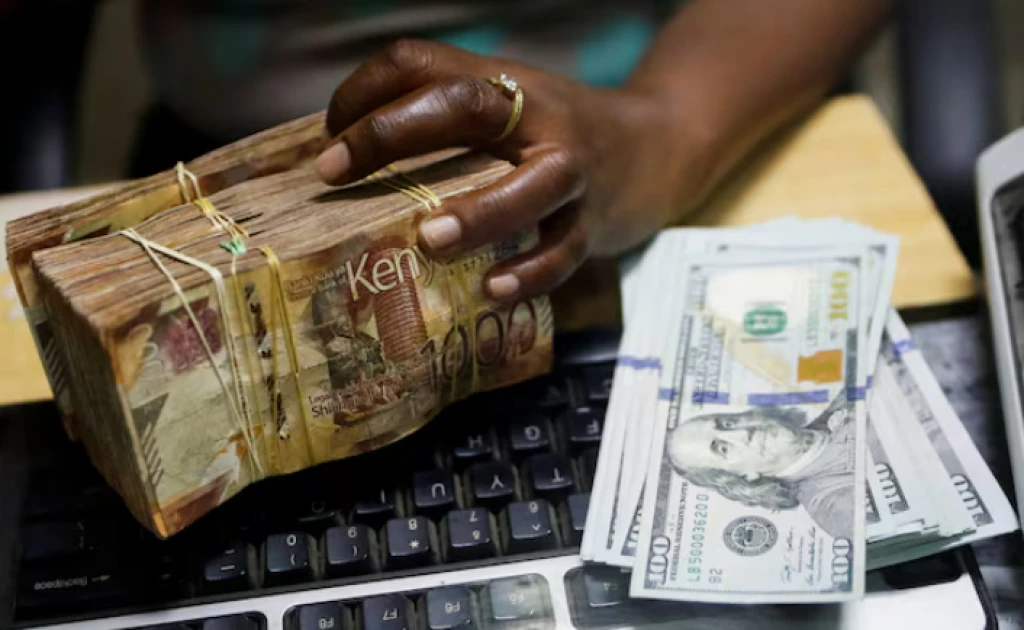
A teller handles Kenya shilling banknotes and U.S. dollar banknotes inside the cashier's booth at a forex exchange bureau in downtown Nairobi, Kenya, February 16, 2024. REUTERS/Thomas Mukoya/File photo

Audio By Vocalize
Kenya’s economy has, on paper, shown steady growth over the years.
Gross Domestic Product figures continue to rise, infrastructure projects expand across the country, and sectors such as banking, telecommunications, and real estate report strong performance.
Yet this apparent progress stands in sharp contrast to the daily experience of many Kenyans who feel that life is becoming more difficult.
This disconnect is not a perception problem. It reflects deeper structural issues within the economy that limit how widely the benefits of growth are shared.
A major reason for this gap is that much of Kenya’s economic growth is concentrated in sectors that do not generate sufficient employment.
Capital-intensive industries such as large-scale construction and financial services contribute significantly to national output, but they do not create enough jobs for the growing population.
Each year, thousands of young people enter the job market, only to find limited opportunities.
The result is a form of growth that increases national wealth without improving livelihoods for the majority.
At the same time, the cost of living continues to rise faster than incomes.
Prices of basic necessities such as food, fuel, electricity, and housing have increased steadily. For most households, wages have either stagnated or grown at a much slower rate.
This imbalance means that even those who are employed often struggle to maintain a decent standard of living.
Increased taxation has further tightened household budgets, reducing disposable income and limiting financial flexibility.
Inequality also plays a significant role. Economic gains are not evenly distributed across society.
A small portion of the population captures a large share of the wealth generated, while the majority remain financially vulnerable.
Urban areas tend to attract more investment and opportunities, leaving rural communities behind. Furthermore, many Kenyans work in the informal sector, where income is unpredictable and access to financial services is limited.
Without stable earnings or social protection, these individuals are particularly exposed to economic shocks.
The burden of public debt adds another layer of pressure. Servicing this debt requires substantial government revenue, often raised through taxes.
While taxation is necessary, its impact is felt most strongly by ordinary citizens when it is not matched by visible improvements in public services.
This creates a sense of frustration and erodes confidence in the broader economic system.
Despite these challenges, there are practical steps that individuals can take to improve their situation. The first is financial discipline.
Careful budgeting, prioritizing essential needs, and avoiding unnecessary expenses are critical in an environment where every shilling counts.
This requires honesty about spending habits and a willingness to make difficult choices.
Diversifying income is equally important. Relying on a single source of income is increasingly risky.
Many Kenyans are finding ways to earn extra income through small businesses, freelance work, or investments in agriculture and trade.
Even modest additional earnings can make a significant difference in cushioning households against rising costs.
Continuous learning and skills development are also essential. The economy is changing, and opportunities are shifting towards areas that require new competencies.
Digital skills, technical training, and financial literacy can improve employability and open up alternative income streams.
Those who adapt are better positioned to navigate uncertainty.
Community-based approaches offer another layer of support. Savings groups, cooperatives, and informal investment networks allow individuals to pool resources and access opportunities that might otherwise be unattainable.
These collective efforts can provide financial stability and create pathways for growth.
There is also a need for a shift in mindset. Economic hardship can easily lead to short-term thinking, but long-term planning remains crucial.
Saving regularly, investing wisely, and avoiding lifestyle inflation can gradually build financial resilience. Progress may be slow, but consistency matters more than speed.
Kenya’s economic growth tells only part of the story. While the numbers suggest progress, the distribution of that progress remains uneven, leaving many citizens under pressure.
Addressing this imbalance requires both systemic reforms and individual action.
At a personal level, discipline, adaptability, and a willingness to explore new opportunities can make the difference between merely surviving and steadily building a more secure future.
Abol Kings is a financial advisor and former banker.
Join the Discussion
Share your perspective with the Citizen Digital community.
No comments yet
This discussion is waiting for your voice. Be the first to share your thoughts!