
SHA patient data safety questioned after Nairobi man’s records show treatment in Garissa
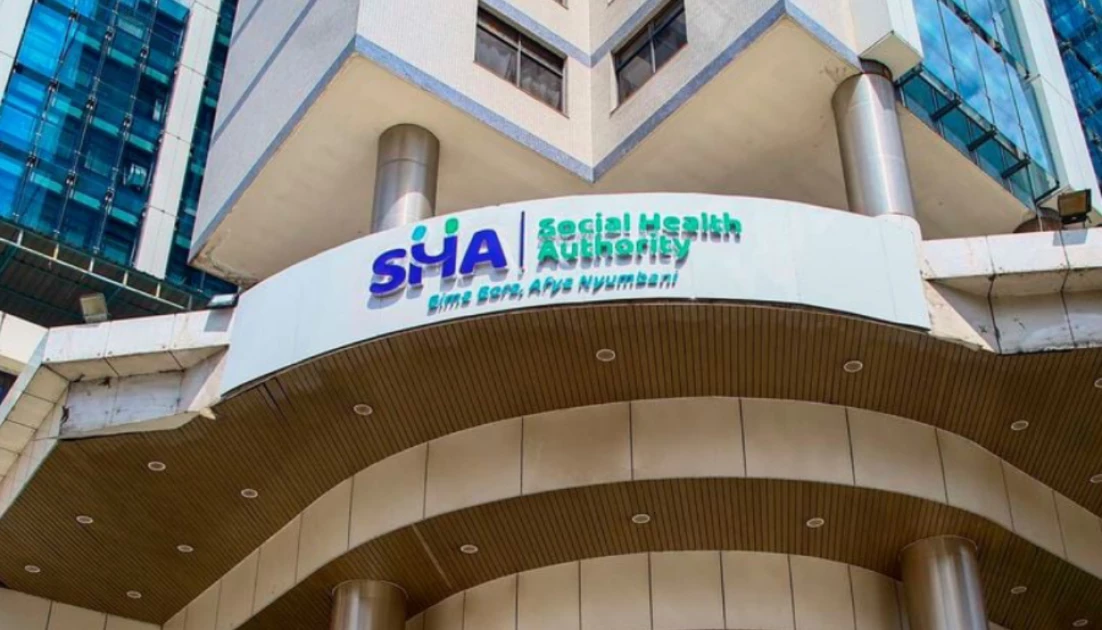
The Social Health Authority (SHA) headquarters in Nairobi. PHOTO | COURTESY

Audio By Vocalize
Concerns have
emerged over the safety and integrity of millions of Kenyans’ private medical
records under the Social Health Authority (SHA) following the case of a Nairobi
man whose account showed that he had received treatment at a health facility in
Garissa County, yet he was at work in Nairobi at the time.
Obed Oruki says he
was shocked after discovering records indicating that he had been diagnosed
with a urinary tract infection and placed on active medication.
His case, which
has drawn widespread attention online, is raising serious concerns over fraud,
data privacy, possible identity misuse, and the credibility of Kenya’s digital
health records system.
Obed Oruki’s
routine check on his SHA account turned into a shocking discovery. The SHA
portal showed he had received treatment and medication from a dispensary in
Garissa County on May 6, 2026 at exactly 7:16am.
At that very time,
Obed says he was nowhere near Garissa and was seated in his office in Nairobi,
engaged in work.
“The previous day
Citizen had actually aired a show where they interviewed Allan Namu and his
team on error by design so because I was busy that day I didn’t watch it…I said
I will watch it, and while at it I just thought out of curiosity why not check
on SHA and shock on me,” Obed says.
Obed has private
medical insurance and has so far, never used his SHA cover. The records show
someone underwent medical assessment under his name and details.
“So I looked at it
the first time and I was hesitant I was like probably it is a mistake let me
refresh…so I looked at it the second time and the same thing so I went to the
medical history and I was like something is wrong,” he narrates.
Records indicate that
whoever accessed Obed’s account first logged into the system at midnight. The
patient’s vital signs were captured hours before the diagnosis and prescription
were later entered at around 7am.
The false records
show Obed was diagnosed with a urinary tract infection and prescribed two
medications: Cefixime 400 milligrams for five days and Paracetamol 500
milligrams
“They didn’t even
have the decency to give me a ‘good’ ailment…a UTI…I like how Kenyans joked
about it but the shock that it is possible for someone to get into your account
and do things and make decisions on your behalf and the ramifications of that
in the long term assuming that is information that is going to stay in my
account for long…I never suffered that but probably it maybe used against me
somewhere,” adds Obed.
Citizen TV used
the service provider number appearing on Obed’s SHA records to verify the
authenticity of the institution.
The search led to
Hagardul Dispensary, a government-owned Level Two health facility in Dertu
Ward, Dadaab Sub-County, Garissa County.
It raises serious
concerns over the safety, accuracy and protection of millions of Kenyans’
personal medical data under the Social Health Authority system.
“I didn’t have any
OTP notification prior to logging in coz I did get an OTP when I logged in but
prior I didn’t and that tells you in my view it’s an inside job…somebody has
bypassed that and denied me an opportunity to pick that problem immediately,” Obed
says.
An individual
identified as Idle Kusow Hassan made entries in Obed's records. Citizen TV could
not verify whether such an individual exists in the facility, and his role.
Efforts to reach Hagardul Dispensary for clarification were unsuccessful.
Digital Health
Authority Chief Executive Officer Anthony Lenayara maintains that access to
member information and services is protected through a strong authentication
and consent mechanism, adding that they haven't received sufficient details regarding
this particular case, to independently verify the claims.
Join the Discussion
Share your perspective with the Citizen Digital community.
No comments yet
This discussion is waiting for your voice. Be the first to share your thoughts!