
The steps to bridge the gaps in Kenyan basketball
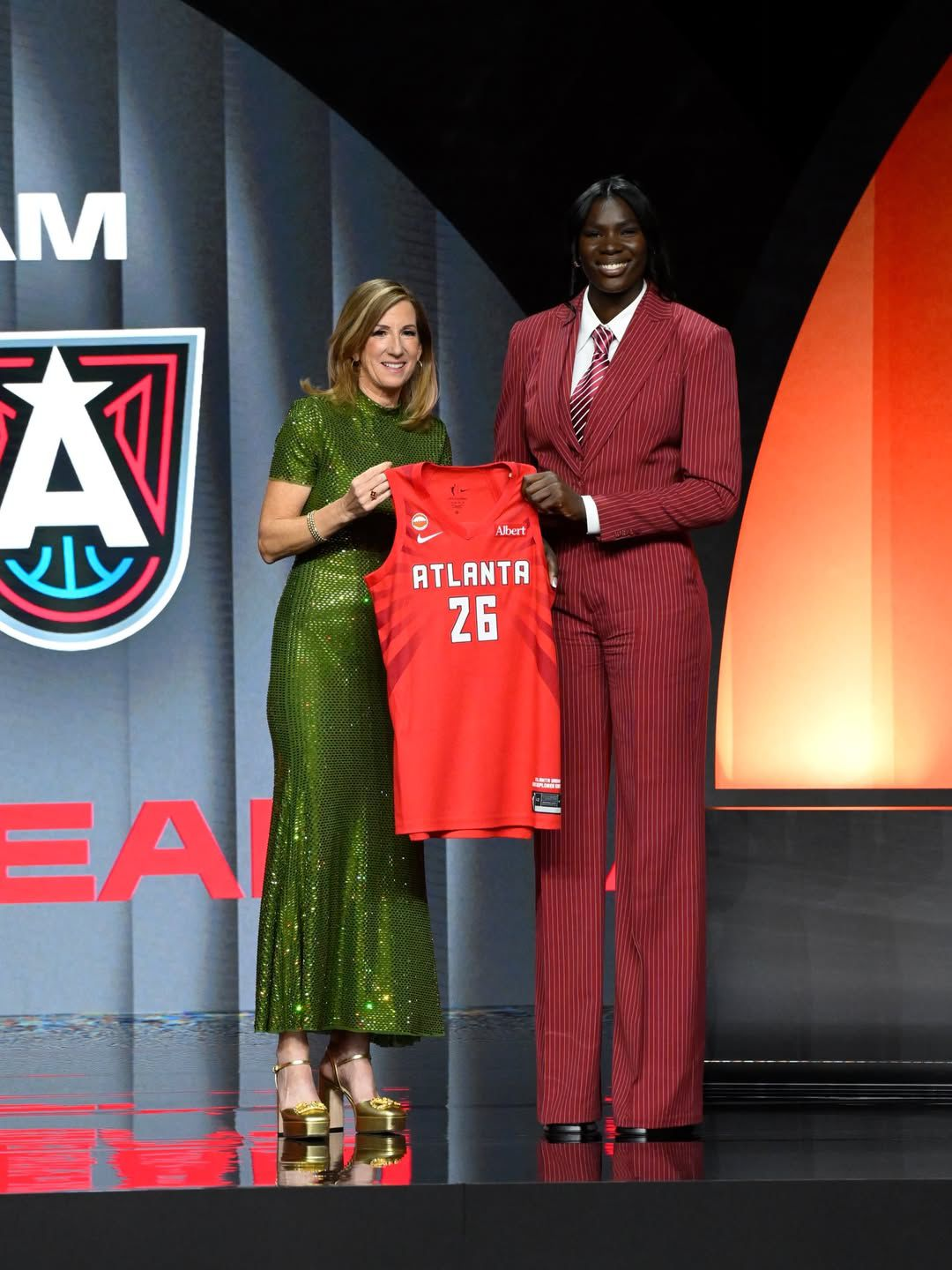
New Atlanta Dream draftee Madina Okot (Right) poses for a photo with Women's National Basketball Association (WNBA) commissioner Cathy Engelbert The Shed at Hudson Yards in New York City on April 13, 2026. Photo Courtesy

Audio By Vocalize
The rise of Madina Okot to the WNBA has been celebrated as a landmark moment for Kenyan basketball.
But behind the headlines lies a more complex story, one that reveals the persistent gap between local talent development and access to elite global opportunities.
Okot’s journey, shaped through teams like Zetech Sparks, reflects the steady growth of grassroots and institutional basketball programs in Kenya.
Her progression highlights the country’s increasing ability to nurture high-potential athletes capable of competing on the world stage.
Reports indicate that Okot faced multiple setbacks, including four visa denials that delayed her move abroad, a stark reminder that success in sport is not determined by talent alone.
These challenges point to deeper structural barriers that many Kenyan athletes continue to face.
According to development experts such as coach Paul Swagi, Ogot’s experience is not unique.
"Many young players lack the right guidance and support that would set them on an international stage", he stated.
"To promote Kenyan basketball, development should start from the grassroots level", he added.
While participation levels and talent pipelines are improving, transitioning to elite international leagues remains a significant hurdle.
Limited exposure to global scouts, inadequate funding, and complex logistical processes, including visas and international clearances, continue to slow the progress of promising players.
The result is a system where talent exists, but opportunity remains unevenly distributed.
Ogot’s story, therefore, represents more than personal triumph.
It highlights a broader issue: Kenya is producing world-class players, but the structures needed to elevate them consistently to global platforms are still underdeveloped.
Stakeholders across the sport are now being called upon to act, to strengthen development pathways, expand international exposure, and provide stronger institutional support for athletes navigating professional careers abroad.
As basketball continues to grow in Kenya, Okot’s journey stands as both an inspiration and a warning.
Talent may open the door, but without the right systems in place, many will struggle to walk through it.
Join the Discussion
Share your perspective with the Citizen Digital community.
No comments yet
This discussion is waiting for your voice. Be the first to share your thoughts!