
The accidental rise (and crushing fall) of Africa’s youngest president
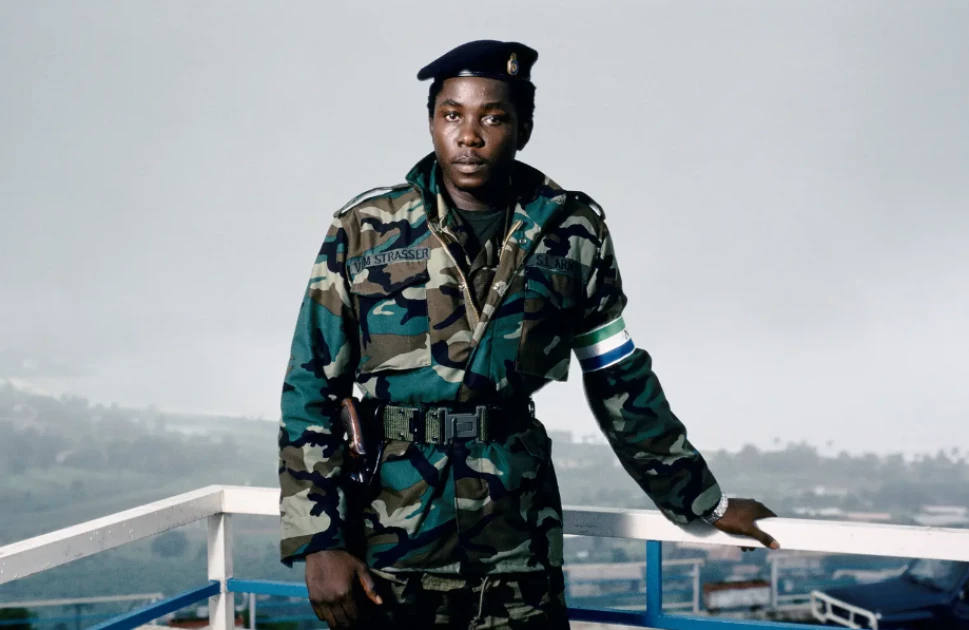
Captain Valentine Strasser at 25, when he was the head of state of Sierra Leone. PHOTO | COURTESY

Audio By Vocalize
By Paulie Mugure Mugo

On the morning of Wednesday, April 29, 1992, residents of Freetown, Sierra Leone, woke up to the highly unusual spectacle of armed soldiers steering combat vehicles into the city, with heavy machine guns, anti-aircraft weapons, and rocket launchers on display.
The soldiers, fit young
men from the 'Tiger' and 'Cobra' battalions, rolled determinedly into town,
targeting both the State House, which housed the president’s offices, and the
nearby presidential residence. By 8am, the soldiers were firmly installed at the
president’s doorstep. They had come to demand better conditions at the war
front and essential army supplies. Such as boots.
Among the 60 or so officers were about six
men who had been serving together at the war front, and had formed a bond close
enough to jointly instigate this fiery visit to the head of state. In their
midst was a fresh-faced captain named Valentine Strasser. Young Strasser and
his brothers-in-arms quickly stormed the presidential palace and successfully
crushed their way into the president’s private rooms, finding him closeted in
his bathroom, clothed in his dressing gown.
But later that April morning, as the soldiers engaged President Joseph Saidu Momoh in talks that were just about as warm as an iceberg, it became exceedingly clear that the president was not about to accede to their demands. Who, exactly, did this small band of junior officers imagine they were, showing up at State House with terse demands and a deadline?
By noon President Momoh had taken to the airwaves and heatedly informed the
nation what was going on, calling the determined soldiers “misguided.” Big
mistake. For the fighters, it was now do or, almost certainly, die.
"Misguided” military officers had only one sure fate in the Africa of the
early 1990’s. The militants thought fast. Before he knew it, President Momoh
found himself bundled into a helicopter and deposited in neighboring Guinea.
The youthful soldiers had overthrown his government.
No one was more surprised by the sudden power vacuum, it is said, than the mutineers themselves. All they had wanted when they had abandoned the war front 24 hours earlier were improved battle conditions. And as the anxious citizens waited to hear what was to follow, the soldiers speedily conferred among themselves.
One hour after Momoh’s
career-ending proclamation, Captain Strasser, by dint of his superior
English-speaking skills, was selected by his colleagues, most of whom were
rural, less educated officers, to announce the overthrow of the government. A
day later, presumably after what must have been fairly animated talks, another
announcement was made. Captain Valentine Strasser was the new head of state. He
was 25.
The country exploded. The citizens were
ecstatic. After 24 years of sheer thievery by the former president’s party, the
All People’s Congress (APC), the people were desperate for change. And the
youthful new leaders seemed just about right. Posters bearing Strasser’s image
quickly popped up in the streets and a catchy new tune, “Tiger Come
Down to Town!”, hit the airwaves.
The new president and his team promptly
set up the National Provisional Ruling Council (NPRC), with Captain Strasser as
its chairman, and appointed 21 cabinet ministers, retaining only two from the
former government. The young tigers rolled up their jungle-patterned sleeves
and got to work.
Corrupt public officials who had acquired
wealth dubiously soon found their assets confiscated, with over USD 13 million reportedly recovered from private homes. Electricity supply, previously only
reliable in military barracks and in the homes of government officials, was
vastly improved. Fuel supply was restored. The price of rice, a favored staple,
remained stable, and salaries were increased. Inflation was reportedly brought
down from more than 90% to 16%. Work to reconstruct a vital road connecting
Freetown and the rest of the country began. The new government promised to
bring the ongoing war with Liberia-backed rebels to an end and, finally, return
the country to civilian rule in due course.
There was a nationwide feeling of excitement;
an electrifying spark of renewed hope for the struggling nation. A tough new
tiger had come to town!
But trouble, too, began to surface, laying
bare the soft dark underbelly of the amateur regime.
The NPRC “boys”, usually seen sporting jungle
fatigues and dark, funky sunglasses, loved a good party. In the early days of
the regime, it was rumored that they were frequent visitors at the dorms of a
local university, enjoying fun times with their age mates. And beautiful young
ladies in Freetown soon began bleaching their skins when it became known that
the cool young leaders preferred lighter-skinned - uhm - companions.
There was the sticky matter, too, of
state-led “confiscations”. Upon seizing power, Strasser had taken over a
palatial mansion built in the 1970’s by the nation’s first president, Siaka
Stevens, and made it his official residence, reasoning that the lodge had been
built using state funds. Likewise, some members of the NPRC moved into
luxurious homes previously occupied by corrupt government officials. They drove
the former oppressors' expensive cars and emulated their opulent lifestyles,
benefiting from the very assets they had confiscated.
Within a year, a severely damaging story
surfaced, claiming that the president and some of his “boys” had stashed away
diamonds worth tens of millions of dollars and secretly flown to Europe in a
scandalous plan to sell the precious stones privately. They had reportedly used
some of the proceeds to buy arms, but had also pocketed some of the cash
themselves. The article had been published by a Swedish newspaper. When a local
paper carried the story, its editor found himself arrested and charged with
sedition.
There was much hidden, it seemed, in that
dark underbelly. But perhaps even more damaging was the regime’s sometimes
dangerously clumsy handling of crucial matters of state.
Just eight months after the NPRC took power,
on December 29th 1992, twenty-six
“coup-plotters”, were summarily executed by firing squad on a beach outside
Freetown, causing immediate international uproar. Shortly thereafter, the
government appeared to have a change of heart and declared a period of national
mourning. But the incident generated sustained criticism internationally and
remained a persistent thorn in the flesh for NPRC in the months to come.
Later, in an effort to end the ongoing border
war, the NPRC recruited thousands of new soldiers, deploying them to the
violent battlefront at the eastern border of the country. But most recruits
were young and untrained, some having barely entered their teens. The juvenile
fighters, disillusioned by insufficient provisions and low pay, soon developed
a proclivity for narcotic drugs and looting sprees - soldiers by day, rebels by
night. They were nicknamed “so-bels” by the hapless populace.
As Strasser’s time in office wore on, doubts
regarding his capabilities as the head of state grew. Rumors began to
emerge that the young commander-in-chief was barely in control of the military.
And his cabinet. Who knew - perhaps the president’s malleability was the very
reason the mutineers’ communique had been thrust into his hands on the day of
the coup?
Strasser also seemingly had difficulties
executing his role as the country's diplomat-in-chief. It was rumored, for
instance, that during a Commonwealth Heads of Government meeting, the president
had been unable to muster the courage to meet with senior personages such as
the Queen.
Increasingly,
Strasser retreated from the public eye and refused to speak to the press.
Reports that he had begun abusing alcohol and narcotic drugs began to
circulate. And that his second-in-command, Julius Maada Wonie Bio, barely in
his thirties himself, was now chairing cabinet meetings.
The initial euphoria began to fade. The
acronym NPRC was transliterated into an unflattering slogan by the tired
populace: “Na Pikin Running the Country”; meaning, “It’s
the children running the country”.
We may never know why on Tuesday 16th January
1996, Strasser chose to attend a meeting without his customary presidential
guard. What we do know is that while in the meeting room with Bio, his
second-in-command, a pistol was suddenly drawn and pointed at a startled
Strasser. The instantly-former president was hastily escorted to a waiting
helicopter and deposited in neighboring Guinea, precisely as had been done to
his predecessor. It was the end of a tumultuous four-year experiment.
In the next three months, Bio, now in
control, paved the way for the promised return to civilian rule. Presidential
elections were held in March 1996, after which Bio handed power to the winning
candidate, and tendered his resignation from the military. Twenty-two years
later, at the age of 54, he successfully contested and won the country’s
presidential elections. Julius Bio currently serves as the nation’s president
and head of state.
“We have attempted to liberate Sierra Leone
from shame and restore the vision of what our country should be,” President
Strasser had said in an address to the UN, shortly after taking power in
1992. “In spite of our youth, we believe we have demonstrated capacity
for leadership and concern for our nation's welfare, which previous governments
had failed to provide for our country in the last 24 years. The youthfulness of
the NPRC government, therefore, should not be held against us.…”
[Paulie Mugure Mugo is a published author and a co-founder of Eagles Leadership Network (ELN), an initiative that trains and equips upcoming leaders in the area of ethical governance.]
Join the Discussion
Share your perspective with the Citizen Digital community.
No comments yet
This discussion is waiting for your voice. Be the first to share your thoughts!