
Science takes centre stage in Kenya's push to restore Mangrove ecosystems

Audio By Vocalize
This was a key focus of the National Mangrove Stakeholder Forum underway in Kilifi County, where government agencies, researchers, development partners, conservation organisations, Community Forest Associations and the private sector are reviewing the implementation of the National Mangrove Ecosystem Management Plan (2017–2027) and shaping the future of mangrove conservation in Kenya.
The two-day forum, organised by the State Department for Forestry under the theme "Advancing Policy Leadership, Coordination and Community-Led Stewardship for Kenya's Mangrove Ecosystem," includes dedicated discussions on the role of research, technology and innovation in monitoring and restoring mangrove ecosystems.
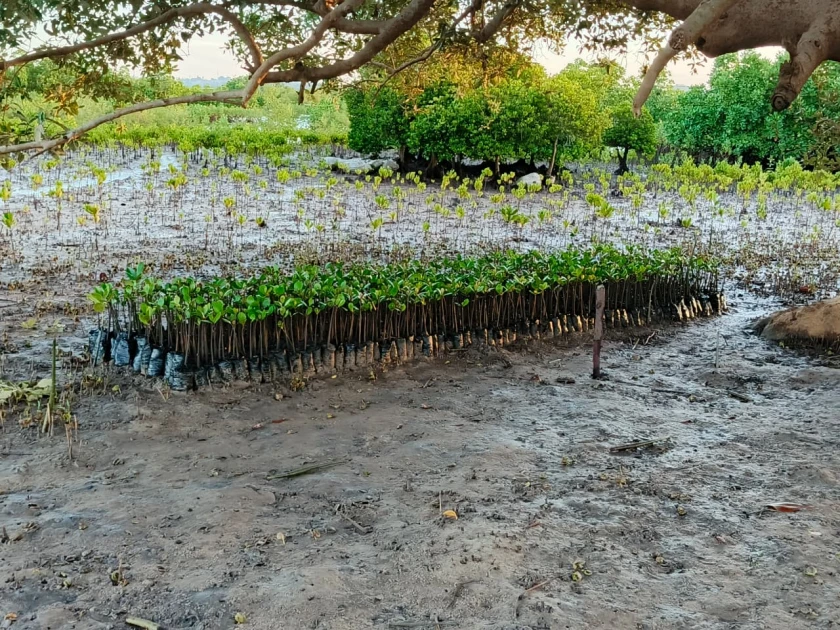
Among the institutions playing a central role is the Kenya Forestry Research Institute (KEFRI), which says successful restoration depends on applying science rather than simply planting trees.
KEFRI Chief Executive Officer Dr. Jane Njuguna said research remains fundamental to restoring healthy and resilient mangrove forests.
"Healthy mangroves do not happen by chance, they are built on science. At KEFRI, we are generating the research, technologies and innovations that enable Kenya to restore mangrove ecosystems effectively and sustainably."
Kenya's mangrove forests cover approximately 61,271 hectares along the country's 536-kilometre coastline, providing vital ecosystem services that include climate change mitigation through blue carbon storage, shoreline protection, fisheries enhancement, biodiversity conservation and livelihood support for coastal communities.
However, these ecosystems continue to face increasing pressure from illegal harvesting, encroachment, pollution, coastal development, sedimentation, climate change and reduced freshwater inflows resulting from upstream river damming.
According to the State Department for Forestry, these pressures have contributed to degradation of associated marine ecosystems, reduced fisheries production and the loss of seagrass beds and coral reefs, while Kenya continues to record an annual mangrove cover loss of 0.7 per cent.
Dr. Njuguna said restoration programmes must be guided by a thorough understanding of mangrove ecosystems if they are to deliver lasting environmental benefits.
"Every successful mangrove restoration begins with understanding the ecosystem. The right species, the right site and the right science make the difference between planting trees and restoring resilient coastal forests."
The forum is expected to generate strategic recommendations to strengthen future mangrove governance while promoting greater use of research, innovation and technology in conservation planning and ecosystem monitoring.
Participants are also exploring ways to strengthen partnerships between research institutions, government agencies, communities, conservation organisations and the private sector to improve restoration outcomes.
Expected outputs include a review of the National Mangrove Ecosystem Management Plan, an action framework for improved governance and stronger collaboration among stakeholders.
As Kenya prepares for the next phase of mangrove conservation, experts say science will remain the foundation upon which effective restoration, climate resilience and sustainable management of the country's coastal forests will be built.
Join the Discussion
Share your perspective with the Citizen Digital community.
No comments yet
This discussion is waiting for your voice. Be the first to share your thoughts!