
Persons with disabilities unveil 10-point agenda for full inclusion in governance

Audio By Vocalize
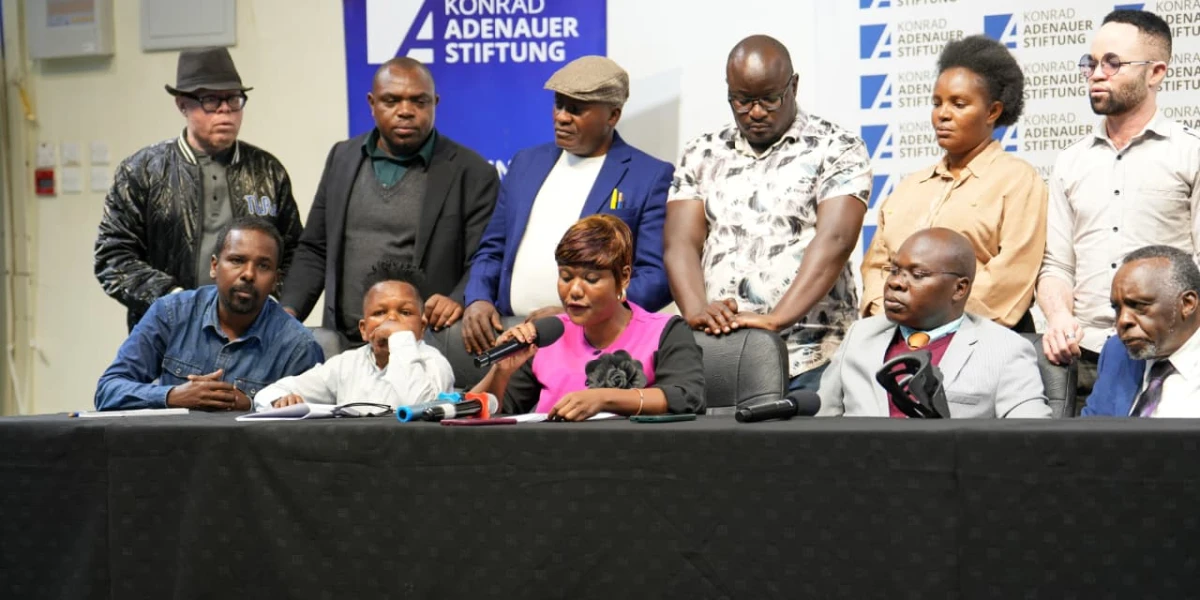
During a Persons with Disabilities Breakfast Forum in Nairobi, Joseph Atella, Executive Director of the Consortium of Disabled Persons Organisations in Kenya (CDPOK), highlighted that individuals with disabilities are among the most marginalised groups in civic and political arenas, despite years of advocacy and constitutional protections.
“We are still facing significant barriers to participation in political activities. Inaccessible polling stations, limited civic education materials in accessible formats, communication challenges, and persistent negative societal attitudes prevent many individuals with disabilities from fully engaging in democratic processes,” Atella said.
Atella emphasised that Kenya's 2010 Constitution provides a robust legal framework for inclusion, which guarantees equality, non-discrimination, dignity, education, communication, and political participation for persons with disabilities.
“The government must fully implement these constitutional provisions and existing disability laws. Legal protections must translate into tangible opportunities for millions of Kenyans living with disabilities,” he urged.
He also stressed the importance of economic empowerment, asserting that persons with disabilities should be actively involved in trade, entrepreneurship, employment, and national development programs to unlock their full potential and contribute significantly to the country’s growth.
“We need to ensure that persons with disabilities are included in all economic activities,” Atella remarked.
He called on both national and county governments to enhance access to assistive technologies, healthcare services, social protection programs, and inclusive education systems that cater to the diverse needs of persons with disabilities.
Bridgit Songok, the Nominated Member of County Assembly (MCA) representing Persons with Disabilities in Nandi County, echoed these sentiments by advocating for increased appointments of individuals with disabilities to senior government positions, including Cabinet Secretaries, Principal Secretaries, Ambassadors, and other key leadership roles.
“Representation at the highest levels of government remains disproportionately low. Since independence, no person with a disability has ever been appointed as a Cabinet Secretary, despite our community's significant contributions to national development,” Songok said.
Songok also highlighted the need for comprehensive and up-to-date data collection on disability, emphasising that accurate statistics are essential for effective planning, budgeting, and service delivery for persons with disabilities.
Regarding employment, she called for strict enforcement of the constitutional requirement that reserves at least five per cent of opportunities in public institutions for persons with disabilities, identifying employment as a vital pathway to economic independence and dignity.
“We must ensure that this requirement is not just a statistic, but a reality for people with disabilities,” she insisted.
On the subject of political representation, Songok proposed a structured framework to guarantee disability representation at both national and county levels, including dedicated positions in county assemblies, Parliament, and the Executive.
“Every county government should appoint at least one County Executive Committee Member and a dedicated director responsible for coordinating disability programs and services,” she suggested.
Furthermore, Songok called for increased funding for disability sports, noting that many athletes face challenges related to training, equipment acquisition, and participation in international competitions, despite their outstanding performances.
Dr Samuel Kabue, a veteran disability rights advocate and former member of the United Nations Committee on the Rights of Persons with Disabilities, on his side, challenged political parties to engage more effectively with disability members and formally recognise disability caucuses within their structures.
“Political parties must strengthen their engagement with disability members. We need to ensure that the concerns of persons with disabilities are reflected in party policies and nomination processes,” Dr Kabue noted t
He revealed that more than 20 counties failed to nominate disability representatives in previous elections, emphasising the need for legal reforms. “We require minimum representation thresholds for persons with disabilities in Parliament and county assemblies, similar to the model currently used in the Senate,” he concluded.
Join the Discussion
Share your perspective with the Citizen Digital community.
No comments yet
This discussion is waiting for your voice. Be the first to share your thoughts!