
OPINION: Will Kenya ever play in the FIFA World Cup?
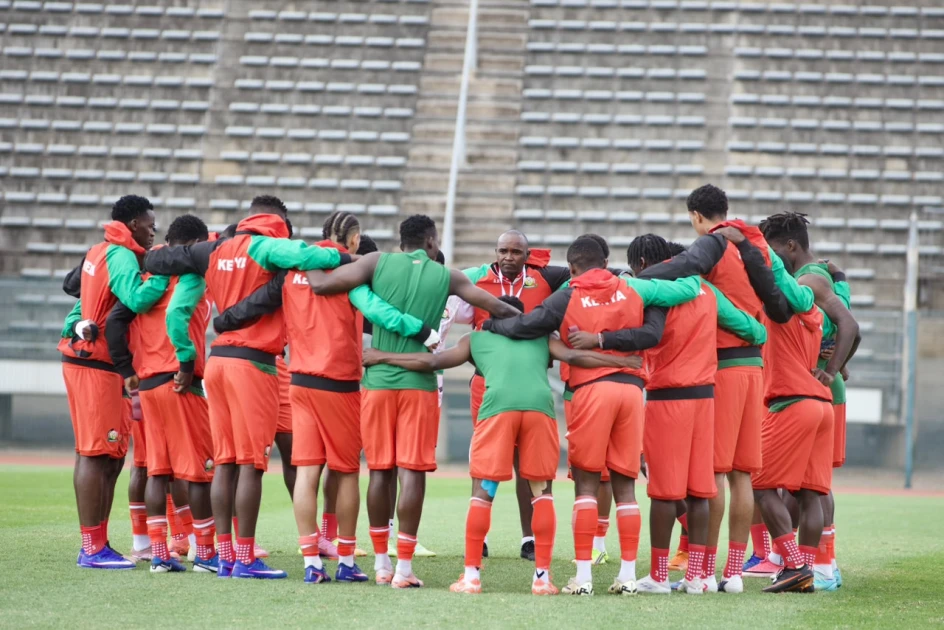
Harambee Stars players being briefed after a training session in Pretoria, South Africa. Photo/Handout.

Audio By Vocalize
Every four years, millions of Kenyans passionately follow the
FIFA World Cup. We wear the jerseys of Argentina, Brazil, France, England,
Germany, Spain or Morocco. We celebrate goals, debate tactics and dream that
perhaps one day Kenya will also be part of football's greatest stage.
The truth is that Kenya's absence from the World Cup is not
due to a lack of talent. It is the result of decades of inconsistent planning,
poor governance, inadequate investment in youth development, and an absence of
a long-term football philosophy.
Nations do not qualify for the World Cup by chance; they build
systems that consistently produce elite players over many years.
If Kenya genuinely wants to play at a FIFA World Cup within
the next two decades, the country must shift from managing football as a
seasonal activity to developing it as a national project.
Every World Cup player was once a child kicking a football in
a neighbourhood, school or village.
The difference between successful football nations and
struggling ones lies in what happens after that child is discovered.
Countries that consistently qualify for the World Cup have
systems that identify talent early, nurture it scientifically and provide clear
pathways to professional football.
What Kenya lacks is a structured system that develops them.
Talent without development is merely potential.
Lessons from Suriname: Value Addition
One of the most fascinating examples in world football is the
South American country of Suriname.
With a population of just over 600,000 people and limited
football success internationally, Suriname has historically been ranked far
below football's leading nations.
Yet many players with Surinamese heritage have become stars
for the Netherlands. Football legends and international players with Surinamese
roots have made enormous contributions to Dutch football, helping the
Netherlands become one of the world's most respected football nations.
The raw talent existed in Suriname.
The value addition occurred in the Netherlands.
The Dutch football system transformed naturally gifted
children into world-class professionals through:
- Professional youth academies
- Qualified youth coaches
- Modern training methods
- Excellent infrastructure
- Competitive youth leagues
- Sports science
- Clear player development pathways
Natural talent alone is never enough.
The system determines success.
Morocco Shows Africa What Is Possible
Africa received another reminder of what long-term planning
can achieve when Morocco reached the semi-finals of the 2022 FIFA World Cup.
It followed years of investment in elite academies, coach
education, sports science, player scouting, and partnerships between government
and football authorities.
The Mohammed VI Football Academy has become a continental
benchmark because it combines education, football, nutrition, psychology and
high-performance coaching under one vision.
Instead, Kenya should build a model suited to its own
geography, resources and football culture.
Contrary to popular belief, Kenya is not starting from zero.
Several institutions already possess mandates that, if
properly coordinated, could transform football.
The challenge is that these institutions often operate
independently rather than as parts of one national football development
strategy.
FKF remains the technical custodian of football.
Its responsibilities should include:
- National football philosophy
- Coach education
- Youth competitions
- Talent identification
- Club licensing
- National team development
- Technical standards
To its credit, FKF has continued organizing leagues across
various levels, expanded women's football, supported youth competitions and
strengthened engagement with FIFA and CAF development programs.
However, Kenya still lacks a unified national player
development pathway that links grassroots football to county academies, elite
development centres and the senior national teams.
The Ministry provides policy direction and national
leadership.
In recent years, government has increased investment in sports
infrastructure and has promoted sports as part of youth empowerment and
economic development.
However, infrastructure alone cannot produce World Cup
players.
Football development requires sustained policy support
extending beyond electoral cycles.
A national football development strategy should be protected
as a long-term national agenda spanning 15 to 20 years regardless of changes in
political leadership.
The Kenya Academy of Sports has enormous potential.
Its mandate extends beyond elite competition.
It should become the country's centre for:
- Football research
- Coach education
- Sports science
- Performance analysis
- Talent development methodologies
- Youth curriculum development
The Academy can help standardize coaching methods across Kenya
so that a child in Turkana receives similar foundational training to one in
Mombasa or Kisumu.
National Sports Fund
Development cannot happen without sustainable financing.
The National Sports Fund has an important role in financing
long-term development rather than only supporting competitions.
- County football centres
- Coach education
- Youth leagues
- Girls' football
- Equipment
- Goalkeeper development
- Medical support
- Sports science
- Talent identification
Investment in children offers greater long-term returns than
concentrating spending almost exclusively on senior national teams.
Kenya often becomes excited when Harambee Stars assemble
before AFCON qualifiers.
Yet the national team is simply the final product of work done
years earlier.
If the foundation is weak, the national team will inevitably
struggle.
Grassroots football must become visible in every one of
Kenya's 47 counties.
- Structured Under-8, Under-10, Under-12, Under-14 and Under-16
leagues.
- Certified youth coaches.
- Qualified referees.
- Safe playing fields.
- Football equipment.
- Medical support.
- Talent databases.
- Annual scouting festivals.
- Links to regional development centres.
Football development should not depend on occasional
tournaments.
Children improve through regular training and competition
throughout the year.
The most valuable investment in football is not a stadium.
It is a coach.
Every great football nation invests heavily in youth coach
education.
A poorly trained coach can unintentionally limit hundreds of
young players over the course of a career.
Kenya therefore requires a national youth coaching strategy
that aims to produce thousands of certified grassroots coaches across all 47
counties. Coach education should be continuous, evidence-based and accessible,
with clear progression through CAF licensing pathways. Schools, clubs and
community programmes should all benefit from a growing pool of technically
competent coaches.
When people discuss infrastructure, attention usually focuses
on major stadiums.
Kenya needs:
- Community football pitches.
- County training centres.
- Floodlit grounds.
- School football facilities.
- Mini pitches in informal settlements.
- Goalkeeping centres.
- Rehabilitation facilities.
- Video analysis rooms.
- Regional high-performance centres.
Children develop where they train every day—not only where
national teams play a few matches each year.
Kenya once produced outstanding footballers through school
competitions.
Schools provide the widest platform for talent identification
because they reach children from every social and economic background.
Education and football should complement one another, ensuring
that young athletes develop both academically and athletically.
Perhaps Kenya's greatest weakness has been the absence of
continuity.
Every federation leadership changes direction.
World Cup qualification demands consistency.
Kenya should therefore adopt a legally recognized National Football Development Blueprint extending over 15 to 20 years, with clearly defined milestones, measurable performance indicators and stable funding.
Such
a blueprint should outline responsibilities for FKF, the Ministry of Sports,
the Kenya Academy of Sports, the National Sports Fund, county governments,
schools and private-sector partners, ensuring that progress continues
regardless of changes in leadership.
Football is no longer merely a sport.
It is an industry.
A successful football ecosystem creates employment for
coaches, referees, physiotherapists, analysts, nutritionists, scouts,
groundskeepers, media professionals, event managers and entrepreneurs.
Investment in football is therefore also investment in youth
employment and economic growth.
A thriving domestic football system can generate value far
beyond the pitch.
Kenya should not measure success solely by whether Harambee
Stars qualify for the next FIFA World Cup.
Instead, success should be judged by whether the country is
steadily building the structures that make qualification inevitable over time.
World Cup qualification cannot be achieved through short-term
preparations or last-minute coaching changes.
The countries lifting football's greatest trophies today
planted those seeds decades ago.
The talent exists in every county—from Mandera to Mombasa,
Turkana to Taita Taveta, Kisumu to Kilifi.
What remains is to build a system capable of discovering,
nurturing and elevating that talent.
The question, therefore, is no longer whether Kenya has enough
gifted footballers.
The real question is whether Kenya possesses the discipline,
patience and collective resolve to invest consistently in them for the next
twenty years.
If the answer is yes, then the dream of seeing Harambee Stars walk onto the FIFA World Cup stage will cease to be an aspiration and become a realistic national ambition.
World Cups are not won by chance, and nations do
not qualify by hope alone. They qualify because they plan, invest, develop and
persist. Kenya's journey to the World Cup begins not in a packed national
stadium, but on community pitches, in school fields and county leagues, where
the next generation is waiting for a system that believes in its potential.
Join the Discussion
Share your perspective with the Citizen Digital community.
No comments yet
This discussion is waiting for your voice. Be the first to share your thoughts!