
OPINION: Why County Govts must strengthen budget discipline to deliver devolution
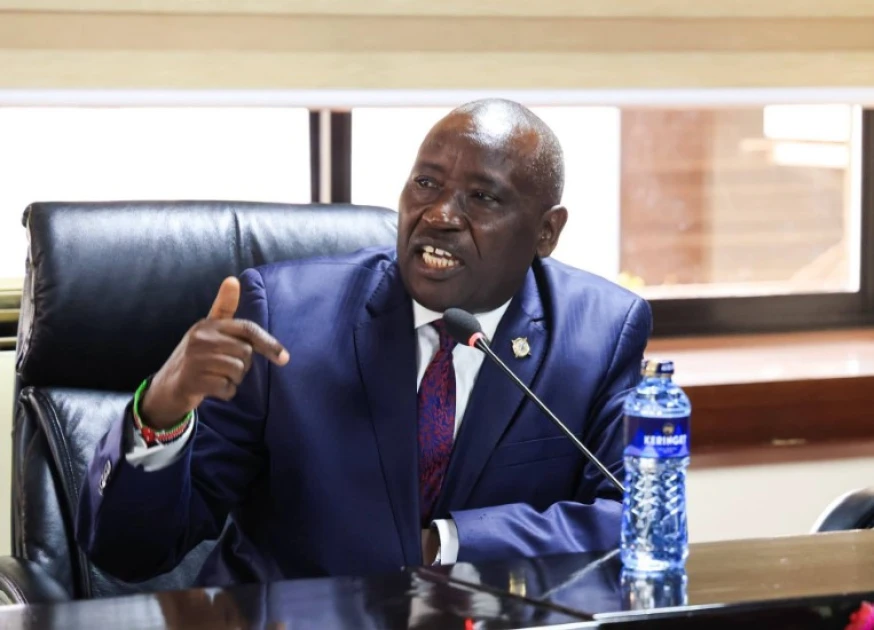
A file photo of Kitui Central MP Makali Mulu

Audio By Vocalize
When drafters of the 2010 Constitution conceptualized devolution, they envisioned a governance system that would help cure Kenya’s perennial marginalization problem and hasten achievement of equity in resource allocation and economic development across the Country.
Billions of shillings have been channeled to county governments since the onset of devolution in 2013 through the equitable share, conditional allocations from the National Government and grants from development partners and independent donors.
Sadly, however, across the over one decade of the existence of devolution, a persistent and troubling question has really bothered many devolution enthusiasts including myself.
Why is it so hard for counties to deliver in key service areas like healthcare, agriculture, water, market spaces and other essential public sectors services under the county governments’ purview?
I attempted to unravel this headache recently when we debated the County Governments Additional Allocations Bill, in the National Assembly.
This Bill provides another important reminder that county governments receive more than just the equitable share from the Exchequer and are therefore expected to deliver services to Kenyans’ expectations.
A scrutiny of the flow process of funds to counties reveals such allocations from the National Government as funding for Community Health Promoters, County Aggregation and Industrial Parks (CAIPs), court awards, royalties and several other development programmes.
All these are crucial additional sources of funding to counties, besides the initiatives spearheaded by development partners who occasionally support counties through grants aimed at strengthening service delivery and local development.
The cardinal obligation of each county leadership is to demonstrate greater responsibility through proper planning, timely implementation and strict compliance with financial management requirements.
A persistent threat to devolution which I have noted is the inability of some county governments to access donor-funded grants because they fail to satisfy the agreed preconditions.
Consequently, in most circumstances the funds end up idle in special accounts for months thus denying the local communities health facilities, roads, water projects and other critical investments.
These delays are as a result of weaknesses in planning, governance and financial management among our counties.
We must strengthen the institutional capacity of our county governments by ensuring that all legal, financial and administrative requirements are met before funds are released.
Counties must prepare implementation plans early, enhance project readiness and comply fully with donor reporting obligations.
It goes without saying that every penny that remains idle in the account represents a missed opportunity to improve the lives of wananchi.
Equally important is the need to align county budgets with realistic priorities, by ending the culture counties spreading limited resources across numerous projects, most of which remain incomplete for years.
Counties need to prioritise completion of ongoing projects before launching new ones to ensure that budgetary allocation is linked to measurable development outcomes.
In the same breath, the repeated allocation of funds for projects whose progress remains uncertain, is slowly but surely killing devolution.
For nearly a decade, Parliament has, for instance, appropriated funds annually for the construction of county headquarters in counties that lack permanent administrative offices.
I raised this issue in the National Assembly as a matter of urgent concern.
We cannot continue appropriating funds without establishing whether previous allocations have delivered value for money.
Every instance of misappropriation means fewer medicines in hospitals, fewer classrooms for our children, fewer kilometres of roads and fewer economic opportunities for our citizens, and ultimately missed opportunities to lift the country up the economic ladder.
County governments must embrace stronger financial discipline by ensuring that budget implementation focuses not merely on spending allocated funds but on delivering measurable results through quality service for Kenyans.
As we push for entrenchment of robust internal audit systems, transparent procurement processes and effective project monitoring public participation must also move beyond statutory compliance, to ensure that Kenyans indeed get value for money.
Finally, as we commend institutions such as the Office of the Auditor-General, the Controller of Budget and other accountability agencies, we as Parliament also need to ensure that they receive adequate financial and legal support to undertake their work most effectively.
The future of devolution will not be determined by how much money we allocate to counties but how wisely those resources are managed and how faithfully they improve the lives of the people we serve.
The writer is the Kitui Central MP, and a ranking member of the National Assembly Budget and Appropriations Committee
Join the Discussion
Share your perspective with the Citizen Digital community.
No comments yet
This discussion is waiting for your voice. Be the first to share your thoughts!