
OPINION: Transforming education through digital skills - Safaricom and DSF partnership

Audio By Vocalize
By Karen Basiye

Safaricom’s ambition to become Africa’s leading purpose-led
technology company goes beyond innovation through our products and services. At
its core, it is about transforming lives through impactful interventions across
key pillars: education, agriculture, health, and humanitarian response that
directly reflect the pressing needs of our communities.
Through the
Technology for Development workstream, partnerships remain central to
delivering shared value. It is in this spirit that Safaricom has partnered with
the Digital Skills Factory (DSF) to accelerate digital literacy in the
education sector. An area where access to infrastructure has improved, but
utilization remains low due to persistent skills gaps.
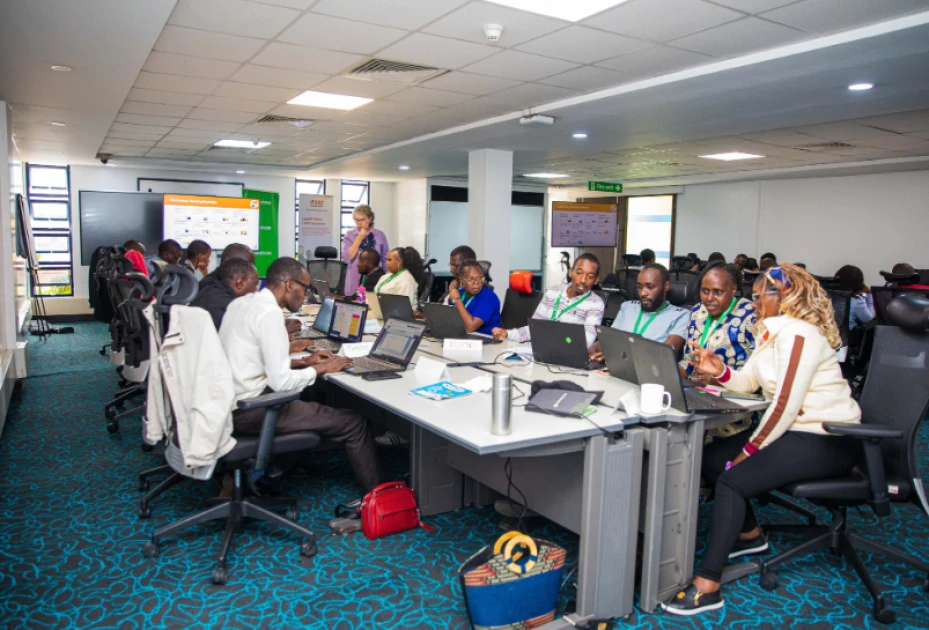
Recently, in collaboration with DSF, Safaricom conducted a Trainer of
Trainers (ToT) programme involving 33 teachers and 14 headteachers. The
training focused on strengthening digital literacy and embedding inclusive
education practices, equipping educators with practical skills to deliver in an
increasingly digital, learner-centred environment.
The sessions were immersive and hands-on, with DSF trainers
guiding participants through modules designed to build both confidence and
competence. Teachers learned to create and manage online classrooms, enabling
continuity of learning beyond the physical classroom and fostering more
inclusive participation.
To enhance engagement, the programme introduced gamification
tools such as Kahoot, helping educators break the monotony of traditional
lessons and encourage active learner participation. Teachers also gained
practical skills in setting, managing, and sharing assignments digitally tools
that support structured, continuous learning.
For school heads, the training emphasised digital
leadership. Headteachers strengthened their ability to manage virtual
engagements through tools such as Google Meet, improving efficiency in
communication and administrative coordination. Meanwhile, educators were
introduced to emerging technologies, including Artificial Intelligence tools like
Gemini and Copilot, which can support lesson planning, content creation, and
more personalized learning experiences.
Importantly, the programme embraced inclusivity. For
visually impaired teachers, adaptive technologies such as screen readers
ensured full participation, reinforcing the commitment to equitable access to
digital skills for all educators and, by extension, their learners.
Kenya’s transition to the Competency-Based Education (CBE)
system has fundamentally reshaped how teaching and learning are delivered. It
calls for a more learner-centric, digitally enabled approach. This shift has
made it essential to retool teachers with relevant digital competencies,
ensuring they can effectively meet the needs of modern learners.
This initiative aligns with the M-Pesa Foundation’s Citizens
of the Future programme, which aims to upskill between 10,000 and 20,000
teachers in digital literacy over the next five years. Through this
partnership, we are building a pipeline of educators who are not only digitally
competent but also future-ready.
Before the training, many teachers expressed a lack of
confidence in using digital tools. Today, that narrative is changing. Educators
are now embracing innovation, leveraging AI tools to enrich lesson delivery and
improve classroom engagement. Equally important, the ToT model ensures
sustainability, as trained teachers cascade their knowledge to peers amplifying
impact across schools.
This partnership directly addresses a key challenge: while significant
investments have been made in digital infrastructure through initiatives such
as GIGA Schools, Instant Network Schools, and Computers for Schools, adoption
has lagged due to limited digital literacy. DSF bridges this gap by providing
structured, engaging, and accessible digital learning content that drives
uptake and meaningful use.
Beyond training, the partnership is designed for scale and
sustainability. It combines Safaricom’s network reach and technological
infrastructure with DSF’s robust curriculum to improve digital literacy,
increase utilization of existing infrastructure, and promote continuous
learning through both free foundational courses and premium content.
Ultimately, this initiative is about more than skills it is
about unlocking opportunity. By empowering teachers with digital-first
capabilities, we are shaping a generation of learners equipped with practical,
job-ready skills that align with today’s and tomorrow’s market needs.
At Safaricom, we believe that when teachers are empowered, learners thrive and
when learners thrive, communities prosper. This partnership is a meaningful
step toward building an inclusive, digitally enabled education ecosystem that
leaves no one behind.
The writer
is the Director, Sustainability and Shared Value at Safaricom.
Join the Discussion
Share your perspective with the Citizen Digital community.
No comments yet
This discussion is waiting for your voice. Be the first to share your thoughts!