
How the return of Toyota Celica will redefine the future of rally racing

Audio By Vocalize
However, as the championship prepares to enter a new era in 2027, Toyota has made a decision that could prove significant not only for its own ambitions but also for the future direction of rally racing. The return of the iconic Celica name to the WRC, through the new GR Celica Rally1, is more than a nostalgic marketing exercise.
It is a statement of intent from a manufacturer that understands the importance of its history while recognizing the need to embrace a changing motorsport landscape.
For Toyota, the Celica represents a return to one of the most successful chapters in its rallying history. For the championship, it offers an opportunity to reconnect with an older generation of enthusiasts, attract new audiences, and demonstrate why manufacturers should continue investing in rally racing.
The question, therefore, is not simply whether the Celica will be competitive. It is whether its return can help change the way the WRC is perceived, marketed, and contested.
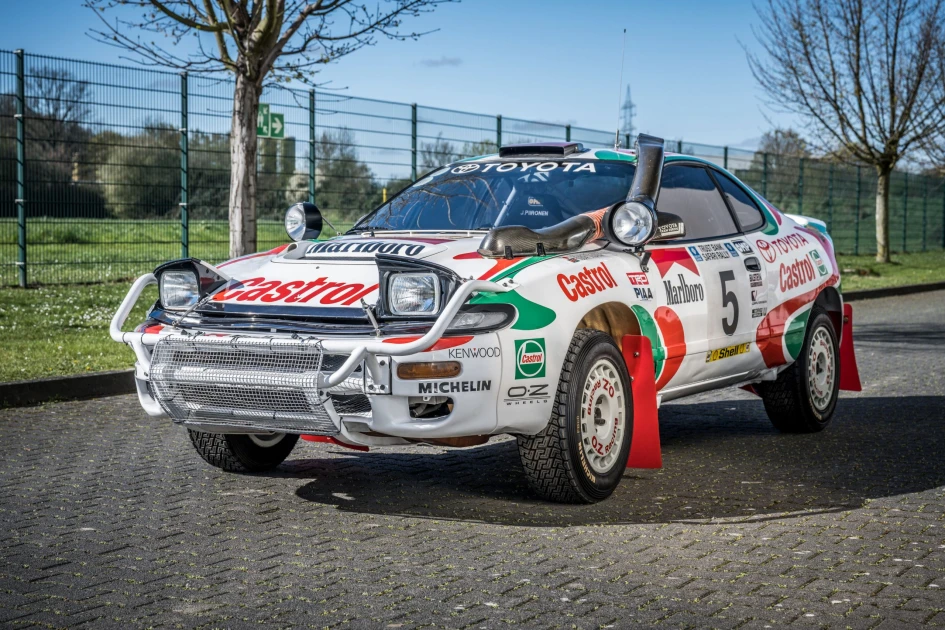
Few cars carry the historical significance of the Toyota Celica in international rallying.
The model became synonymous with Toyota's rise to prominence in the WRC during the late 1980s and 1990s. Its success was built around some of the sport's most memorable drivers, including Carlos Sainz, Juha Kankkunen, and Didier Auriol, who helped establish Toyota as a dominant force in world rallying.
The Celica played a central role in Toyota's drivers' championship successes in 1990, 1992, 1993, and 1994, making it one of the defining cars of that generation.
Its combination of engineering strength, performance, and competitiveness helped create a lasting connection between the manufacturer and rally fans across the world.
That connection is precisely what Toyota hopes to revive.
In an era when motorsport increasingly competes for attention against other sporting and entertainment products, heritage remains a powerful asset. Fans do not simply support manufacturers because of their latest technical achievements. They also identify with the stories, personalities, and machines that have shaped the sport over generations.
The return of the Celica gives Toyota an opportunity to reconnect with those memories while introducing the name to a younger generation that may never have witnessed its greatest rallying achievements.
It also gives the WRC something that every championship needs: a compelling story beyond the battle for championship points.
Perhaps the most significant aspect of the Celica's return is the timing.
Toyota is introducing the car as the WRC prepares to implement its new technical regulations in 2027, a major transition designed to make the championship more accessible and financially sustainable.
The new WRC27 framework introduces a cost-controlled approach, with cars subject to a €345,000 cost cap. This represents a reduction of more than 50 per cent compared with the outgoing generation of Rally1 machinery.
The regulations also introduce greater flexibility in vehicle design, allowing manufacturers and independent constructors to develop different body shapes around a common safety-cell concept.
This is important because one of the biggest challenges facing international rallying has been the cost of competing at the highest level.
For years, the financial demands associated with developing and operating top-level rally cars have limited the number of manufacturers and independent teams capable of challenging consistently.
By reducing those barriers, the FIA is attempting to create an environment in which more manufacturers, constructors, and private teams can participate.
Toyota's decision to introduce the Celica alongside the GR Yaris demonstrates how manufacturers can take advantage of this flexibility.
The two cars will have different exterior designs but share the same underlying mechanical package and are being developed to deliver equivalent performance.
That is an important distinction. The return of the Celica is not about creating an entirely different competitive advantage through a new mechanical formula. It is about demonstrating how manufacturers can express their identities through different vehicle designs while competing under common technical requirements.
If successful, this approach could encourage other manufacturers to consider bringing back historic models or introducing entirely new designs into the championship.
Imagine a WRC grid featuring different silhouettes representing some of the world's most recognizable automotive brands. Such variety could give the championship a visual identity that has been missing in recent years.
Toyota's approach is particularly ambitious because it is not simply introducing another car. It is reorganizing its factory programme around two distinct teams.
The manufacturer will compete as Toyota Racing with the GR Celica Rally1, while Gazoo Racing Toyota will campaign for the 2027 GR Yaris Rally1.
The Celica squad will feature defending world champion Elfyn Evans, alongside Oliver Solberg and Sami Pajari.
The Yaris team will be represented by former world champions Ott Tänak and Kalle Rovanperä, alongside Takamoto Katsuta.
This six-crew structure allows Toyota to strengthen its presence across the championship while creating an additional competitive narrative within its own organization.
For the first time in this particular format, Toyota will have two distinct factory identities competing for victories using different vehicle designs.
That could create an interesting dynamic. Although both teams operate under the same Toyota umbrella, their drivers will have separate responsibilities and the opportunity to establish their own identities.
It also creates greater internal competition, which could push engineers and drivers to continually improve their performances.
There is, however, a potential challenge. Running two teams and developing two different body configurations requires additional resources, coordination, and technical expertise. Toyota must ensure that the strategy strengthens its championship ambitions rather than dividing attention and resources.
Nevertheless, the decision reflects a manufacturer confident in its engineering capabilities and willing to experiment with a new approach.
One of the biggest opportunities presented by the Celica's return is its potential to attract a wider audience.
Rallying has traditionally relied on the connection between drivers, manufacturers, and the challenging environments in which the sport takes place. Unlike circuit racing, where spectators follow competitors around a defined track, rally fans often experience the sport through individual stages spread across vast geographical areas.
This makes the championship's commercial identity particularly important.
Recognizable cars, manufacturer rivalries, and compelling personalities help create stories that attract audiences beyond traditional motorsport enthusiasts.
The Celica offers all three.
Its historical significance provides an immediate talking point, while the prospect of seeing a modern interpretation of a legendary rally car competing against the GR Yaris creates an interesting marketing opportunity.
Toyota can use the two models to appeal to different generations of fans, particularly those who remember the Celica's dominance during the 1990s.
The championship can also benefit from the renewed attention surrounding one of rallying's most recognizable names.
However, nostalgia alone will not guarantee success. Toyota and the WRC must ensure that the excitement surrounding the Celica translates into stronger spectator interest, television audiences, digital engagement and commercial partnerships.
The real test will be whether the car can create memorable sporting moments rather than simply generate headlines before the season begins.
Toyota's decision could also place additional pressure on its competitors.
The WRC needs a healthy manufacturer base to remain competitive and commercially attractive. While Toyota has established itself as a dominant force in recent seasons, the championship's long-term success cannot depend on one manufacturer's achievements alone.
The arrival of the GR Celica could encourage rival manufacturers to rethink their own strategies under the new regulations.
Hyundai, M-Sport Ford and potential new entrants will be watching closely to see whether Toyota's two-model approach delivers the expected competitive and commercial benefits.
There is also an opportunity for independent constructors to enter the championship with different vehicle concepts, provided they can meet the technical and financial requirements.
A more diverse grid would be a major step forward.
For years, fans have wanted to see more manufacturers competing at the highest level, with different engineering philosophies and vehicle identities adding variety to the competition.
The new regulations, combined with Toyota's decision, could help move the championship closer to that vision.
Ultimately, competition is what drives motorsport forward. Toyota's return to the Celica name should encourage its rivals to respond, creating a healthier environment in which manufacturers are challenged to innovate rather than simply maintain the status quo.
Despite the excitement, the Celica's return is not without its risks.
The name carries enormous expectations, particularly among fans who remember its achievements during the 1990s. Any comparison with that era will inevitably place additional pressure on Toyota's new project.
However, the modern WRC is very different from the championship in which the original Celica established its reputation.
Today's competition requires sophisticated engineering, extensive data analysis, physical preparation and the ability to adapt to constantly changing road conditions.
The new car will have to prove itself on gravel, asphalt, snow and some of the most demanding rally stages in the world.
Its performance will ultimately depend on the quality of its engineering, the effectiveness of its development programme and the ability of its drivers to extract the maximum from the machinery.
Toyota has an advantage in experience, having established itself as one of the championship's strongest manufacturers. Its existing technical expertise and driver development structures provide a strong foundation for the transition.
But history will not win rallies. The Celica must earn its reputation through results.
The return of the Toyota Celica could become one of the defining developments in the modern history of the World Rally Championship.
It represents the meeting of two important ideas: preserving the heritage that made rallying popular while embracing the changes required to secure its future.
The 2027 regulations offer an opportunity to reduce costs, encourage participation, and introduce greater flexibility in vehicle design. Toyota's decision to bring back the Celica demonstrates how manufacturers can use that opportunity to create something distinctive.
More importantly, it sends a message that rallying does not have to abandon its history to remain relevant.
There is something powerful about seeing a legendary name return to the stages where it once achieved greatness. For older fans, it is an opportunity to relive memories. For younger enthusiasts, it is a chance to discover a piece of rallying history.
But the greatest achievement would be if the Celica's return inspires other manufacturers to follow Toyota's lead, bringing more variety, investment and competition into the championship.
The WRC needs more than fast cars and talented drivers. It needs identity, compelling rivalries and manufacturers willing to invest in its future.
Toyota has taken an important step in that direction.
When the GR Celica Rally1 finally takes to the stages in 2027, it will carry the weight of a legendary name.
Whether it can match the achievements of its predecessors remains to be seen.
Join the Discussion
Share your perspective with the Citizen Digital community.
No comments yet
This discussion is waiting for your voice. Be the first to share your thoughts!