
OPINION: Resolving Kwale Sugar woes would prove Dangote right
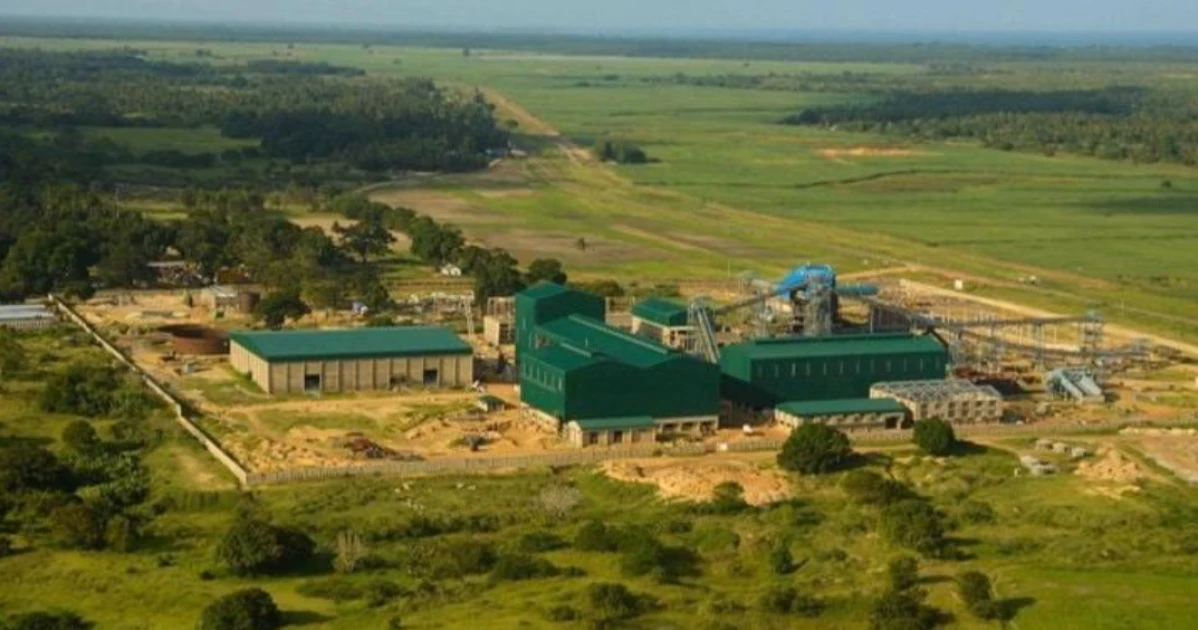
The land question at Kwale did not begin with KISCOL. The estate sits on 42,000 acres that previously hosted the Madhvani sugar operation.

Audio By Vocalize
Aliko Dangote, Africa’s most successful industrialist, has
spent the better part of the last year delivering a single, unfashionable
message across the continent. Speaking at various investment summits, he has
put it as plainly: “The only way for you to attract foreign investments or
investors is by having successful local investments. Domestic investors are the
ones who actually attract foreign investors. If you don’t make it attractive
for local investors to come and invest, no foreigner will come and invest.”
On the southern coast of Kenya, one of those investments is
waiting to be treated as such.
Every textbook on industrial investment lists the ingredients
that a serious project must combine: credible promoters, deep financiers,
world-class strategic partners, qualified people, modern technology, the right
inputs, and secured land. Kwale International Sugar Company Limited (KISCOL)
was structured to deliver every one of them.
The promoters are the Pabari Group of Kenya and Omnicane
Limited of Mauritius — two houses with decades of combined experience in
trading, agro-industry, energy, infrastructure and large-scale investment, and
the financial capacity to carry a project of this scale across cycles.
The financiers are not fringe lenders. The project drew
long-tenor commitments from a regional syndicate that includes KCB Bank,
Stanbic Bank, Co-operative Bank and the Trade and Development Bank (TDB) on the
Kenyan and regional side, alongside Mauritius Commercial Bank (MCB) and SBM
Bank of Mauritius offshore. That is the kind of syndicate that does not
assemble around speculative bets; it assembles around projects that have been
independently appraised, structured, and underwritten on the assumption that
the legal and operational ground beneath them will hold.
The strategic partnership with Omnicane brings world-class
operating discipline in sugar production, irrigation engineering and
agro-industrial management from one of the most respected names in the global
sugar industry. The technical team is drawn from Kenya, India and Ethiopia,
marrying local knowledge to international operating experience across
agriculture, factory management, irrigation and engineering.
The technology and infrastructure match the ambition: a modern
3,300 tonnes-of-cane-per-day factory, expandable to 5,000 TCD, coupled to an
18MW bagasse-fired co-generation plant that turns mill waste into clean grid
power, served by dams, boreholes and water pans feeding the most
water-efficient sub-surface drip irrigation system in commercial sugar anywhere
in the world.
The agronomy is equally deliberate. KISCOL introduced
fast-maturing cane varieties selected for Kwale’s coastal climate. Cane that
takes up to 18 months to mature in the western sugar belt reaches the mill in
roughly 12 months here — a third less working capital tied up in every standing
crop, a third more turns of the same hectare over a decade.
At full design capacity, the project would close almost
100,000 metric tonnes of Kenya’s annual sugar deficit — close to 10 per cent of
the gap the country currently fills with imports. The foreign exchange Kenya
spends every year importing that sugar is foreign exchange the same economy
could be earning, retaining and recirculating at home.
Every ingredient, in other words, is in place. Every
ingredient except one.
The land question at Kwale did not begin with KISCOL. The
estate sits on 42,000 acres that previously hosted the Madhvani sugar
operation. When the project was being re-conceived as KISCOL, the structure
agreed with the Government of Kenya was deliberate and, on its face, equitable.
Of the 42,000 acres, 15,000 acres were to be transferred to KISCOL for the
nucleus estate and core infrastructure.
The remaining 27,000 acres were to be allocated to local
occupants under a structured resettlement plan, with each household receiving a
5.5-acre outgrower package: three acres for cane, two acres for subsistence
farming, and half an acre for a homestead.
It was, on paper, an unusually well-designed compact. It gave
the investor what it needed — secured land for industrial-scale cane and
processing. It gave the surrounding community what it needed — title, food,
shelter and a guaranteed cash crop tied directly to the new factory at the
centre of the estate.
And it gave the country what it needed — a sugar project that
did not pit an investor against a community, but bound the two into the same
outgrower economy.
The resettlement never materialised. The 27,000 acres
earmarked for outgrower households were not transferred. The 5.5-acre packages
were not issued. The community that the plan was meant to settle on its own
land instead remained, understandably, where it had always been — including on
the 15,000 acres that had been allocated to KISCOL.
The investor honoured its side of the compact. The other half
of the compact was never delivered. This led to years of litigation and land
access between the Company and the community.
Everything that has followed flows from that single, unkept
commitment. The unresolved occupation of the nucleus estate has delayed
completion of key project infrastructure.
A sugar mill engineered to crush 3,300 tonnes a day cannot
operate at design throughput if its water, land and power arteries cannot be
completed. Every season at sub-optimal capacity is a season of fixed costs
absorbed without the offsetting revenue the project was financed to generate —
and a season of debt service borne by the syndicate of banks that backed the
country’s ambition in the first place.
The legal consequences have already crystallised. In
litigation arising directly from the non-implementation of the resettlement plan,
KISCOL has been awarded approximately Ksh.24 billion against the Government for
breach of contract — a figure that captures, in the cold language of damages,
the cost of a promise not kept. That number is not a windfall.
It is a measurement of value foregone: of cane not grown,
sugar not milled, power not exported, jobs not created, taxes not paid, loans
not fully serviced, and import substitution not achieved.
The most striking feature of the Kwale story is how avoidable
the present impasse always was. The dispute does not turn on a contested title
or a defective acquisition. It turns on the non-implementation of a
resettlement plan that the State itself designed and committed to. An early,
decisive government intervention to settle the 27,000-acre community plan on
the terms originally agreed would have unlocked the 15,000-acre nucleus estate
and, with it, the full operating capacity of the factory.
That intervention would have delivered outcomes that no policy
white paper can manufacture: thousands of titled smallholder farmers integrated
into a modern cane value chain; a fully operational mill closing a tenth of the
national sugar deficit; an 18MW renewable plant feeding the grid; a coastal
county hosting one of the largest private agro-industrial employers in its
history; a healthier loan book for four Kenyan and regional banks and two
Mauritian banks that took an early bet on the country; and a tax base built
around a single, visible, working investment. None of that required new money
from the Treasury. It required the implementation of an agreement the State had
already made.
President William Ruto has been consistent and energetic in
positioning Kenya as a destination for transformative investment. The diplomacy
has been serious, the roadshows have been frequent, and the policy posture —
from the bottom-up agenda to the renewed push on value addition — has been
pro-investor in its language.
The question every visiting investor quietly asks, however, is
the one Dangote has been answering out loud: does the country make its own
domestic investments work?
Resolving the Kwale impasse on the terms originally agreed
would be a national-scale answer to that question. It would unlock the full
capacity of a project that closes nearly 10 per cent of the country’s sugar
deficit.
It would convert a Ksh.24 billion adverse judgment into a
working industrial asset whose returns to the State — in tax, in employment, in
foreign exchange saved on imports, in renewable power supplied to the grid,
would over time dwarf the cost of doing the right thing.
Above all, it would be a signal. The most powerful signal
Kenya could send to the next investor weighing a long-dated commitment to this
country is not a tax holiday or a new bilateral treaty. It is the visible,
decisive resolution of an investment Kenya has already attracted, on the terms
the State itself agreed. Foreign capital, as Dangote keeps reminding the
continent, follows that signal. It does not lead it.
KISCOL was built on the assumption that if a project did
everything right on the inputs it could control — promoters, financiers,
partners, people, technology, agronomy — the country would meet it halfway on
the one input only the country can deliver: implementation certainty.
Sugar in Kwale was always meant to be more than sugar. It was
meant to be a demonstration that Kenya can host a complete, integrated, modern
agro-industrial project on its own coast, in partnership with its own coastal
communities, on terms that work for both.
That demonstration is still recoverable. What it requires is
not new policy and not new investors. It requires state intervention that was
agreed at the very beginning — and, with it, the unlocking of the limitless
potential that a single working investment can release for the country that
hosts it.
If domestic investment is the doorway through which foreign
investment walks, then Kwale is not a coastal land dispute. It is the doorway.
[Ian Njoroge is a Mechanical Engineer registered with the
Engineers Board of Kenya (EBK). ian.njoroge2012@gmail.com]
Join the Discussion
Share your perspective with the Citizen Digital community.
No comments yet
This discussion is waiting for your voice. Be the first to share your thoughts!