
OPINION: Climate action must look beyond farms to tea factories
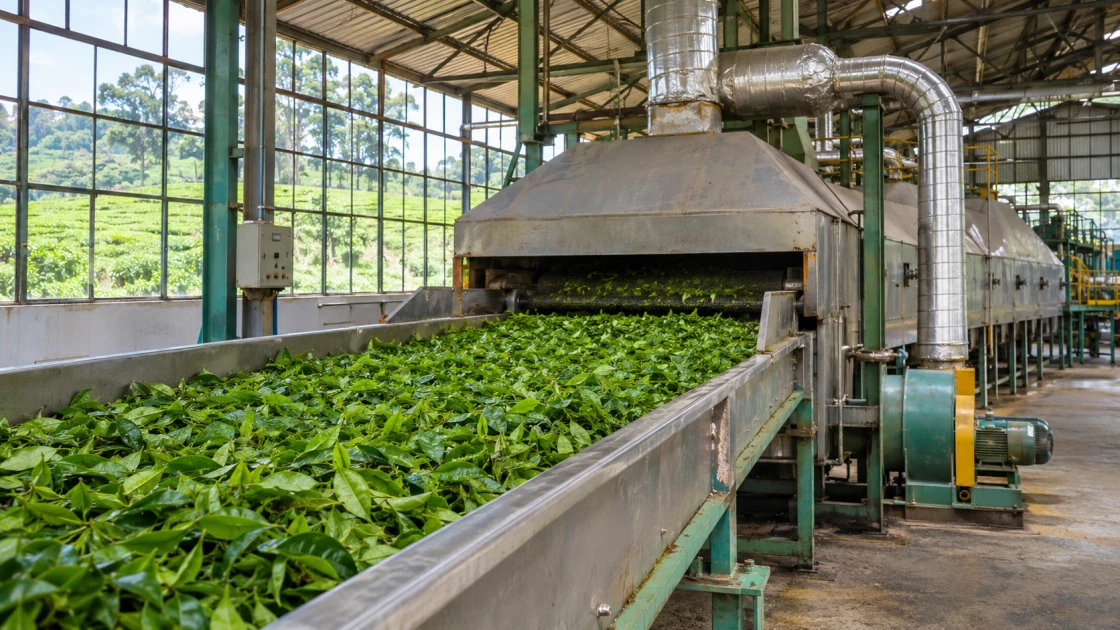
An AI-generated illustration of tea processing.

Audio By Vocalize
As COP31 turns attention to food security and zero waste, Kenya’s tea industry offers important lessons on including food processing in climate action initiatives.
When we talk about climate change and food systems, we mainly focus on production: drought, unpredictable rainfall, crop losses and the farmers struggling to adapt. These are critical challenges, but another part of the food system deserves more attention; what happens after the harvest.
In Kenya’s tea industry, fresh green leaf must be processed carefully and within strict timelines to produce our world-renowned tea.
This requires a lot of energy, especially during drying. At this stage, heat is used to reduce the moisture of processed teas to about 2.5–3.0%, to maintain its quality during storage and packaging. In Kenya, many tea factories rely on firewood to produce this heat. This makes firewood use an important concern because it puts pressure on Kenya’s forests and increases production costs.
A 2024 study by Kenya’s Energy and Petroleum Regulatory Authority (EPRA) reported that the tea sector used an average of 3.83 cubic metres of firewood for every tonne of tea produced. Across the two years covered by the study, the sector consumed approximately 1.54 million cubic metres of wood, most of it sourced from forests.
Research published in PLOS Climate in 2024 also examined energy use in Kenyan tea factories over five years. The researchers identified firewood as a major source of greenhouse gas emissions in their assessment and highlighted drying as one of the most energy-intensive stages of tea processing. When trees are cut down faster than they can regrow, forests shrink, affecting biodiversity and the water sources that communities depend on.
These findings matter because they show that greenhouse gas emissions do not begin and end on farms. They follow the food as it moves through processing, preserving, packaging and transporting. If we want to adopt climate-resilient food systems, we must consider the entire value chain.
Working in the tea industry, I have seen first-hand the kind of environmental devastation that tea processing could bring about, if left unchecked.
This is one of the reasons I am currently working on a project exploring briquettes as an alternative source of fuel. I see this as an opportunity to reduce dependence on conventional firewood while making better use of available resources.
With the right production methods and suitable applications, briquettes- which are made from agricultural waste collected from nearby farms- could offer an alternative source of heat for tea factories, while enhancing waste management and a circular economy. I believe exploring such alternatives is an important step towards making tea processing more environmentally responsible.
However, one tea factory’s actions, no matter how well resourced, cannot bring about the systemic change that we need in the industry.
Other stakeholders including climate negotiators, African governments, development partners and financial institutions must pool efforts and recognise food processing as an important part of climate action.
COP31 provides a great opportunity to align national climate plans and food-systems strategies to address emissions from manufacturing alongside agricultural adaptation and production.
This means financing energy audits and cleaner processing technologies, supporting research into locally appropriate fuels, strengthening emissions monitoring and ensuring that workers and farming communities are part of the transition.
Africa needs food industries that create value, protect livelihoods and supply safe, quality products. We also need industries that use energy responsibly and reduce avoidable emissions.
The future of sustainable food systems will not be secured on farms alone. It will also be shaped by the decisions we make inside our factories, around our boilers and in the technologies we choose to power production.
Every cup of tea tells a story—not only of the farmers who grow it, but also the energy, resources and people behind its production. It is time we make this story more sustainable.
Joyline Cheptoo is a production manager at Emrok Tea Factory and an African Food Fellow.
Join the Discussion
Share your perspective with the Citizen Digital community.
No comments yet
This discussion is waiting for your voice. Be the first to share your thoughts!