
Oman says grounded tanker oil spill covers 400 square km
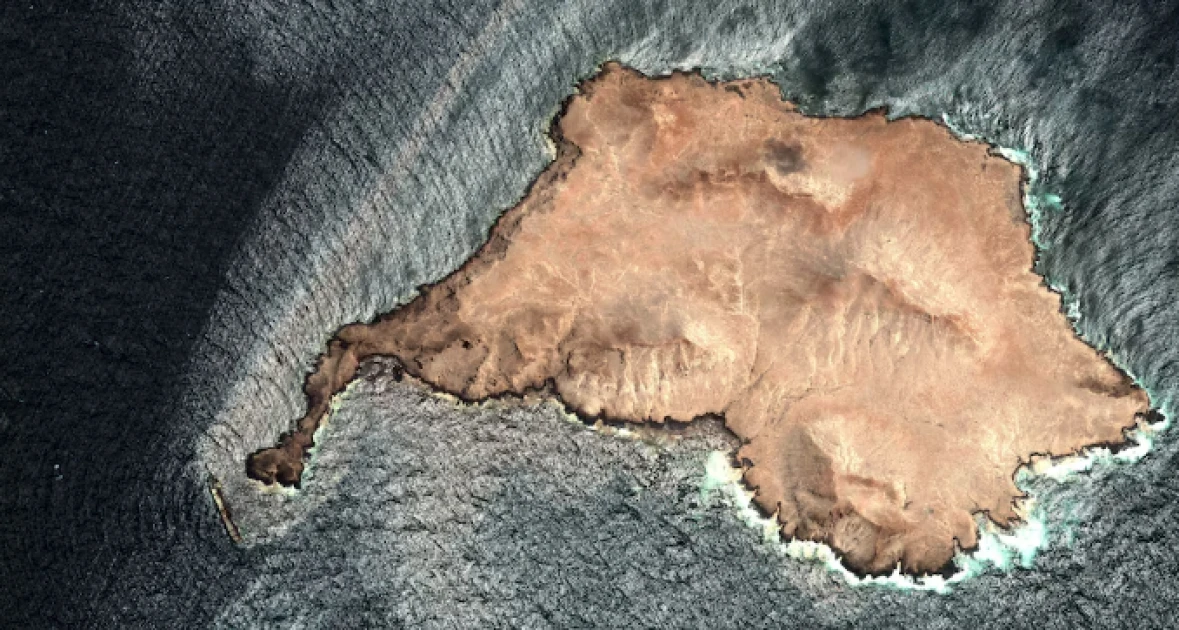
A satellite image shows the damaged vessel Caroline Bezengi and an oil slick off the Hallaniyat Islands, off the coast of Dhofar Governorate, Oman, August 5, 2026. Pléiades © CNES 2026, Distribution Airbus DS/Handout via REUTERS

Audio By Vocalize
Leaking crude oil from a tanker grounded off a nature reserve in Oman has created a slick covering almost 400 square kilometres, the country's government said on Monday.
The Caroline Bezengi is loaded with close to one million barrels of Russian oil bound for Asia and first reported difficulties on June 8 off Yemen, with two maritime security sources saying initial assessments indicated a blast had occurred onboard.
No party has taken responsibility for attacking the vessel.
Oman, in its first public disclosure on the environmental impact, said on Monday it was seeking to tackle the oil leak near the Hallaniyat Islands.
Oman's Sultan Haitham bin Tarik issued a royal decree last year creating a nature reserve around the islands, an area that is home to wildlife including Arabian Sea humpback whales and Socotra cormorants.
The oil slick covers some 390 square km (150 square miles), Oman's Environment Authority said in a statement carried by the state news agency, adding that there was no concern for facilities in the area including water desalination plants and tourist facilities.
Environmental group Greenpeace last week estimated the slick at around 600 square kilometres citing analysis of satellite imagery.
It extends northeast of the islands and is within an estimated seven kilometres of the coast, the authority said.
A spill of this scale requires dispersant be sprayed across the affected area by aircraft and the use of booms and other equipment to collect the oil before it reaches the shore or sinks to the sea floor, said Tony Gutierrez, professor of environmental microbiology and biotechnology at Edinburgh's Heriot-Watt University.
"If this oil is kept offshore, the impact will be much less than if the oil reaches shallower waters and the actual coastline," he said, citing the impact on diverse marine life such as coral, birds and fish.
"You could find oil still there years later. And that's what happened with Exxon Valdez. Ten years down the line, there still were remnants of oil," he said, referring to a 1989 spill in Alaska.
An analysis by Reuters of satellite imagery and shipping specialists showed the spill from the stranded 274-metre (900-foot) tanker was still spreading at the end of last month, raising concern about possible environmental damage.
The Caroline Bezengi loaded at Russia's Black Sea port of Novorossiysk in April and passed through the Suez Canal at the end of May, ship-tracking data shows.
Built in 2001, it is part of the so-called shadow fleet of older oil tankers used by Russia which lack Western insurance cover and sail under the flags of various nations to obscure their true ownership.
It was listed on public shipping databases as flying the Cameroon flag but was among 39 vessels de-listed from Cameroon’s ship registry in June.
The ship is subject to sanctions imposed by the European Union, Ukraine, the UK, Canada and Switzerland.
Its registered owner is Rentoor Shipmanagement Ltd and its manager is Villar Shipmanagement Ltd, according to LSEG data. Reuters could not immediately reach those firms, which appear to be based in China.
Join the Discussion
Share your perspective with the Citizen Digital community.
No comments yet
This discussion is waiting for your voice. Be the first to share your thoughts!