
Marburg virus case detected in Uganda
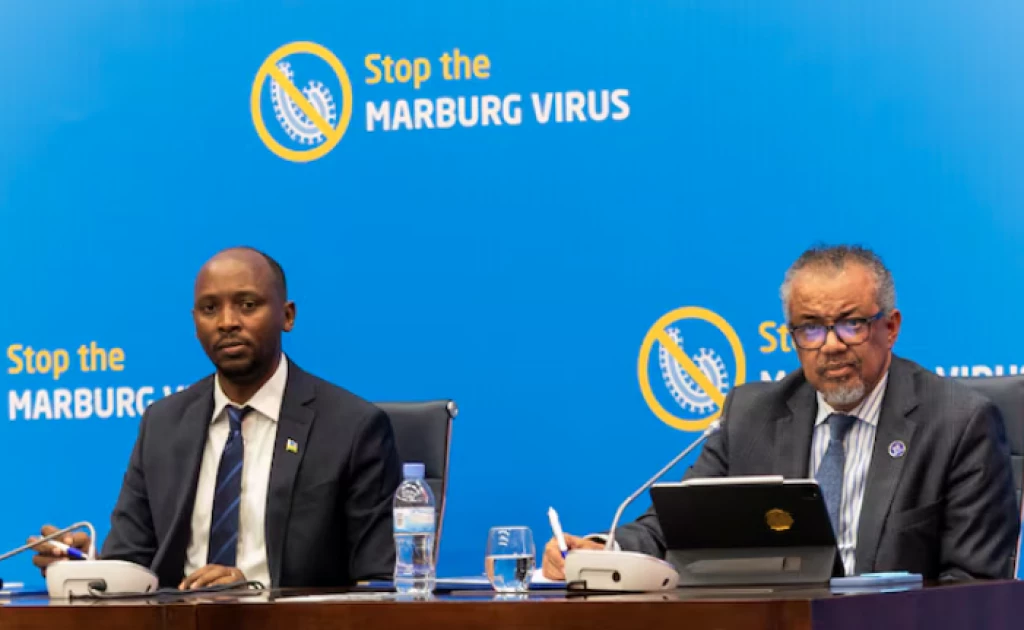
World Health Organization Director-General Tedros Adhanom Ghebreyesus flanked by Rwanda’s Minister of Health, Sabin Nsanzimana address a press conference on the Marburg virus outbreak at the Kigali Convention Center in Kigali, Rwanda, October 20, 2024. REUTERS/Jean Bizimana/File Photo

Audio By Vocalize
The case is a child aged one year and five months, the WHO's emergencies director Chikwe Ihekweazu told a press conference in Geneva.
So far, no identified contacts of the case have shown symptoms, said WHO chief Tedros Adhanom Ghebreyesus.
Marburg, a haemorrhagic fever, is a severe, often fatal illness in humans.
The virus is transmitted to people from fruit bats and spreads among humans through human-to-human transmission.
"In Uganda, no new cases of Ebola have been reported since June 21," Tedros told reporters.
"However, on Tuesday this week, Uganda notified WHO of a confirmed case of Marburg virus disease in the country's western Kyegegwa District.
"The case was identified through enhanced disease surveillance for Ebola.
"Health authorities have informed WHO that they are monitoring all identified contacts, but so far, none have shown symptoms.
"WHO is supporting investigations to determine the source of exposure, assess the public health risk, and to support community engagement."
Uganda has been hit by the Ebola outbreak in the neighbouring Democratic Republic of Congo.
According to the latest figures from the WHO, there have been 20 confirmed cases in Uganda, including two confirmed deaths. Fifteen patients have recovered from the virus.
The average case fatality rate for Marburg is around 50 percent, though rates have varied from 24 percent to 88 percent in past outbreaks, the UN health agency says.
Early supportive care with rehydration, and symptomatic treatment improves survival.
There are currently no approved vaccines or antiviral treatments for Marburg, but a range of vaccines and drug therapies are under development.
Join the Discussion
Share your perspective with the Citizen Digital community.
No comments yet
This discussion is waiting for your voice. Be the first to share your thoughts!