
Lula, Brazil's political titan, defies the passage of time
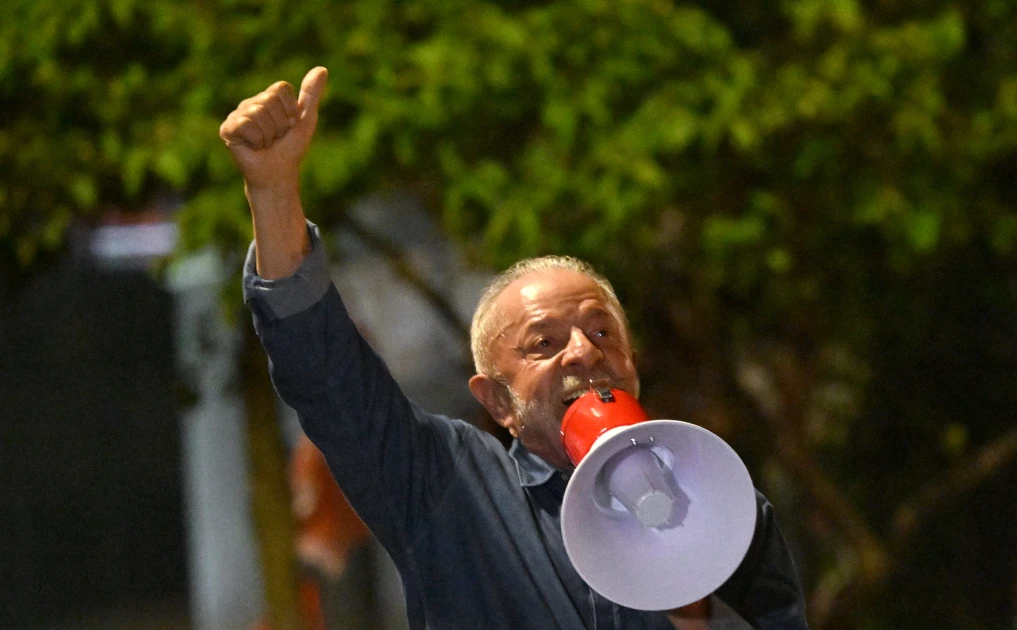
Brazil's President and presidential candidate Luiz Inacio Lula da Silva delivers a speech to supporters after winning the presidential runoff election in Sao Paulo, Brazil, on October 25, 2026. Photo by JUAN BARRETO / AFP

Audio By Vocalize
The titan of the political left made history by becoming the first person to win a presidential runoff after losing the first round in Brazil.
His shock win follows a long and storied political career, beginning in the bowels of a metalworkers' trade union and even including stints behind bars.
He charted a rocky road to his fourth election victory.
Questions about his ability to do the job at almost 81 encouraged Lula to do squats and jog along the campaign trail to prove that he was fitter than ever.
Initially startled by his second-place finish to Flavio Bolsonaro earlier this month, Lula dusted himself off and launched into an energetic runoff campaign.
He upped his social media game at the eleventh hour, posting selfie videos and buying a cellphone for the first time.
The shift highlighted a certain disconnect with his country's extremely online, deeply polarized population, 14 years after he was first elected.
His victory preserves Latin America's largest country as a leftist stronghold amid a regional lurch to the right championed by US President Donald Trump.
- Poverty, presidency, prison -
Lula, a defining figure in Brazilian politics over four decades, rose from poverty to the presidency, fell into disgrace and was jailed, before once again rising from the political ashes when he returned to power almost four years ago.
His first-round campaign focused heavily on his life story and legacy, which critics said was a misreading of what weary Brazilians wanted to hear.
The president grew up in deep poverty, the seventh of eight children in a family of illiterate farmers in the arid northeastern state of Pernambuco.
He worked as a shoeshine boy and peanut vendor before becoming a metalworker and trade unionist. In the 1960s, he lost a finger in a workplace accident.
After losing three presidential bids, Lula finally entered the presidential palace in Brasilia in 2003 and was re-elected in 2006.
He left office in 2010 as a blue-collar hero who presided over a commodity-based economic boom that helped lift 30 million people out of poverty.
Massive corruption scandals haunted Lula and his party, fueling a wave of disgust that propelled Jair Bolsonaro into the presidency in 2018.
Lula was jailed before the election until the charges were annulled on procedural grounds and the lead judge on the case was found to be biased.
However, Lula was not exonerated and the scandal contributed to enduring polarization in Brazil.
Bolsonaro's presidency brought more division, and by the 2022 election, Lula pulled off a dramatic comeback by a razor-thin margin.
Love for the poor
In his third term, Lula is credited with restoring social programs eroded by his predecessor, curbing the destruction of the Amazon rainforest, and putting Brazil's democracy back on a more secure footing.
But the father of five still triggers fierce rejection among voters frustrated by crime and corruption.
He has also faced criticism over Brazil's mounting public debt, which, with high interest rates, costs the government around $18 billion a month in interest alone.
Lula came under fire for an election-season spending push, including an increase to the Bolsa Familia social welfare benefits which, launched 20 years ago, remains his most significant legacy.
"He has that love for the poor. That's all it is," fisherman Antonio Carlos Lima Ferreira told AFP at his home in the interior of Maranhao state, recalling times when he had to send his son to bed hungry.
"Today, at my table, I can choose what I want to eat."
Lula said recently he did not want to be remembered as "just the Bolsa Familia president."
- No successor -
Lula, who has not cultivated a potential successor, campaigned on a pledge to stop the far right from returning to "destroy" the country.
His improbable victory on Sunday awed his supporters, many of whom feared an erosion of rights under a theoretical Flavio Bolsonaro presidency.
Lula "will always remain a symbol of the defense of democracy," civil servant Gustavo Monteiro, 58, told AFP at a leftist rally.
"He represents the fight against political repression," Monteiro said.
The leftist veteran has already spent more time in office than any other democratically elected leader in Latin America's biggest country.
"There is no one in this country with more experience as president than me," Lula told foreign media, including AFP, in an interview.
Join the Discussion
Share your perspective with the Citizen Digital community.
No comments yet
This discussion is waiting for your voice. Be the first to share your thoughts!