
KVA warns Livestock Bill could weaken Kenya’s animal disease control
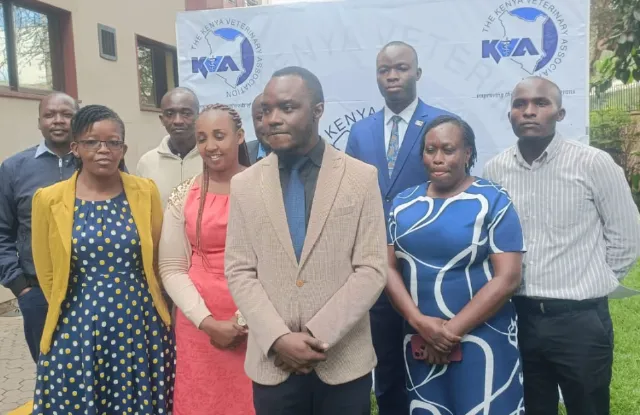
The Kenya Veterinary Association (KVA) officials address the press on November 11, 2025. PHOTO | VINCENT ANGUCHE | CITIZEN DIGITAL

Audio By Vocalize
The association says the Bill risks creating overlapping mandates between new institutions and existing statutory bodies, particularly over animal disease surveillance, quarantine, movement restrictions and veterinary certification.
KVA President Dr Kelvin Osore says the Director of Veterinary Services (DVS) must retain overall authority on animal health matters to avoid confusion during disease outbreaks and protect Kenya's livestock exports.
“You cannot strengthen Kenya’s livestock sector by creating competing centres of authority over animal health, disease control and veterinary certification,” Osore said.
“The DVS must remain the competent veterinary authority. We should strengthen institutions that already carry these responsibilities rather than legislate uncertainty and ambiguity into a system on which disease control, public health and international trade depend.”
The association has also raised constitutional concerns, arguing that the proposed institutional arrangements must comply with Kenya's international obligations under the World Trade Organisation's Agreement on Sanitary and Phytosanitary Measures.
Osore warned that unclear regulatory responsibilities could undermine Kenya's credibility in issuing veterinary certificates required by importing countries.
“Article 2 of the Constitution is not ornamental, and Kenya’s ratified international obligations form part of our law. Parliament must therefore ensure that the proposed legislation does not create competing statutory mandates or undermine the country’s established animal-health and sanitary standards,” Dr. Osore said.
The Bill proposes the establishment of eight institutions, including the Livestock Inputs and Products Regulatory Authority, Kenya Livestock Research Organisation, Livestock and Livestock Products Marketing Board and Kenya Veterinary Vaccines Institute.
However, the Public Service Commission has questioned the expansion of State institutions, citing the government's ongoing efforts to rationalise State corporations and contain the public wage bill.
Department of Livestock Development Secretary for Administration Dr Joshua Chepchieng told stakeholders that a revised version of the Bill had addressed at least 90% of the concerns raised during consultations.
KVA has disputed this position, arguing that some provisions still create overlapping responsibilities despite proposed saving clauses.
The association wants the Kenya Veterinary Board to retain its mandate over professional registration, licensing and regulation, while official animal-health certification remains under recognised veterinary authorities.
It has warned that it may pursue legal and constitutional options if Parliament passes the Bill without addressing its concerns.
“Our preference is to resolve these issues constructively with Parliament, but KVA also has a duty to protect the integrity of Kenya’s animal-health system and veterinary profession,” Osore said.
The association is urging the parliamentary committee to amend the proposed law to protect animal health, public safety and Kenya's livestock trade.
Join the Discussion
Share your perspective with the Citizen Digital community.
No comments yet
This discussion is waiting for your voice. Be the first to share your thoughts!