
Beyond the badge: The silent mental health crisis facing police officers
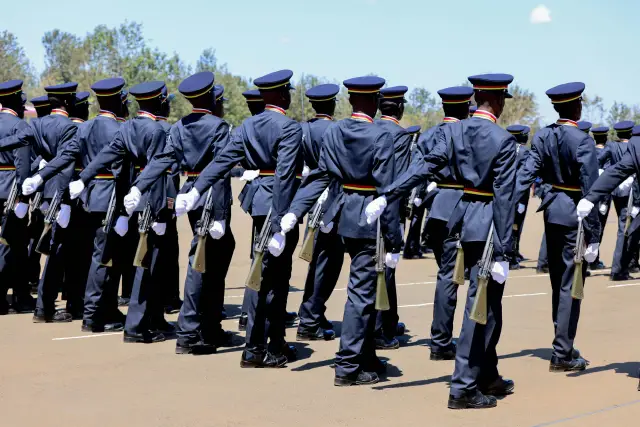
Inspector General of Police Douglas Kanja presides over the recruits' full-dress rehearsal parade at the National Police College, Main Campus, in Kiganjo, on August 25, 2026. Photo: NPS

Audio By Vocalize
But behind the badge and the blue uniform are human beings carrying heavy, unspoken trauma from gruesome crime scenes, fatal road accidents and relentless daily pressures.
For many citizens, the police uniform has become a symbol of fear rather than protection.
Accountability for rogue officers remains non-negotiable. Yet, away from the cameras, a quieter crisis is unfolding inside police stations nationwide. When an officer witnesses death and violence day after day, how does it affect them?
Thirty-five-year-old Japheth Nyakenyanya has worn the badge for the past ten years. Before joining the National Police Service, Japheth was a teacher until a deeper calling pulled him towards law enforcement.
“I joined the service because of a passion for helping people and wanting our country to be safe. I was a teacher, but I felt my dream was to be a police officer. I had high expectations that people would appreciate my service, but on the ground, things were different,” Nyakenyanya recalled.
Today, Japheth serves both as a police officer and a trained police psychologist and certified mediator. From inside the station, he sees a side of policing that rarely makes the news.
“There is a story I want people to understand. The public only concentrates on the negativity. I have seen people who don't have fare come to a police station, and they are given fare by officers. We are human beings. A lot of things can contribute to someone behaving the way they behave. People can provoke you, and already, maybe that police officer had problems at home and is easily provoked,” he explained.
Long deployments away from spouses and children, financial strain, and repeated exposure to horrific crime and accident scenes create a silent pressure cooker. Without an outlet, that trauma can spill into their homes and onto the streets.
“We leave our families and work away from them; this can be a reason why they are stressed. Conflict can arise because of spending a lot of time away from your family, and this can lead to high suicide rates. Gender-based violence among police officers can be caused by many things; one of the triggers is trauma from bad experiences," he added.
“Police officers witness accident scenes and family separations; it affects the behaviour of an officer. We have seen cases of cheating because people stay long hours and days away from their families, and there are a lot who have been affected by drug abuse."
It is not only police officers who carry the unseen scars of duty. Many have complained of toxic work environments. Simon Losepe of the Kenya Prisons Service says he was unprocedurally stripped of his duties coordinating wellness activities for inmates and prison staff.
“I have a lot of frustrations as an officer. I got involved in an accident this year when going to the Madaraka Day celebrations, and I hurt my right hand. I can't do much or carry my rifle. My boss is frustrating me. I have stress and depression. I was even removed from the wellness station verbally without any reason,” Losepe said.
The International Justice Mission, widely known for advocating police accountability, says an officer's mental wellness cannot be separated from how they treat ordinary citizens.
“The wellness of police officers cannot be taken away from police professionalism. When an officer goes to the field with trauma, without proper structures and without the support to handle difficult situations, when confronted with an issue and they have unresolved trauma, they project it onto the people they serve. You see irritability, anger and being unable to regulate their own emotions,” said Esther Njuguna, Manager of Social Services at the International Justice Mission.
Experts say that in a career that demands toughness, admitting that a police officer is struggling is often seen as a sign of weakness. By the time a crisis becomes visible, early warning signs may have been missed for months.
“An officer is, first of all, a human being. When they are overwhelmed, they start to withdraw. They become irritable, they avoid coming to work, and relationships start getting affected. When support is delayed, you see coping mechanisms like drinking, truancy at work, and they start numbing their feelings," Njuguna noted.
“Mostly because officers are meant to be strong, we see negative behavioural outcomes when they have been trying to suppress these feelings."
To break this silence, the International Justice Mission has partnered with the National Police Service to support the mental wellness of officers.
“We run a police accountability programme, but that's not enough. What we have done in our relations with the police service is build dedicated counselling rooms and train officers, and we have seen great results," Njuguna noted.
“The counselling departments are building sensitisation because the counsellors are police officers themselves, both uniformed and non-uniformed. One of the biggest deterrents to seeking help was fear of victimisation. The trained police officers are bound by the ethics of our profession. Confidentiality is key."
Inside his station, Japheth supports fellow officers in crisis and assesses the mental state of suspects brought into custody, ensuring vulnerability is met with humanity before a charge sheet is ever drawn.
Losepe, meanwhile, says he remains committed to his work despite the challenges, but is appealing for support.
“Hakuna haja ni bebane na stress inisumbue akili nifikirie kujiua. I cannot kill myself. I do my job diligently. Kazi yangu ni ku counsel wafungwa. I need help. Nataka mnisaidie,” Losepe said.
Nyakenyanya says seeking counselling can make a difference, not only in an officer's professional life but also in their relationships and personal development.
“If they don't go for counselling, it has to affect them at home. But some have done so well, even in their financial management and raising their families. With my salary, I have been able to advance my studies, build a home and meet my daily needs. I feel so proud being a police officer,” he said.
Still, limited resources mean junior officers in remote or high-risk areas struggle to access care. Experts insist that true police welfare must go beyond salaries, housing and uniforms.
“The service has been decentralised, but not at an optimum level. Resources are the biggest hurdle. Being proactive in terms of police wellness will help. When we think about welfare, we are not just thinking of salaries and housing; how do we ensure they bring their best selves every morning when they come to work? You can imagine an officer being told their wife in the village is having an affair, and they go to their OCS for an off-duty pass, which is denied,” Njuguna said.
“Even as we take rogue officers to court, we also support them in this way. When we enhance their wellness, they can be better to civilians.”
As Kenya looks towards future elections and long-term reform, a new chapter is within reach. It requires treating accountability and empathy not as opposites, but as complementary pillars: holding the service to the highest standards while supporting the human beings behind the badge.
Join the Discussion
Share your perspective with the Citizen Digital community.
No comments yet
This discussion is waiting for your voice. Be the first to share your thoughts!