
Kirinyaga farmers embrace land snail farming for profit
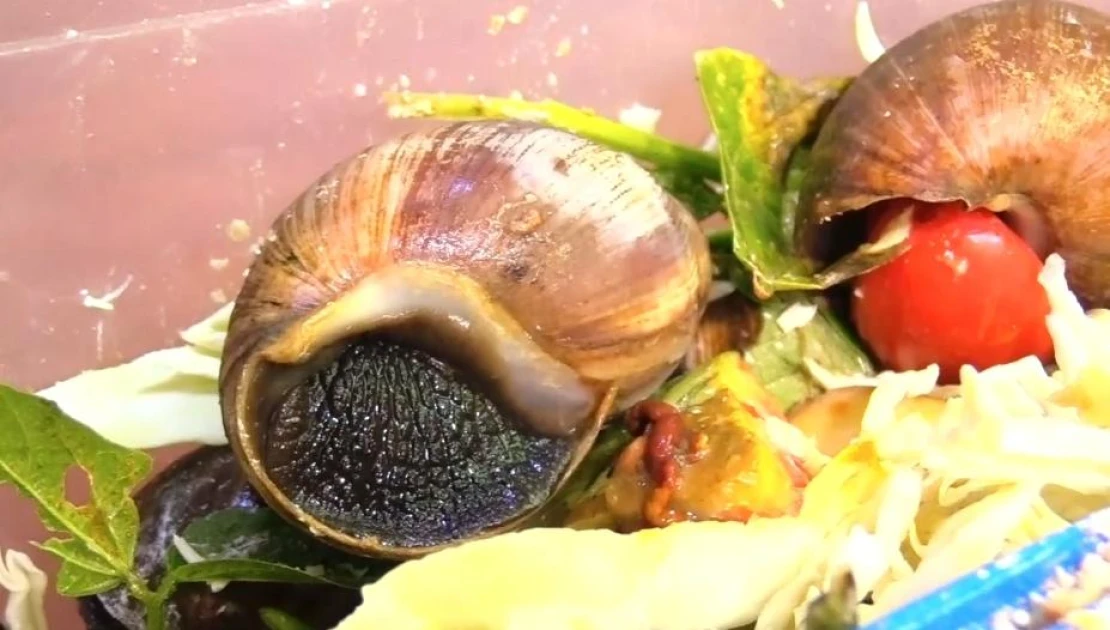
Giant African Land Snail.

Audio By Vocalize
Experts have assured residents that the land snails being promoted for commercial farming are entirely different from the aquatic golden snails that have wreaked havoc in Mwea's rice fields.
Paul Kinoti, a lecturer at Jomo Kenyatta University of Agriculture and Technology (JKUAT), said the snails being introduced are terrestrial species that pose no threat to rice farming.
"There has been a lot of discussion about the problems being experienced by Mwea rice farmers. The snails we are promoting are totally different from those found in the Mwea irrigation scheme. The snails found in Mwea are aquatic and are also associated with other problems such as bilharzia," Kinoti said.
He explained that the invasive snails in Mwea thrive in water bodies and attack rice crops, while Giant African Land Snails are raised on land under controlled conditions.
Kinoti is encouraging Kirinyaga residents to venture into commercial land snail farming, describing it as a low-cost enterprise that requires little land and labour while offering access to both local and export markets.
Among those participating in the programme are Mathew Njeru, Jamleck Mugo and James Karanja, who say snail farming presents a viable opportunity for youth, women and small-scale farmers with limited land.
Njeru, a farmer from Mutungara in Mwea, said the training had equipped him with the knowledge needed to venture into snail farming.
"They are not like the snails found in the Mwea scheme. These are kept within the compound and are inexpensive to rear," he said.
Mugo said their group comprises 13 members, most of whom are tea and coffee farmers seeking to diversify their sources of income.
"Sometimes we face challenges in tea and coffee farming. Snail farming offers us another source of income. We do not need to use chemicals, and it is affordable to manage within our compounds," he said.
Karanja, 70, said he was optimistic about the venture after learning about its potential benefits.
"These snails have been well researched and have many benefits. Even with my small piece of land, I believe I can earn a good income from this farming," he said.
Kinoti said snail farming can generate returns from a small area of land and requires relatively simple management skills.
JKUAT's cosmetology department purchases snail slime at KSh1,200 per litre for research and cosmetic applications.
Join the Discussion
Share your perspective with the Citizen Digital community.
No comments yet
This discussion is waiting for your voice. Be the first to share your thoughts!