
Kirinyaga County maps snakebite hotspots to guide antivenom development

Audio By Vocalize
The Kirinyaga County Government has partnered with the National Government to map snakebite hotspots as part of a research initiative aimed at supporting the development of a locally produced antivenom tailored to snake species found in the county.
The exercise is being conducted in collaboration with the Kenya Institute of Primate Research (KIPRE) through the Kenya Snakebite Research and Intervention Centre (K-SRIC). Researchers are collecting data on the prevalence and geographical distribution of snakebite cases to improve prevention strategies, treatment, surveillance and emergency response.
The findings are expected to inform antivenom distribution, strengthen referral systems, identify high-risk areas and contribute to the development of a more affordable and effective antivenom suited to Kenya's venomous snake species.
Kirinyaga County Director of Public Health and Sanitation Peter Irungu said the exercise is the first comprehensive study of snakebite burden in the county and will provide data to support planning and resource allocation.
"This is the first study of its kind in Kirinyaga. The findings will help us determine the actual burden of snakebites, map out the affected areas and enable the county to plan better for prevention, treatment and procurement of antivenom," said Irungu.
He noted that despite snakebite remaining a significant public health concern in parts of the county, reliable data on the extent of the problem has been limited.
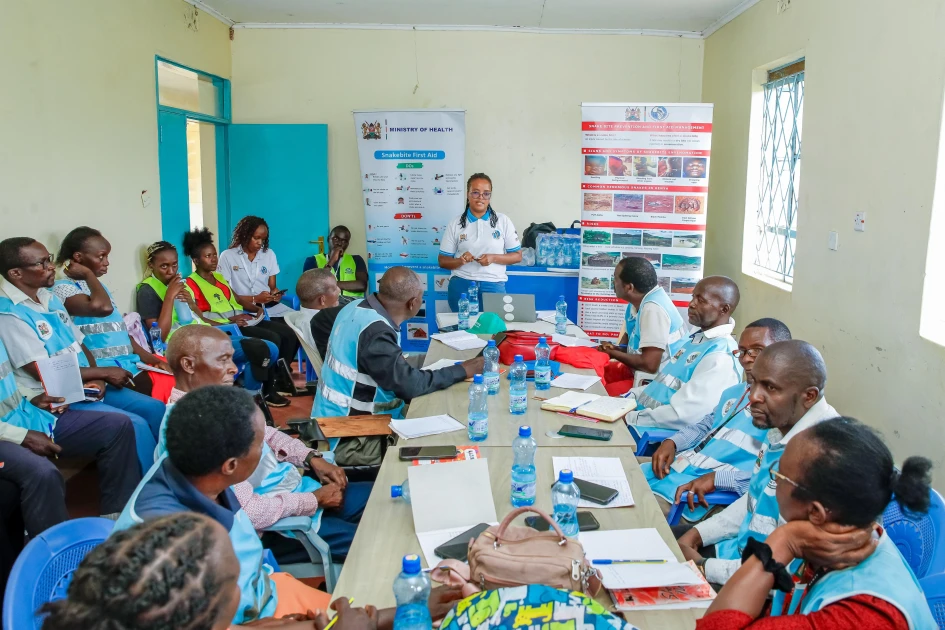
As part of the programme, Community Health Promoters (CHPs) are undergoing specialised training on snakebite prevention, first aid, recognition of envenoming, timely referral and community awareness to improve frontline response.
KIPRE Public Health Research Scientist Cecilia Ngari said researchers have mapped about 600 households over the past two and a half weeks and expect to complete coverage across all sub-counties before the exercise concludes.
"Working closely with the county, we have been able to map around 600 households over the last two and a half weeks, and we expect to cover all the sub-counties before completing the exercise," she said.
Ngari said the exercise is also documenting the challenges CHPs face when responding to snakebite cases at the community level.
"Our institution has been mandated to develop a locally available antivenom that works better against the snake species found in Kenya. The mapping exercise will provide the evidence needed to understand where snakebites occur most, focus resources appropriately and support the development of an antivenom that will be affordable and easily accessible," she added.
During the training, CHPs were sensitised on recognising signs of snakebite envenoming, including swelling, bleeding, blistering, wounds and drooping eyelids, as well as emergency response measures such as immediate eye irrigation where venom has been spat into the eyes and prompt referral to health facilities.
Participants were also informed that the red spitting cobra and black mamba are among the venomous snake species commonly found in Kirinyaga.
Community Health Promoter Charity Mugo from Kangai Location said the training had equipped participants with practical skills to educate residents on prevention measures, including keeping compounds clear, using torches when walking at night and seeking immediate medical attention after a snakebite.
Residents from snake-prone areas welcomed the initiative, saying it could improve both prevention and access to treatment.
Murinduko resident Ephantus Kariuki said brown spitting cobras are common in the area, particularly around homes where they search for food and water during dry weather.
Another resident, Pius Muriithi, recounted surviving a snakebite after being bitten outside his home at night.
"I did not realize I had been bitten until I started bleeding and later developed severe swelling on my face. I was rushed by ambulance to Kimbimbi Hospital where I received treatment for more than a week," he said.
Join the Discussion
Share your perspective with the Citizen Digital community.
No comments yet
This discussion is waiting for your voice. Be the first to share your thoughts!