
Kenyan religious scholars urge UN to review detention of Shincheonji founder
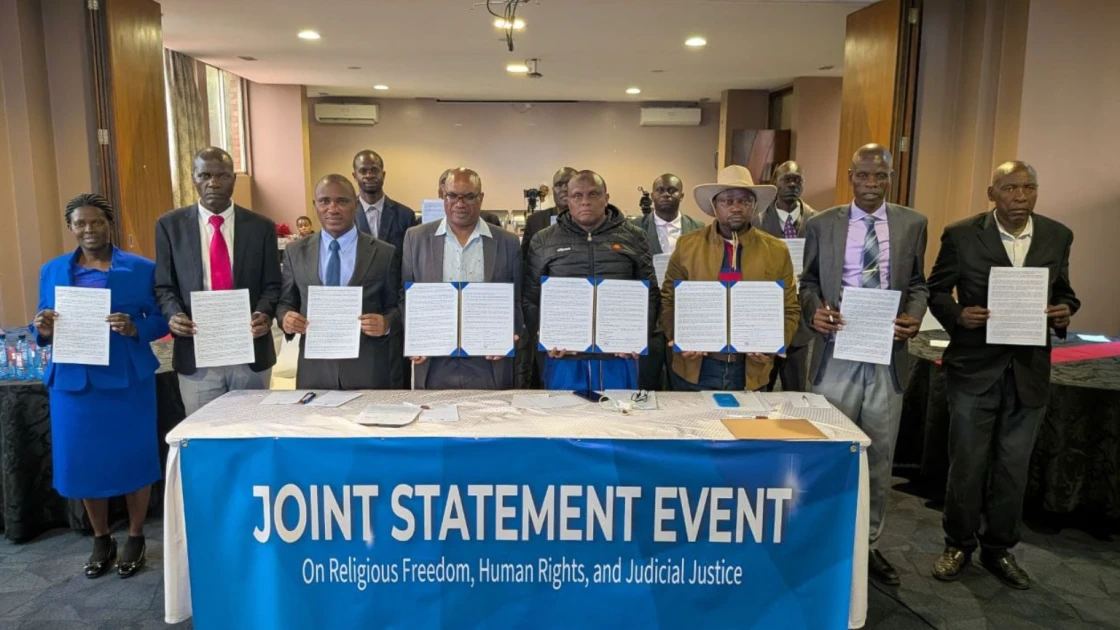
Speaking in Nairobi, the faith leaders said they had endorsed a petition to the UN Working Group on Arbitrary Detention (WGAD) and the UN Office of the High Commissioner for Human Rights (OHCHR), urging the bodies to seek a humanitarian review of Lee's detention.

Audio By Vocalize
A group of Kenyan religious leaders and scholars has appealed to the United Nations to review the detention of 95-year-old Shincheonji Church of Jesus Chairman Man-Hee Lee, citing humanitarian concerns and the need to uphold religious freedom and due process.
Speaking in
Nairobi, the faith leaders said they had endorsed a petition to the UN Working
Group on Arbitrary Detention (WGAD) and the UN Office of the High Commissioner
for Human Rights (OHCHR), urging the bodies to seek a humanitarian review of
Lee's detention.
The scholars said
their appeal does not challenge the judicial sovereignty of the Republic of
Korea, but calls for fairness, proportionality, non-discrimination and respect
for fundamental human rights throughout the legal process.
According to the
group, Lee, who founded the Shincheonji Church of Jesus and the peace
organisation HWPL, was taken into custody on June 24, 2026, and indicted on
what they described as non-violent political charges. They argued that his
advanced age and reported health concerns warrant humanitarian consideration.
Rev. Dr. Joseph
Maryale, who said he has worked with UNDP, UN-Habitat and UNODC, said the
campaign seeks to ensure that international human rights standards and the rule
of law are upheld.
"The campaign
is a cry for human rights. When the law is not followed, then there is a
violation of human rights," he said.
Rev. Dr. Jechoniah
Wambua Musembi said every individual has the right to freedom of conscience,
belief and association under international human rights standards.
Imam Abdul Haneen
of Dawaah Center Adams Mosque said the appeal was aimed at ensuring judicial
proceedings are conducted fairly and without prejudice.
"We are not
questioning the Republic of Korea's judicial sovereignty. We are calling for
the highest standards of fairness, proportionality and humanity, especially
when a defendant is 95 years old," he said.
The scholars also
expressed concern that public criticism of the Shincheonji Church in South
Korea should not influence judicial proceedings, saying all religious
communities deserve equal protection under the law.
They concluded by
expressing hope that South Korea's legal process would reflect its commitment
to the rule of law, religious freedom and the protection of human rights.
Join the Discussion
Share your perspective with the Citizen Digital community.
No comments yet
This discussion is waiting for your voice. Be the first to share your thoughts!