
Kenya on high alert as Ebola outbreak spreads in DR Congo
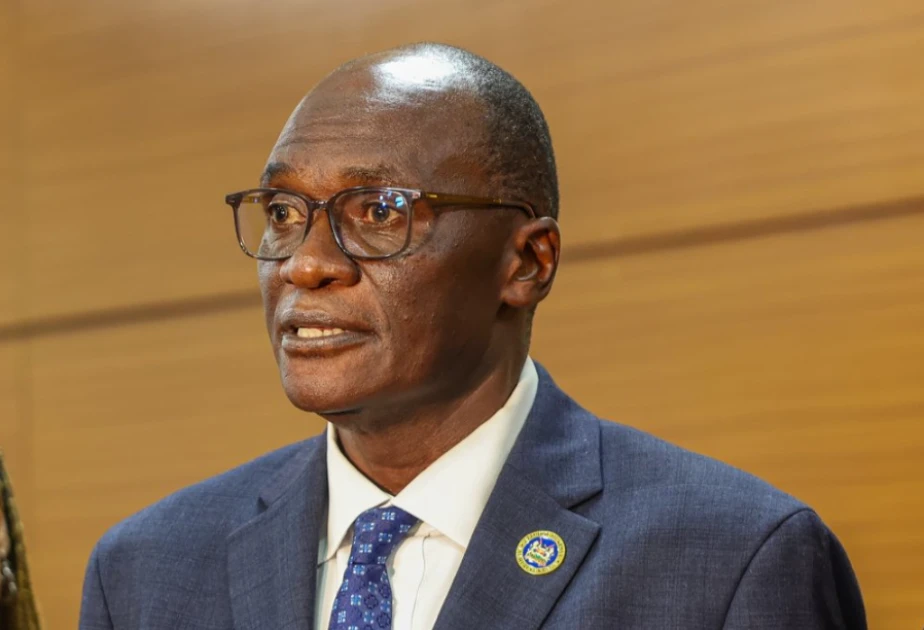
Health DG Dr. Patrick Amoth addresses the press on February 17, 2026. PHOTO | COURTESY | MoH

Audio By Vocalize
The government has heightened surveillance and emergency preparedness measures following a deadly Ebola outbreak in the Democratic Republic of Congo (DRC) that has already claimed at least 65 lives and infected more than 240 people.
The Ministry of Health says no Ebola case has been detected
in the country so far, but authorities are closely monitoring the evolving
situation amid fears of possible cross-border spread within the East African
region.
Director-General for Health Dr. Patrick Amoth said the government has activated enhanced preparedness and response measures in collaboration with regional and international public health partners.
"The Ministry of Health has activated enhanced preparedness and response measures, including the formation of a national Ebola preparedness team and the activation of the National Public Health Emergency Operations Centre for real-time monitoring and coordination," said Dr Amoth in a statement.
Other measures put in place include enhanced surveillance
for viral haemorrhagic fevers, rapid case detection, strengthened screening at
airports, border points and other ports of entry, as well as improved
laboratory preparedness and diagnostic capacity.
The outbreak has been reported mainly in the gold-mining
towns of Mongwalu and Rwampara in Ituri Province in eastern DRC.
According to the Africa Centres for Disease Control and
Prevention (Africa CDC), at least 246 suspected cases have been recorded, with
more cases pending confirmation in Bunia, the provincial capital near the
Uganda border.
The agency says four deaths have so far been confirmed among
laboratory-confirmed cases, although international media reports indicate the
overall death toll could be higher than 80.
Concern over regional spread intensified after Uganda
confirmed the death of a 59-year-old Congolese man linked to the outbreak.
In a statement issued on May 15, 2026, Uganda’s Ministry of
Health confirmed a case of Ebola Bundibugyo virus disease in a patient who had
been admitted to Kibuli Muslim Hospital on May 11 and died three days later.
Ugandan health authorities, however, maintained that no
local transmission had been confirmed.
Ebola virus disease is a severe and often fatal illness
caused by the Ebola virus and spreads through direct contact with infected
blood or body fluids, contaminated surfaces, or infected animals and wildlife
products.
According to Kenya’s Ministry of Health, infected persons
only become contagious after developing symptoms, which include fever, severe
weakness, fatigue, headache, muscle pain, vomiting, diarrhoea, stomach pain
and, in severe cases, unexplained bleeding or bruising.
The DRC has experienced more than a dozen Ebola outbreaks
over the years, with the deadliest recorded between 2018 and 2020, when nearly
2,300 people died.
Scientists are currently working to determine the exact
strain behind the latest outbreak.
While the Ebola Zaire strain has been linked to most
previous outbreaks in Congo, preliminary findings now suggest that a different
variant could be involved, with further genomic sequencing ongoing.
Join the Discussion
Share your perspective with the Citizen Digital community.
No comments yet
This discussion is waiting for your voice. Be the first to share your thoughts!