
Gov’t heightens Ebola surveillance as WHO raises alarm over DRC outbreak
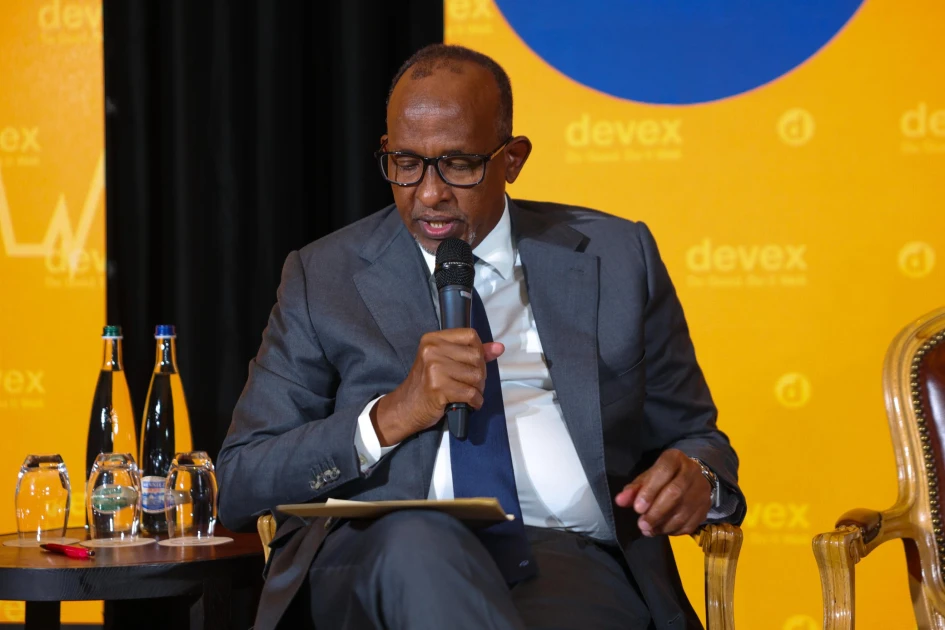
Health CS Aden Duale during a past function. PHOTO | COURTESY

Audio By Vocalize
The Ministry of Health has stepped up national surveillance and response measures to guard against a possible importation of the Ebola virus.
The number of suspected Ebola cases in the Democratic
Republic of Congo (DRC) and Uganda has risen to 600, with 139 suspected deaths.
The ministry says the situation in DRC remains a major
concern due to strong regional links through road transport, air travel, trade
and cross-border movement of people.
According to Health Cabinet Secretary Aden Duale, Kenya remains free of
the deadly Ebola virus, with surveillance measures further heightened to
minimise the risk of spread.
As of May 18, 2026, 34,500 travellers, including 18,552
international, 5,848 local, 2,514 truck drivers and 4,729 conveyances, had been
screened across the country.
Additional preparedness measures include the deployment of
an online passenger surveillance system, population mobility mapping in
high-risk border regions, enhanced airport surveillance through the Kenya Civil
Aviation Authority (KCAA), and strengthened cross-border coordination.
Duale, in a statement, says
Kenya has also enhanced laboratory preparedness and diagnostic capacity through
designated testing facilities at the Kenya Medical Research Institute (KEMRI).
The ministry says it is also mapping ambulance capacity in
high-risk counties with support from the Kenya Red Cross Society, while
strengthening engagement with private hospitals to improve early detection,
referral and reporting systems.
WHO has declared the outbreak a
Public Health Emergency of International Concern, while maintaining that it has
not reached pandemic level.
“Beyond the confirmed cases, there are almost 600 suspected
cases and 139 suspected deaths. We expect those numbers to keep increasing,
given the amount of time the virus was circulating before the outbreak was
detected,” said WHO Director General Tedros Adhanom Ghebreyesus.
The WHO says the virus may have been spreading in the
Democratic Republic of Congo (DCI) undetected for several months.
“Investigations are
ongoing to ascertain when and where exactly this outbreak started. Given the
scale, we are thinking that it has started probably a couple of months ago, but
investigations are ongoing, and our priority is really to cut the transmission
chain by implementing contact tracing, isolating, and caring for all suspects
and confirmed cases,” stated WHO Technical Officer in Health Emergencies
Programme Anais Legand.
Addressing the media from Geneva, Switzerland, the WHO
Director-General and his technical team said the current virus strain
identified as Bundibugyo, has not been seen for more than a decade and there is
no approved vaccine or therapeutics, limiting treatment and prevention options.
“There is an RVSV Bundibugyo vaccine. So this would be the
equivalent of Ervebo, which would be specific for Bundibugyo. There are no
doses of this which are currently available for clinical trial. So this needs
to be prioritised as the most promising Bundibugyo candidate vaccine. The
information that we have is that this is likely to take six to nine months,” said WHO
Senior Advisor on Research and Development Vasee Moorthy.
The World Health Organization has warned that while the
global risk remains low, the outbreak continues to pose a high risk at both
national and regional levels, requiring sustained international attention and
coordinated action to prevent further spread.
Join the Discussion
Share your perspective with the Citizen Digital community.
No comments yet
This discussion is waiting for your voice. Be the first to share your thoughts!