
Gov't attributes milk supply shortage to anticipated El Niño rains

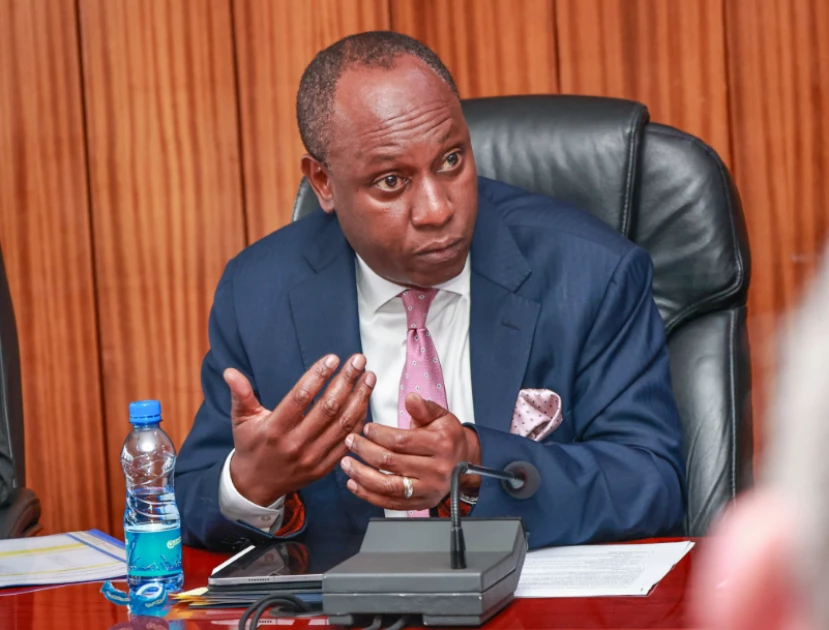
Livestock Development PS Jonathan Mueke during a past meeting in his office. PHOTO | COURTESY

Audio By Vocalize
Livestock Development Principal Secretary (PS) Jonathan Mueke said on Thursday that the ongoing drought has affected livestock pastures, hence limited milk production.
"Just before an El Niño, we usually have drought. It has affected not just Kenya but the rest of the world. This has affected our pastures, hence the situation," he said.
"We have agreed that all of us across the value chain will support our farmers. The real issue is fodder pressure due to lack of rain, and we have agreed we will talk to feed manufacturers."
PS Mueke said that the government has now agreed to allow duty-free import of maize for animal feed and the directive will be gazetted next week.
"We agreed our farmers should get right pricing. The Kenya Dairy Board will monitor that so that processors get raw material they need," Mueke noted.
Dairy Processors Association Chairman Kenneth Gitonga said they have analysed the existing numbers, asserting that the situation is only temporary.
"We have agreed that the way out of this is to support the farmers. We have also agreed as processors to ensure every drop of milk is mopped up and delivered to consumers," noted Gitonga.
"Otherwise there is no need to panic, let us share what we have."
This comes as consumers in Nairobi and other parts of the country are facing limited milk supplies, with some supermarkets reporting empty shelves.
Traders said deliveries have declined, while some outlets have also reported price increases of between Ksh.3 and Ksh.5 for a 500-millilitre packet.
In a statement, KDB clarified that formal milk deliveries to processors fell by 3.7 per cent, from 84.4 million litres in June to 81.3 million litres in July.
The board said preliminary indications point to a further decline in August, largely due to seasonal production conditions.
It said the prevailing dry and cold weather in key milk-producing areas has affected pasture and fodder availability, with pasteurised milk more affected than long-life varieties.
Kenya expects El Niño rains in the months of October-November-December (OND), as the government warns that heavy rainfall could trigger flooding, displacement, disease outbreaks, infrastructure damage and loss of livelihoods.
The government has unveiled a contingency plan to strengthen preparedness for the expected rains, targeting areas considered vulnerable to heavy rainfall, including riverine and low-lying areas, coastal regions, highland and landslide-prone areas, arid and semi-arid lands, northern Kenya and urban centres prone to flooding.
“The anticipated impacts include flooding, drowning, injuries and fatalities, displacement and isolation of communities, disease outbreaks, disruption of essential services, damage to roads and other critical infrastructure, and losses to crops, livestock and livelihoods,” read a statement from the Ministry of Interior.
Authorities have already undertaken hotspot mapping to identify areas at greatest risk and guide preparedness, evacuation and response interventions.
Roads and transport infrastructure likely to be affected have also been identified across the North Eastern, Tana River, Coastal, Western/Nyanza, Rift Valley, Turkana, Nairobi, Central and Eastern regions.
Join the Discussion
Share your perspective with the Citizen Digital community.
No comments yet
This discussion is waiting for your voice. Be the first to share your thoughts!