
Government to launch disability rights charter to strengthen inclusion agenda
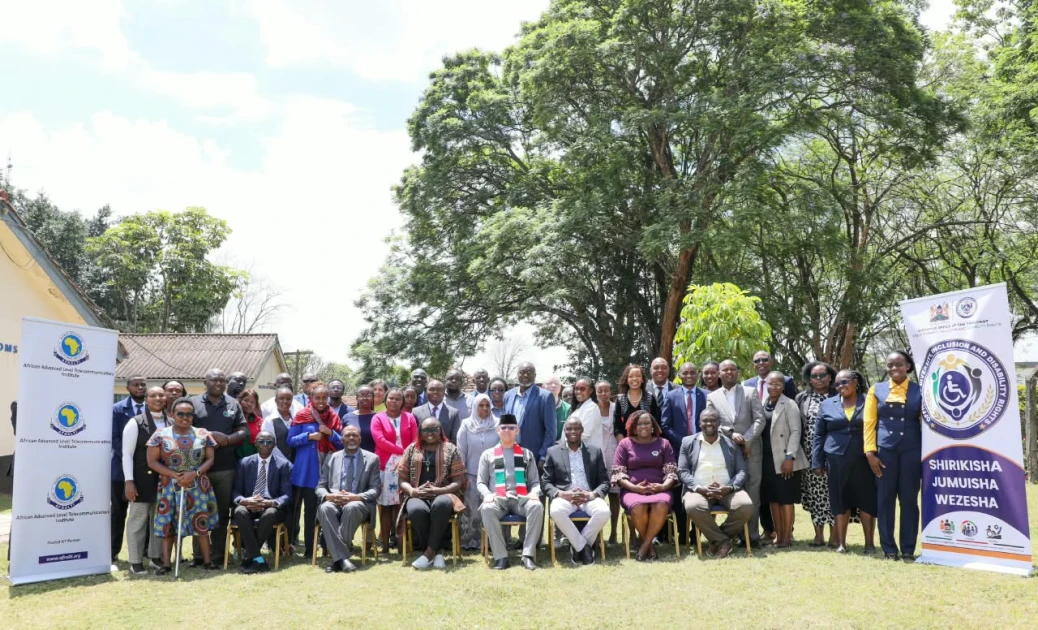
Stakeholders from government, business, academia and other institutions during a diversity benchmarking focus group session at AFRALTI in Nairobi, where discussions centred on strengthening diversity, equity and inclusion, including the rights and participation of persons with disabilities.

Audio By Vocalize
Mwaura said the proposed charter would provide a framework for advancing equity, improving representation and ensuring persons with disabilities participate fully in national development.
Speaking during a Diversity Benchmarking Focus Group Session at the African Advanced Level Telecommunications Institute (AFRALTI) in Nairobi on Thursday, Mwaura said the initiative would complement the government's broader diversity agenda under the Usawa ni Sawa campaign.
“We will launch a disability charter and set the pace for disability rights,” Mwaura said.
He explained that the establishment of ODIDR within the Executive Office of the President reflected President William Ruto's commitment to prioritising women, young people, ethnic minorities and persons with disabilities in national policy and government programmes.
“When we were campaigning to get this government, the President was very keen on focusing on women, youth, ethnic minorities and persons with disabilities,” he said.
Mwaura noted that the office was established to coordinate efforts across government institutions rather than compete with ministries and agencies already implementing programmes targeting the four groups.
He said the government needed to assess progress made so far, identify existing gaps and determine what additional resources and interventions were required to advance inclusion.
The National Diversity Management Framework and Diversity Index initiative will provide a platform for institutions to assess their diversity management practices, identify shortcomings and develop action plans to improve representation and participation.
The benchmarking session brought together representatives from government, business, academia and other institutions, including Kenya Airways, Safaricom, Equity Group Foundation, the Public Service Commission, the National Youth Council and the Kenya Institute of Special Education (KISE).
Participants emphasised that diversity and inclusion should not be treated as responsibilities of specialised government departments but as obligations that every institution must incorporate into its daily operations.
Anthony Mwangi, KISE Deputy Director of Finance and Administration, said disability was a concern that could affect anyone, regardless of their current circumstances.
Mr Mwangi described disability as an “open club” that anyone could join through changing circumstances, urging institutions to establish environments that accommodate people with different abilities.
His remarks highlighted the need for organisations to anticipate the needs of persons with disabilities rather than wait until an employee, student or member of the public requires assistance.
The discussion also focused on the growing importance of digital accessibility, with Charles Juma of the British High Commission calling on organisations to make it a management priority rather than leave the responsibility to ICT departments.
Juma said accessible websites alone were insufficient if other digital systems, communication platforms and services remained difficult for persons with disabilities to use.
“If we want to create opportunities for persons with disabilities in our organisations, our societies, government and business, then let's think about it as an entire organisational issue,” he said.
He noted that accessibility should inform decisions on recruitment, technology, communication and service delivery, warning that inaccessible online forms, poorly designed documents and digital platforms incompatible with screen readers could deny persons with disabilities access to essential information and opportunities.
Meanwhile, Dr Anthony Akoto, a women's rights adviser at the Executive Office of the President, called for greater representation of women in diversity and inclusion initiatives.
Akoto said institutions could not claim to promote equality while excluding women from discussions and decisions shaping national policies.
“We cannot talk about inclusivity. You cannot talk about diversity when we leave out women,” he said.
He urged organisations to ensure women actively participate in leadership, employment and decision-making processes, noting that their involvement was necessary for translating inclusion commitments into meaningful action.
At the workplace level, Kenya Airways Diversity Initiative Lead Dr Linda Okolo called for greater awareness of disability and efforts to address stigma that discourages employees from disclosing their needs or seeking assistance.
Dr Okolo said organisations needed to move beyond treating inclusion as a regulatory requirement and make it part of their workplace culture.
She observed that disability affected employees and their families in different ways, including those caring for children or relatives who required additional support.
She further called for greater recognition of neurodiversity and an understanding of the different ways people learn, communicate and process information.
Dr Okolo said employers needed to review their recruitment practices, workplace accessibility and staff support systems to ensure employees with different needs could participate fully.
The discussions also highlighted the importance of cultural diversity in shaping inclusive policies and public services.
Gerald Alwanga, an official at the State Department for Culture, the Arts and Heritage, said Kenya's diversity agenda needed to recognise the country's different languages, beliefs, traditions and cultural practices.
“We cannot talk about diversity without mentioning culture,” he said.
Alwanga explained that cultural diversity extended beyond festivals and celebrations to include the values, communication patterns and belief systems that shape communities.
He said institutions needed to understand the communities they served when designing policies and delivering public services, warning that language barriers and limited appreciation of cultural differences could prevent some groups from accessing information and participating in government programmes.
He reaffirmed the department's commitment to supporting initiatives that preserve and promote Kenya's diverse cultural heritage.
The benchmarking exercise is expected to help institutions move beyond policy statements by establishing measurable indicators against which their diversity and inclusion performance can be assessed.
However, Mwaura said the government would need to evaluate existing achievements and shortcomings before determining priorities for the next phase of its agenda.
The success of the proposed disability rights charter and the wider diversity framework will ultimately depend on how institutions translate their commitments into practical interventions, allocate resources and regularly measure progress.
For the government, the broader objective is to ensure that inclusion becomes a shared responsibility across public and private institutions, giving women, young people, ethnic minorities and persons with disabilities equal opportunities to participate in the country's social and economic development.
Join the Discussion
Share your perspective with the Citizen Digital community.
No comments yet
This discussion is waiting for your voice. Be the first to share your thoughts!