
Government seeks greater role in tourism funds management

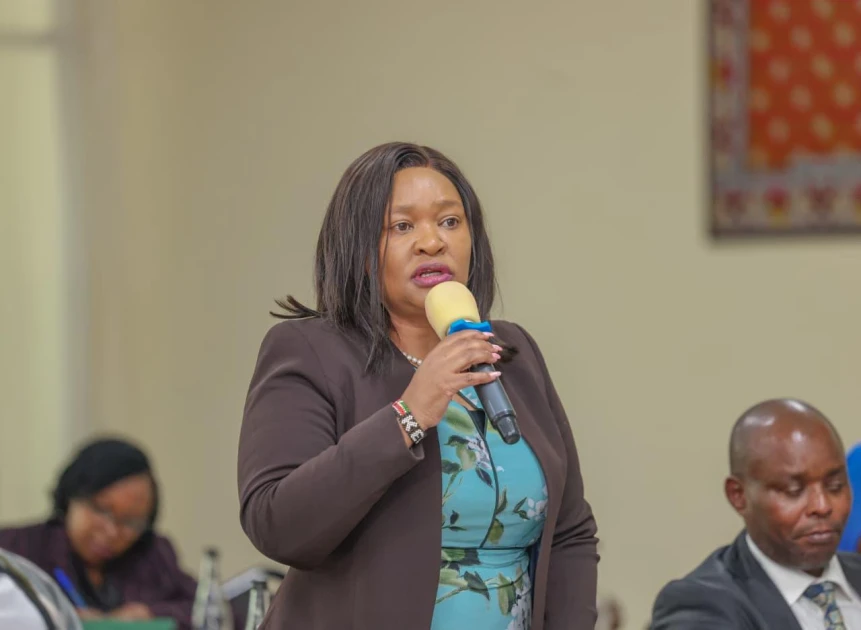
Tourism CS Rebecca Miano making submissions on the Tourism Amendment Bill to the National Assembly Departmental Committee on Tourism and Wildlife on August 20, 2026.

Audio By Vocalize
In its submissions on the Tourism Amendment Bill to the National Assembly Departmental Committee on Tourism and Wildlife, the Ministry proposed that the Tourism Fund retain responsibility for collecting levies, while the Cabinet Secretary assumes oversight of the management and disbursement of the funds.
Currently, the Tourism Fund collects a two per cent levy on revenue generated by regulated hotels and restaurants. The funds are then disbursed to government-owned tourism institutions, including the Kenya Tourism Board (KTB), Tourism Research Institute (TRI), Bomas of Kenya and Kenya Utalii College.
Under the proposed amendments, the Cabinet Secretary’s responsibilities would include formulating policies governing the Fund’s operations, determining the amounts payable to the Fund and setting conditions for the disbursement of its resources.
Tourism CS Rebecca Miano told the committee, chaired by Maara MP Kareke Mbiuki, that the proposed changes were necessary to modernise the legal framework, enable the Government to fund tourism activities and institutions more effectively, and respond to emerging realities in the sector.
“We therefore need to amend and modernise the law so that it reflects the realities of the sector today, responds to emerging opportunities and provides a stronger foundation for its future growth,” Miano said.
She said the reforms would strengthen coordination, improve institutional efficiency and create a more enabling environment for investment, innovation and sustainable growth in tourism.
Tourism PS Julius Bitok said the proposed separation of functions was modelled on the complementary roles played by the Kenya Revenue Authority (KRA) and the Central Bank of Kenya (CBK) in public financial management.
“We are borrowing the approach underpinned by the Public Finance Management where KRA collects money through e-Citizen and deposits the funds with CBK for allocation through Treasury,” Bitok said.
He said a clear and efficient flow of tourism-related revenues would enable the Ministry to plan and implement programmes more effectively while strengthening the financial architecture supporting the sector.
The committee is considering the Bill alongside other proposed amendments to the Tourism Act aimed at aligning Kenya’s tourism legislation with global trends and enhancing the country’s competitiveness.
The proposals include merging the Kenya Tourism Board and Tourism Research Institute, as well as restructuring and consolidating selected semi-autonomous government agencies.
Mbiuki said the committee would undertake extensive public participation to build consensus on the proposed changes.
“We are inviting all stakeholders and the public to present their views on the Bill. We want to have as much consensus as possible including on sensitive areas around tourism,” he said.
Mbiuki also challenged the Ministry to broaden the tax base for applicable tourism levies beyond the traditional hospitality industry to cover Airbnb and other accommodation facilities.
The committee also received submissions from the Office of the Attorney General, the Kenya Law Reform Commission, TRI and KTB.
Join the Discussion
Share your perspective with the Citizen Digital community.
No comments yet
This discussion is waiting for your voice. Be the first to share your thoughts!