
Ebola testing stalled in three Congo labs due to shortages, says WHO
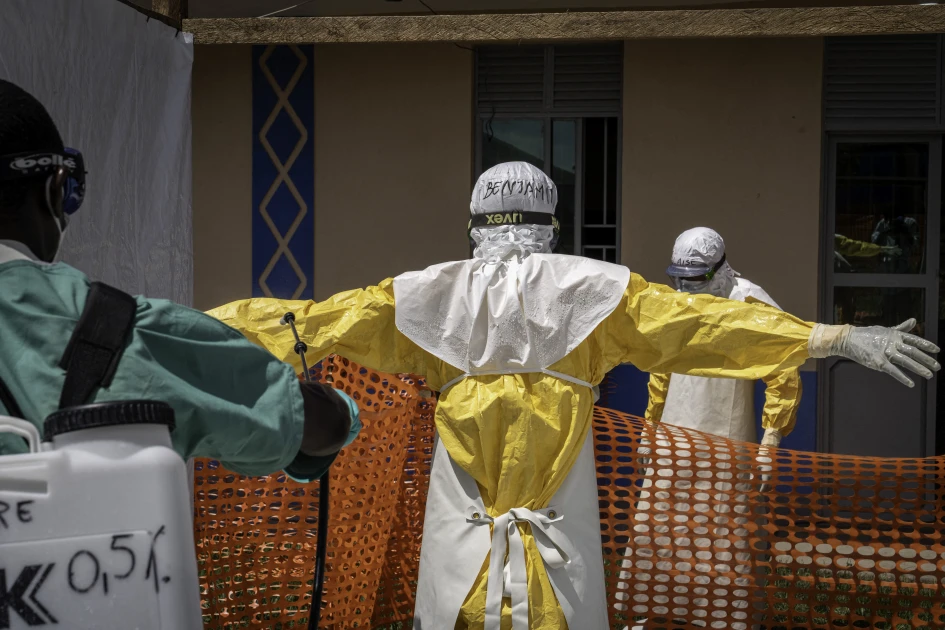
A member of the Doctors Without Border (MSF) personnel at the Elikya clinic Ebola treatment center in the eastern Democratic Republic of the Congo, on June 5, 2026. (Photo by GLODY MURHABAZI / AFP)

Audio By Vocalize
In the latest situation report, dated June 7 and released on Tuesday night, the agency said laboratories in Bukavu and Lwiro in South Kivu province, and Goma in North Kivu, had run out of stock. It said that the labs were awaiting the arrival of reagents - substances required to run the tests - to resume work on backlogged samples.
The WHO did not immediately respond to requests for comment about how many samples were awaiting testing or if supplies have arrived since the data was collected.
TRUST CHALLENGES
There have been almost 600 confirmed cases in the Ebola outbreak, and more than 115 deaths, the Congolese government announced on Tuesday evening. There have also been 19 cases and two deaths in neighbouring Uganda linked to the epidemic, which WHO has declared an international public health emergency.
Testing began slowly because the widely available Ebola tests did not detect the Bundibugyo virus. But it has ramped up since, led by experts at the Institut National de Recherche Biomédicale in Kinshasa, although challenges with access remain due to insecurity and armed conflict in the worst-hit provinces.
Professor Jean-Jacques Muyembe, director of INRB, said that testing capacity was now much improved, increasingly available in regional laboratories, which were able to report results on the same day.
At an online briefing on Wednesday, he said other parts of the response were not keeping up, particularly around the necessity of working with and gaining the trust of the affected communities to help them protect themselves - a lesson learned, he said, after tackling 16 other Ebola outbreaks in the country.
"For the moment I am a bit disappointed, because I don't see in practice these experiences on the ground," he said. "It seemed we have to learn again how to involve the community in this outbreak."
Join the Discussion
Share your perspective with the Citizen Digital community.
No comments yet
This discussion is waiting for your voice. Be the first to share your thoughts!