
CS Mbadi proposes debt-for-food swaps as Kenya’s debt hits Ksh.12.8 trillion
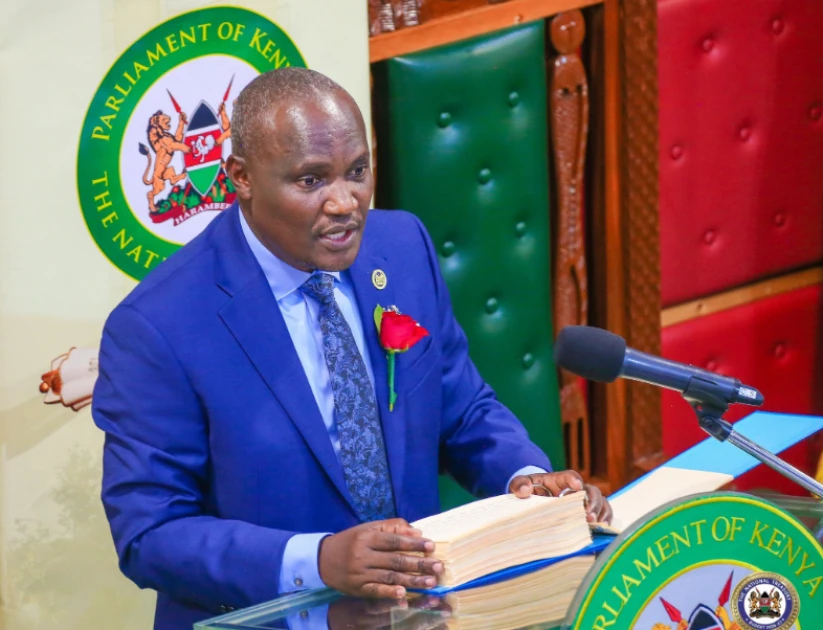
Treasury CS John Mbadi reads his 2026/2027 budget proposals in Parliament on June 11, 2026.

Audio By Vocalize
The government is
proposing a departure from traditional debt management approaches in a bid to
ease the country’s mounting debt burden.
With Kenya’s public
debt now standing at Ksh.12.8 trillion, National Treasury Cabinet Secretary
John Mbadi says the government is exploring debt-for-food and
debt-for-development swaps.
The proposed model
would see creditors forgive part of Kenya’s debt in exchange for investments in
food production, infrastructure and other critical development sectors.
As pressure mounts
over the country’s rising debt levels, the Treasury says the new financing
models are aimed at easing repayment obligations while supporting economic
growth.
According to Mbadi,
the debt-swap arrangements would allow lending nations to cancel portions of
debt and redirect the equivalent funds into projects that support food
security, infrastructure development and other national priorities.
“The government is
considering thematic and liability management instruments such as debt-for-food
swaps and debt-for-development swaps,” said Mbadi.
The proposal comes
amid growing concern among Kenyans and economic analysts over the rapid
expansion of public debt through both external and domestic borrowing.
Kenya’s interest
financing obligations currently stand at Ksh.1.25 trillion.
Mbadi said the
debt-swap arrangements would not only reduce debt-servicing pressure but also
channel resources into sectors that generate economic value and improve
livelihoods.
“These instruments
provide an opportunity to convert external debt obligations into targeted
investments that directly support government priorities, including food
security, sustainable development and social infrastructure, while easing debt
service pressures and fostering fiscal sustainability,” he stated.
Data from the
latest Budget Implementation Review Report indicates that by March 2026,
Kenya’s public debt had risen to Ksh.12.82 trillion.
Of the total debt
stock, Ksh.5.68 trillion is owed to external lenders while Ksh.7.14 trillion is
domestic debt.
Beyond debt swaps,
the Treasury is also seeking to diversify Kenya’s financing sources by tapping
into new international capital markets.
“This includes the
potential issuance of Samurai Bonds in the Japanese market and Panda Bonds in
the Chinese domestic market. By tapping into these markets, the government is
going to benefit from deep and diversified pools of capital,” said Mbadi.
The Treasury is
also proposing Shariah-compliant investment facilities aimed at attracting more
investors and expanding access to liquidity.
“The government is
considering the introduction of Sukuk instruments. These Shariah-compliant
securities, structured on asset-backed principles, will enable the government
to access liquidity,” he added.
In an effort to
unlock liquidity in the economy, the government has allocated Ksh.68 billion in
the 2026/27 Budget to clear verified pending bills owed to suppliers and
contractors.
The move is
expected to boost business activity and improve cash circulation.
Under the
arrangement, suppliers and contractors with claims of up to Ksh.100 million
will be paid over the next two years.
Join the Discussion
Share your perspective with the Citizen Digital community.
No comments yet
This discussion is waiting for your voice. Be the first to share your thoughts!