
From Cockroaches to Hyenas: How reclaiming slurs is rewriting political resistance

Audio By Vocalize
Caught up in the heat of the moment, while also clothed in the ugliness of hate and prejudice, powerful factions spew slurs, tasteless epithets and demeaning aspersions to create a narrative, shut down a subculture, dehumanise a community and strip a people of their dignity.
Most of the time, these dehumanization comes from the establishment, and is almost always done to shake up the opposition and assert control - but in most cases, these instances are flipped over, with the victims taking the slur and wearing it as a crown, completely disarming the establishment.
Drunk in power, and assured of legal immunity, political figures have long perfected the ugly art of insulting those it marginalizes, hoping to ride on the wave to set up groups against each other in a perfectly executed plot of divide and rule.
Fortunately, history has shown that elites make a fatal tactical error when they weaponize degrading language against a frustrated populace.
Instead of the insults working in their favor, they end up inadvertently handing their opponents a badge of honor and, in spectacular cases, birthing a revolution they didn't see coming.
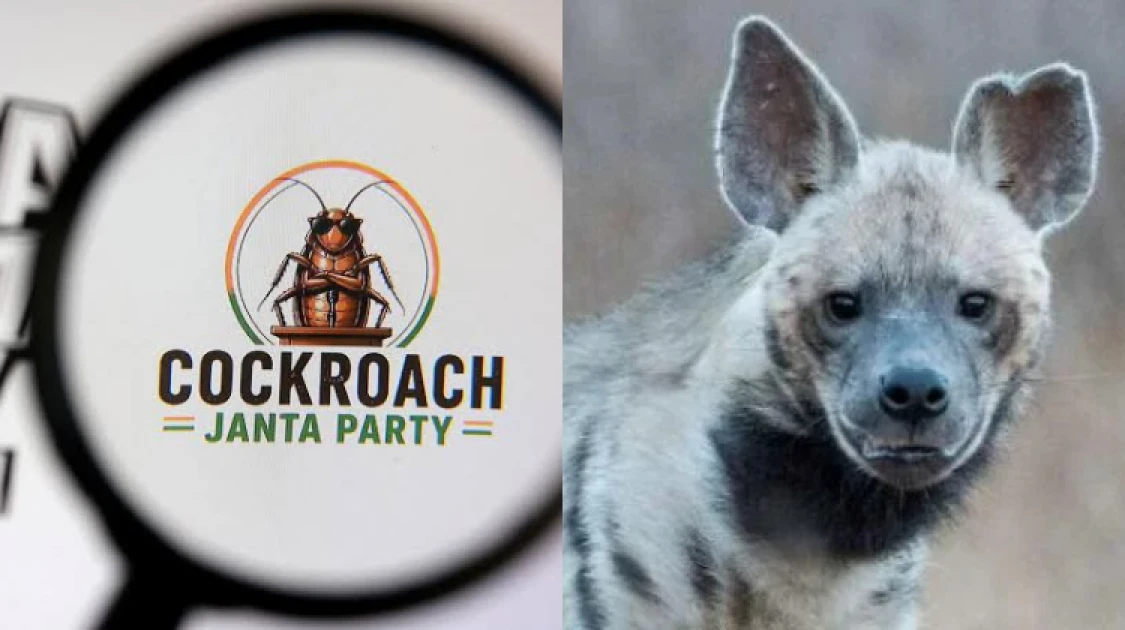
In India, a casual, derogatory remark from the highest levels of the judicial bench, comparing unemployed youth and restless activists to 'parasites' and 'cockroaches', sparked a tectonic shift and birthed a satirical political movement which has threatened to topple Narendra Modi's government.
During a May 2026 court hearing regarding fake degrees, Chief Justice of India Surya Kant compared millions of India's unemployed youth to 'cockroaches' - and the backlash was as swift as it was dramatically brutal.
Emboldened by the Chief Justice's haughty tongue, Gen Z Indians turned the insult into a badge of resistance, channeling widespread frustration over education system failings and major exam leaks into street protests demanding government accountability and the resignation of the education minister.
Quickly, a youth-led political party named Cockroach Janta Party (CJP) emerged, founded by Abhijeet Dipke and supported by hundreds of millions of disenfranchised Indians, accumulating millions of followers on social media, surpassing the official follower counts of major traditional political entities.
Although the courts clarified that Justice Surya Kant's comments targeted holders of fraudulent degrees, the backlash had already set off a digital firestorm, with the 'cockroach' slur becoming the tinderbox needed to light India ablaze.
In Kenya, controversy has been raging online after Health Cabinet Secretary Aden Duale referred to the Agikuyu community as 'Hyenas'.
During a public event in Lafey Constituency, Mandera County, last Tuesday, Duale, speaking in Somali, praised the Kenya Kwanza administration for restoring what he described as the dignity of the Somali community through the issuance of national identity cards and the rollout of development projects across the North Eastern region.
He then made remarks appearing to target the Kikuyu community, claiming they believed "no one else should live in Kenya" before likening them to hyenas.
Whilst a number of Mt. Kenya leaders and political pontificators have taken issue with Duale's disparaging remarks, the wider Kikuyu community has readily and even eagerly embraced the insult, resorting to using its imagery to drive a political point home and assert the community's pride.
Addressing supporters during a rally in Mbeere South, Embu County, Democracy for the Citizens Party (DCP) leader Rigathi Gachagua challenged Duale's verbal slur, saying the Kikuyu community had accepted the "hyena" label and would instead "devour" the Kenya Kwanza administration at the ballot in the 2027 General Election.
"Wewe umeuita mafisi ni sawa, tumekubali. Mwaka ujao tutakukula wewe, tukutafune na tukumeze. Mafisi mko? Si Kasongo ametuma Duale kutuita mafisi? Tumekubali sisi ni mafisi, na hatutakula mtu mwingine. Tunangoja wewe Kasongo, tarehe kumi mwezi wa nane, tutakukula, tukutafune na tukumeze!" Gachagua told the charged crowd.
Creatively inspired by the 'hyena' comparisons, Kenyans took to X and Tiktok to share AI videos of hyenas speaking in Gikuyu, proudly identifying themselves in Gikuyu names and saying popular phrases like "Turi Agikuyu, na tutihakagwo macuru!" (We are Kikuyu, and you cannot easily fool us).
While MC'ing a Kikuyu Mugithi event Saturday night, popular content creator Mbote Njogu also jumped on the wave, leading the massive crowd into 'hyena cries', as he charged the audience and proudly embraced the term imposed onto the community.
"Muriega Hiti ici? Akorwo wi hiti oya guoko iguru!" he charged.
Translation: "Good Evening Hyenas? If you're a hyena put your hands in the air!"
The video has already accumulated over 33,000 'Likes' and has been viewed by a staggering 220,000 people.
The hyena debacle follows a recent statement made by Senate Majority Leader Aaron Cheruiyot, who, while welcoming Sanators allied to the DCP party to the Senate, compared their striking green blazers to 'grasshoppers'.
"The House is more beautiful than what you see this afternoon. If you see things that look like grasshoppers in the House, you should forgive us. We usually look much better than this," Aaron Cheruiyot said.
Undeterred by the jibe, Kiambu Senator Karungo wa Thangw'a took it all in his stride, taking to his official X account to share a digitally-altered photo of himself and his acolytes in a grassland, posing like grasshoppers, complete with antennas sticking out of their heads.
The culture of embracing insults and turning them into lethal weapons is quickly turning into a masterclass in modern political jujitsu.
Unabashed and unscratched by the callousness, marginalized groups are turning satire and self-deprecation into an art form, stripping the ruling class of its primary weapon and proudly embracing the very outcast status assigned to them.
Unbeknownst to the aggressors, the strategy is actually working.
Slur after slur, insult after insult, these derogatory terms are working like magic, and instead of harming or suppressing it, the resistance looks alive, self-aware, and stubbornly irrepressible.
Perhaps the most outstanding example of this form of reclaiming a slur is the Black American community's proud use of the derogative word 'Nigger'.
Initially used as a racist attack by White lynch mobs across America's segregated South, Black Americans began using the term internally, taking a word intended to enforce subjugation and turning it into a boundary that white society could no longer control.
Carefully and expertly, the Black community reclaimed the racial slur through linguistic reappropriation, shifting the pronunciation to 'nigga' and embedding it in pop culture, comedy, and hip-hop.
This process, ultimately, stripped the term of its original white supremacist intent and transformed it into a marker of survival, camaraderie, and resilience.
Derogatory labels are designed to isolate and separate affected communities from the healthy body politic; unfortunately, this tactic has lost its power - and the world appears to be earnestly leaning to the side of the slur.
Join the Discussion
Share your perspective with the Citizen Digital community.
No comments yet
This discussion is waiting for your voice. Be the first to share your thoughts!