
CS Kagwe: Kenya will import most maize from Tanzania to tame shortage
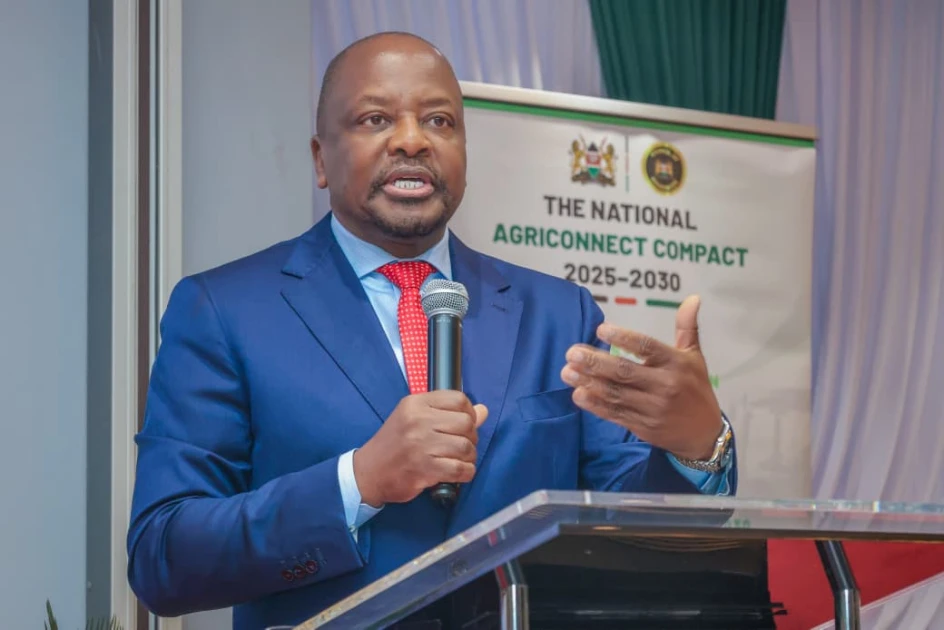
Agriculture Cabinet Secretary Mutahi Kagwe speaking during the launch of the Kenya AgriConnect Compact (2025–2030) in Nairobi on June 17, 2026.

Audio By Vocalize
Speaking on Monday, Kagwe said the Ministry has mopped up every available maize supply in the country before importation and obtained less than a million bags.
"I gave a two-month notice to the farmers for the maize mopping exercise and National Cereals and Produce Board (NCPB) has been buying from farmers at an increased price of Ksh.4,000 from Ksh.3,800," Kagwe told NTV.
"We will import from the East Africa region and COMESA region. We import most of our maize from Tanzania," Kagwe said.
He said the country will not import the 25 million bags of maize at once, but will import in constant flows throughout the year to avoid crises like storage.
Kagwe said the Kenyan food sector is managed by both the private and public sector where the private sector, through millers, buys maize directly from farmers and the public sector, which is the government, makes sure there is enough maize in the country.
"We want farmers to grow as much maize as they can so millers can buy maize at an affordable price that transforms to the price of the flour in the shops and supermarkets," Kagwe said.
Kagwe said finding an equilibrium, where farmers are earning enough money and maize consumers are buying at affordable prices, is a difficult thing to balance.
The CS noted that maize imports will provide an immediate solution to the projected shortage.
The government affirmed it will implement long-term interventions aimed at strengthening local food production and reducing the country's vulnerability to climate change.
Join the Discussion
Share your perspective with the Citizen Digital community.
No comments yet
This discussion is waiting for your voice. Be the first to share your thoughts!