
'Courts must be respected!' EACC clarifies concerns of dropping cases
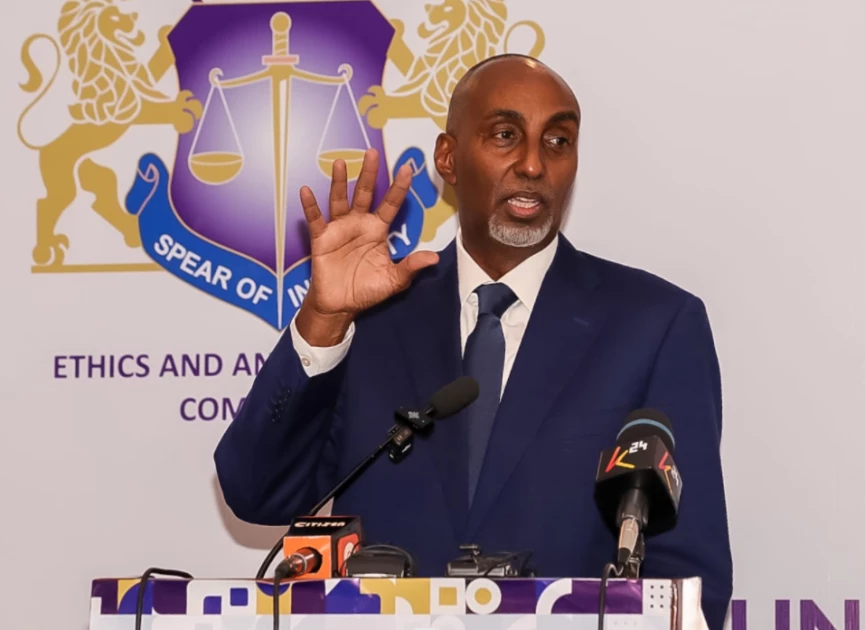
EACC CEO Abdi Mohamud during a past address. PHOTO|EACC

Audio By Vocalize
The Ethics and Anti-Corruption Commission (EACC) has defended its handling of high-profile corruption cases, urging Kenyans to respect court decisions and due process.
Speaking during a Radio Citizen interview on Monday,
EACC Chief Executive Officer Abdi A Mohamud dismissed claims that the
commission drops cases or conducts weak investigations.
Addressing concerns over cases such as the Arror and Kimwarer dams scandal investigated by the DCI and other high-profile cases that have gone through the judicial system, the EACC boss emphasised that courts determine outcomes, not the commission.
“I cannot mention cases we have not investigated...We investigated the maize scandal but Kenyans must understand that our Constitution has given us a lot of freedoms. Sometimes we may not be happy since someone can go to court and appeal, saying they are innocent," he said.
“Someone can either be released or be jailed. The case we
are talking about has passed through many different courts, where they have all
said that there was very strong evidence, and the guys were convicted and they
were jailed for all those years.”
Mohamud maintained that acquittals or successful appeals
should not be interpreted as failures of investigation.
“When someone is freed after the appeal process, it doesn’t
mean the case was weak or there was poor investigation. Let’s not blame the
courts for doing their work," he explained.
He added that the judiciary must be allowed to independently discharge its mandate, saying, "We must respect our courts because we cannot say that every accused person should be jailed. Sasa tukisema hivyo kazi ya Mahakama itakua gani?”
The EACC CEO also pushed back against accusations of
political bias, insisting the commission operates independently.
“Sisi hatuegemei upande wowote wa kisiasa. We are an
independent commission,” he said.
Mohamud further accused politicians and graft suspects of using
the commission as a scapegoat in a bid to shape public opinion when they have a case to answer or are found guilty.
“Some politicians and corruption suspects often use EACC as
a scapegoat to show their innocence or absolve blame when they are guilty," he explained.
He said the commission has stepped up public engagement
efforts, including working with counties and institutions such as the Kenya
Institute of Curriculum Development, to promote ethics and anti-corruption
awareness.
“We are also holding public awareness forums… We are working
with KICD so that children are cautioned about ethics and corruption at a young
age,” he added.
The remarks come amid growing public scrutiny over the
handling and outcomes of corruption cases involving senior government
officials.
Join the Discussion
Share your perspective with the Citizen Digital community.
No comments yet
This discussion is waiting for your voice. Be the first to share your thoughts!