
Bungoma: Judiciary lauds SHOFCO’s intervention in helping SGBV survivors
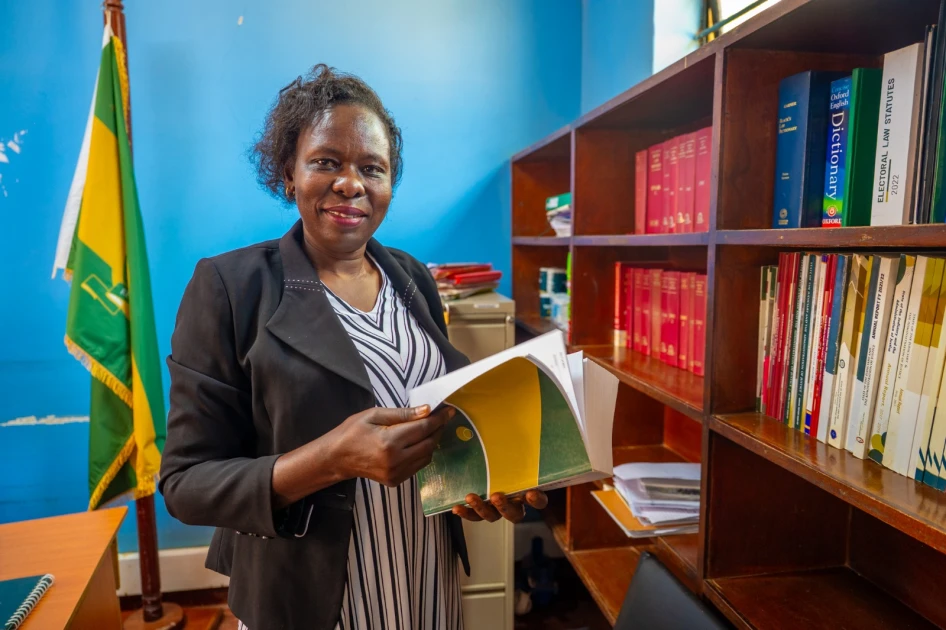
Bungoma Senior Principal Magistrate Ruth Maloba

Audio By Vocalize
For Shilla, the pain of seeing her Form Three daughter sexually abused was made worse by the response of the alleged perpetrator’s family.
Instead of condemning the abuse and supporting
the teenager, the family suggested that their son should marry the girl.
Her daughter’s case exposed rooted cultural
beliefs that silence survivors and allow perpetrators of sexual and
gender-based violence (SGBV) to escape accountability and deny justice to
the survivor.
“They told us that since their son had
already defiled my daughter, the solution was for him to marry her.
“But my daughter had a right to go to
school and build her life. She was a child, and what happened to her was not
something that should be rewarded with marriage,” Shilla said.
According to National Council on the
Administration of Justice (NCAJ) 2024 report, Bungoma County reported
alarmingly high rates of SGBV, with 62% of women experiencing physical violence
and 30% facing sexual violence, significantly surpassing the national averages
of 34% a and 35% respectively.
With support from Shining Hope for
Communities (SHOFCO), Shilla and her daughter were able to navigate the justice
system. The perpetrator was eventually convicted and sentenced to 15 years in
prison.
While supporting survivors through the
justice process remains critical, SHOFCO’s work in Bungoma also focuses on
preventing SGBV before it occurs by addressing the social norms, stigma and
community practices that enable violence to persist.
SHOFCO’s prevention work is implemented in
collaboration with police, Children Services, the Judiciary and community
leadership, helping strengthen both community-level prevention and
institutional responses to SGBV
Shilla’s experience is among cases cited by
the Judiciary and other government agencies as evidence of the critical role
SHOFCO is playing in helping SGBV survivors access justice and support services
in Bungoma County.
Speaking at Bungoma Law Courts Ruth Maloba
Senior Principal Magistrate, thanked SHOFCO for its active participation in the
Court Users Committee and its efforts to ensure that survivors are not left
alone to navigate the often complex justice system.
“SHOFCO has helped survivors with legal
representation, fees, transport reimbursement , counselling, and linkage to
SHOFCO scholarship program for continuation of school; this has made a
significant difference in their ability to pursue justice,” she said.
Maloba said some survivors face enormous
challenges after abuse, making it difficult for them to attend court, seek
medical attention or continue with their education.
She cited two cases where SHOFCO’s
intervention was witnessed.
“In one case, a minor who had been defiled
developed a fistula and required urgent medical attention. SHOFCO stepped in
and helped the survivor access the assistance she needed.
“In another case, a young girl was
experiencing difficulties walking and had urinary problems following the abuse.
She was also struggling to return to school. SHOFCO came in to support her
medical needs and help her begin rebuilding her life,” she stated.
Maloba said the interventions had also
contributed to successful prosecutions, with four perpetrators jailed this year
in cases where SHOFCO supported survivors through the justice process.
For Linet Jelagat, the pain of learning
that her eight-year-old daughter had been defiled was overwhelming.
She said SHOFCO helped her family
understand the court process and provided counselling to help her daughter cope
with the trauma.
“My daughter received medical attention,
and we were supported through the court process. When the perpetrator was
finally sentenced to life imprisonment, I felt that justice had been done for
my child,” she stated.
Wycliffe Minishi, Office of the Director of
Public Prosecutions, Bungoma County Prosecutor, said SHOFCO had stepped in to
address a major gap in the fight against SGBV by preparing survivors to
participate in court proceedings.
“One of the serious challenges we have had
is survivors coming to court while emotionally unprepared to testify.
“SHOFCO has helped to fill that gap by
providing pre court preparations and counselling, which gives survivors the
confidence to appear before the courts and tell their stories,” Minishi said.
He recalled a recent case in which a
survivor, after receiving the necessary support, testified in court and the
magistrate found that the evidence had proved the case beyond reasonable doubt.
“When survivors are supported, they are
more confident and better prepared to participate in the justice process. This
ultimately strengthens the ability of the justice system to hold perpetrators
accountable,” he added.
SHOFCO’s work in Bungoma goes beyond
responding to cases after violence has occurred. The organisation is also
investing in prevention by working with communities, families, young people,
community leaders and government actors to challenge harmful social norms that
enable SGBV, promote early reporting and strengthen awareness of available
protection and justice services.
At Bungoma Police Station, Officer
Commanding Station Winnie Chepkosgei said SHOFCO's intervention had also
extended to prevention and community awareness.
“SHOFCO has helped us create awareness
across our area of jurisdiction, and this has contributed to reducing cases of
SGBV. They work very closely with our gender officers, and this collaboration
has helped us reach communities with information on prevention, reporting and
the importance of seeking justice,” Chepkosgei said.
She said many cases go unreported because
of stigma, fear, family pressure and cultural beliefs.
“These are issues that cannot be addressed
by the police alone. We need community organisations, government agencies and
the Judiciary to work together so that survivors know where to go and
perpetrators understand that they will be held accountable,” she said.
The State Department of Children Services
has also credited SHOFCO with strengthening the protection of children who come
into contact with the justice system.
Mbesa James, Bungoma County Children
Officer, said SHOFCO had helped equip Children Protection Units (CPUs) at
Bungoma Police Station, and Chesikaki Police Station.
“Children need a safe and child-friendly
environment immediately after they are rescued or report abuse. SHOFCO has
supported the equipping of Children Protection Units in police stations, and
this has greatly helped in keeping children safe as other legal processes take
place,” Mbesa said.
But beyond the courtroom and police
stations, community attitudes remain a major obstacle.
Sarah Munoko, a SHOFCO case worker in Mount
Elgon, said some cultural practices continue to make it difficult for women and
girls to escape violence.
“In some communities, including among the
Pokot and Bukusu, there are cultural beliefs that can tolerate wife beating and
early marriage. These beliefs complicate our work because survivors may be
pressured to remain silent or return to situations where they are being
abused,” Munoko said.
She said changing these attitudes requires
sustained community engagement.
“We have to speak to families, elders,
young people and community leaders. A survivor should never be told that
violence is part of marriage or that a child should be married to the person
who abused her,” she said.
Dr Kennedy Odede, SHOFCO founder and CEO,
said the organisation’s approach combines prevention, survivor support and
accountability.
“Our responsibility is not only to support
survivors after violence has occurred, but also to work with communities to
prevent violence from happening in the first place. This means challenging
harmful norms, equipping families and young people with knowledge,
strengthening referral pathways and ensuring that perpetrators are held
accountable.
“Survivors need counselling, medical care, legal assistance and a safe environment to recover, but lasting change will come when communities are also empowered to prevent violence and protect children and women,” Odede said.
Join the Discussion
Share your perspective with the Citizen Digital community.
No comments yet
This discussion is waiting for your voice. Be the first to share your thoughts!