

Xi Jinping rings in 2024 with rare admission that China’s economy is in trouble
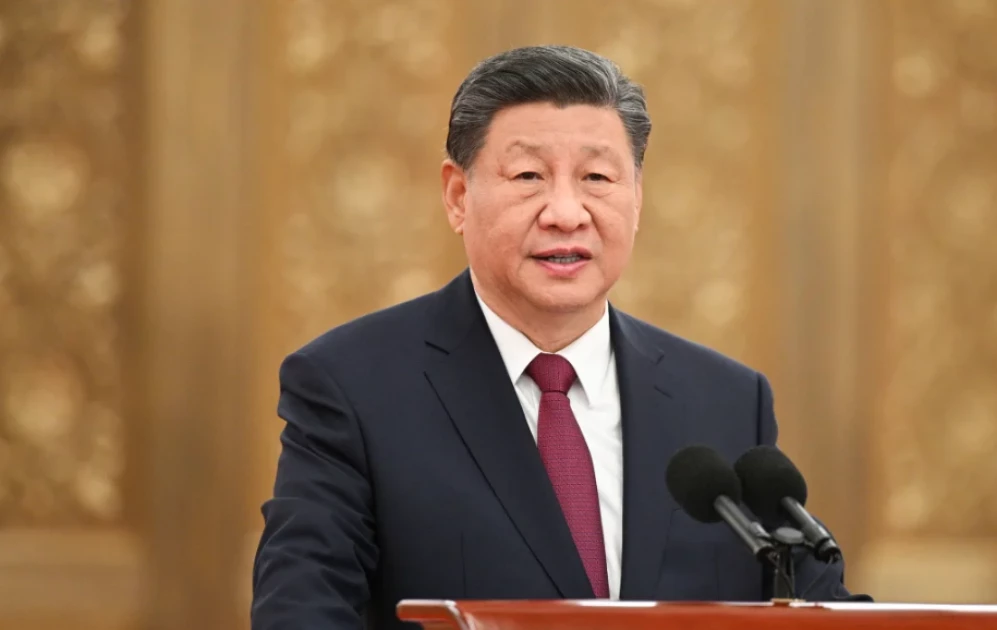
Chinese leader Xi Jinping speaks at the Great Hall of the People in Beijing on December 29, 2023.

Audio By Vocalize
China’s
businesses are struggling and job seekers have trouble finding work, President
Xi Jinping acknowledged during his Sunday New Year’s Eve speech.
This is the first time Xi has mentioned economic challenges in his
annual New Year’s messages since he started giving them in 2013. It comes
at a critical juncture for the world’s second
largest economy, which is grappling with a structural slowdown marked by weak
demand, rising unemployment and battered business confidence.
Acknowledging the “headwinds” facing the country, Xi admitted in
the televised speech: “Some enterprises had a tough time. Some people had
difficulty finding jobs and meeting basic needs.”
“All
these remain at the forefront of my mind,” Xi said in
remarks which were also widely circulated by state media. “We
will consolidate and strengthen the momentum of economic recovery.”
Hours
before Xi spoke, the National Bureau of Statistics (NBS) published its monthly
Purchasing Managers’ Index (PMI) survey, which showed that factory activity
declined in December to the lowest level in six months.
The
official manufacturing PMI dropped to 49 last month, down from 49.4 in
November, according to a statement from the NBS.
A
PMI reading above 50 indicates expansion, while any reading below represents a
contraction. December also marked the third straight month the manufacturing
PMI has contracted.
The
country’s massive manufacturing sector had been weak for most of 2023. After a
brief pickup in economic activity in the first quarter of last year, the
official manufacturing PMI contracted for five months until September. Then it
dipped below 50 again.
China’s
economy has been plagued by a set of problems this year, including a prolonged property downturn,
record high youth unemployment,
stubbornly weak prices and
mounting financial stress at
local governments.
Beijing
is scrambling to revive growth and spur
employment, having rolled out a flurry of supportive measures last year and
vowed to step up fiscal and monetary policy in 2024.
But its increasingly statist approach to the economy,
which emphasises the party-state’s control of economic and social affairs at
the expense of the private sector, has spooked entrepreneurs. The government’s crackdown on businesses in the name of national
security has also scared away international investors.
On Saturday, the People’s Bank of China announced that it had
approved an application to remove controlling shareholders at Alipay, the
ubiquitous digital payment platform run by Jack Ma’s Ant Group. The move means
Ma has officially ceded control of the company that he co-founded.
Ma,
who also co-founded Alibaba Group, said last January that he would relinquish control of Ant, as part
of his withdrawal from his online businesses. His companies were the early targets of Beijing’s unprecedented crackdown on Big Tech
which were perceived to have become overly powerful in the eyes of the
Communist Party.
Xi also pledged that the Chinese mainland would be “reunified”
with Taiwan, reiterating Beijing’s long-held stance on
the self-ruled island democracy, with a strongly worded comment ahead of a
crucial election there.
“China will surely be reunified, and all Chinese on both sides of
the Taiwan Strait should be bound by a common sense of purpose and share in the
glory of the rejuvenation of the Chinese nation,” Xi said during a section of
his speech dedicated to his plans for China’s modernization and development.
The comments come just two
weeks ahead of Taiwan’s presidential elections on January 13, and struck a more
pointed tone than those in his New Year address the year before.
Then, Xi said: “The people on both sides of the Taiwan Strait are
members of one and the same family. I sincerely hope that our compatriots on
both sides of the Strait will work together with a unity of purpose to jointly foster
lasting prosperity of the Chinese nation.”
Xi has made taking control of Taiwan a cornerstone of his broader
goal to “rejuvenate” China to a position of power and stature globally. China’s
Communist Party claims Taiwan as its own territory, despite never having
controlled it and has not ruled out using force to take the island.
Taipei has accused the party of running influence operations ahead of the
election, where current Vice President Lai Ching-te, a candidate openly loathed
by Beijing, has been seen as a frontrunner.
Leave a Comment