

More deaths reported in Angola unrest after fuel hike protests
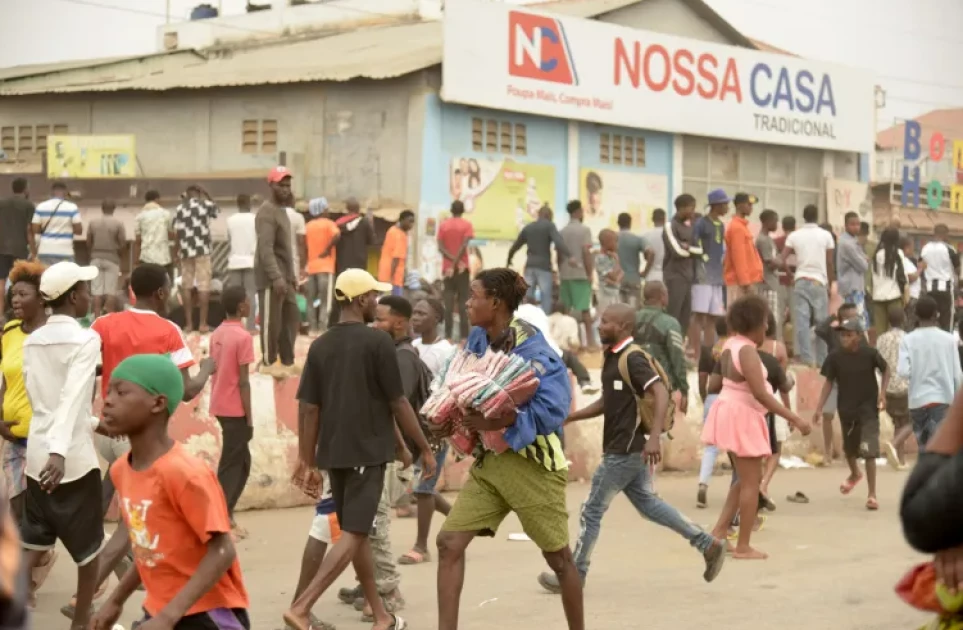
Looting erupts in the Kalemba 2 district of Luanda on July 28, 2025 during a general strike in the taxi sector Photo/AFP

Audio By Vocalize
Transport in the capital Luanda remained suspended and shops closed after Monday's unrest, while sporadic gunfire was heard throughout the day and people again raided shops, AFP reporters said.
The strike was the latest in a series of protests after the price of fuel was hiked from 300 to 400 kwanzas ($0.33 to $0.43) a litre on July 1, squeezing living costs for the millions of poor in one of Africa's top oil producers.
The local TV Nzinga showed women weeping over a body in a street in Luanda's central Cazenga area Tuesday as people ran out of a supermarket carrying food and goods. The report did not say how the person was killed.
In the same area, a young man was killed near a supermarket, apparently by a stray bullet, an AFP reporter said.
Police did not comment and were scheduled to give an update in the evening.
Four people were killed in the unrest on Monday, Deputy Commissioner Mateus Rodrigues said earlier, without giving details.
Police had arrested 500 people and there were only "a few isolated incidents of disorder" remaining, he said.
About 45 shops were vandalised, while 25 private vehicles and 20 public buses were damaged in Monday's violence, he said.
Protests and unrest were also reported outside of the capital, with images on social media showing protesters in the coastal city of Benguela, around 600 kilometres (370 miles) south of Luanda, and police being deployed.
A journalist in the city of Huambo, in the north, said there had also been looting and rioting there.
The Portuguese-speaking country of more than 36 million people has a high inflation rate that neared 20 percent in June, while the unemployment rate hit almost 30 percent, according to the national statistics authority.
"We are tired ... they must announce something for things to change ... for us to live in better conditions," a protester told TV Nzinga.
"Why do you make us suffer like this? How will we feed our children? The prices have to go down," a woman said, addressing President Joao Lourenco, whose MPLA party has held power since independence from Portugal in 1975.
- 'Outcry of the people' -
Local media reported security forces had used tear gas and rubber bullets to disperse the crowds and looters on Monday.
The New Alliance of Taxi Drivers Association (ANATA) distanced itself from the violence but said the three-day strike would continue.
It "has become clear that the voice of the taxi drivers reflects the outcry of the Angolan people", it said in a statement.
Around 2,000 people demonstrated against the fuel hike on Saturday, with protests also held the previous two weekends.
Human Rights Watch said police had used excessive force in the July 12 demonstration, including firing tear gas and rubber bullets.
In a joint statement on Monday, civil society groups condemned the July 19 arrest of a protest organiser, saying he was a "victim of the oppression in Angola."
The demonstrations were a "direct consequence" of the government's failure to address unemployment, high living costs and a decline in public services, the Uyele civic group said.
It is "urgent to understand that we are facing a serious symptom: the social exhaustion of a youth with no alternatives", it said in a statement.
Leave a Comment