

Judiciary to develop framework for AI integration in court operations
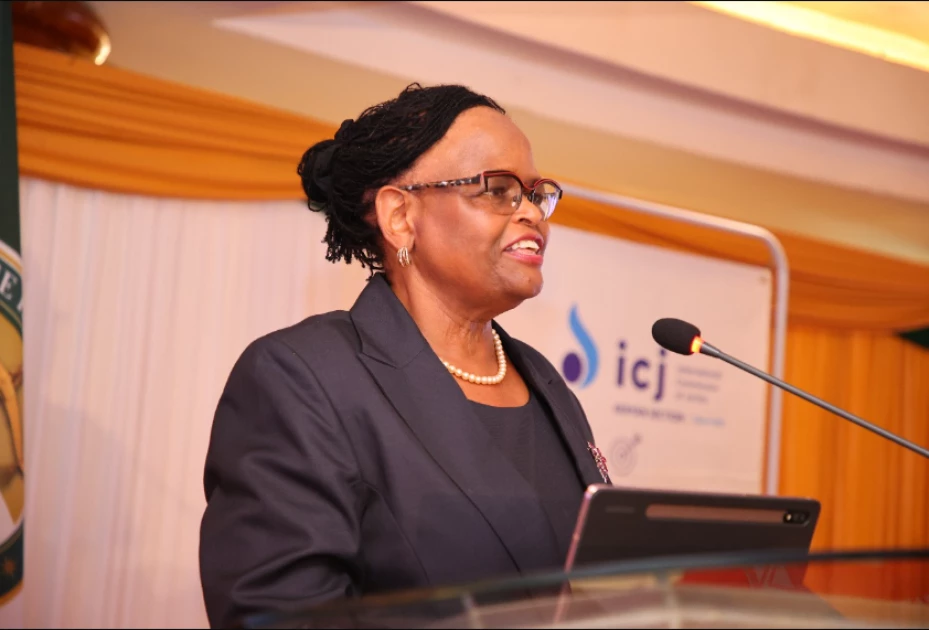
CJ Martha Koome speaks when she officially opened the inaugural High Court Human Rights Summit on December 10, 2024. PHOTO | COURTESY | JUDICIARY

Audio By Vocalize
Speaking during an engagement between Kenya’s Supreme Court and Ethiopia’s Federal Supreme Court in Nairobi, Chief Justice Martha Koome said that the policy will be essential in governing the use of AI in enhancing operations at Kenya’s Judiciary.
“To ensure ethical, safe, and purposeful adoption, we are developing the Judiciary Artificial Intelligence Adoption Policy Framework to guide integration of AI tools while safeguarding judicial independence, data privacy, and due process,” CJ Koome said.
CJ Koome further noted that the Judiciary will have everyone onboard the digital transformation journey and that the vision for ICT is grounded on an approach based on rights and centered on the average technology user.
“The reality of the digital divide—especially for the indigent, the elderly, and those without digital literacy—means we must provide support,” she said.
She further added that the Judiciary is supporting the push for digital literacy by setting up help-desks in Huduma Centres and within court stations to help users of the courts maneuver online services and notably the electronic filing of court cases.
Koome also highlighted that achieving seamless and end-to-end judicial systems is being hindered by the interoperability across justice sector institutions
“We have made significant progress by integrating the Judiciary’s system with that of the Office of the Director of Public Prosecutions (ODPP). Through the National Council on the Administration of Justice (NCAJ), we are working to bring on board other key agencies—such as the police, prisons, probation, and the children’s department.” CJ Koome noted.
However, safeguarding digital systems from digital threats is plagued with high costs, but Koome noted that the Judiciary is investing in robust cybersecurity measures to help them tackle the risks.
She observed that judicial exchanges are vital ways through which judiciaries shape the future of justice in the region.
“We hope that the lessons shared during this study visit will contribute to stronger, more resilient, and more people-centred justice in Kenya and Ethiopia,” she remarked.
CJ Koome was addressing the Ethiopian delegation led by the Vice President of the Federal Supreme Court of Ethiopia, Hon Abeba Embiale Mengste, in an engagement themed, “Regional Experience Sharing on Integrated Case Management System and Electronic Record Management”.
Speaking at the same event, Supreme Court Judge and Chair of the Judiciary’s Integrated Case Management Systems Committee (ICMS), Judge Isaac Lenaola stated that Kenya’s judiciary is willing to offer technical ICT assistance to Ethiopia’s Federal Supreme Court so that they can actualize their ambition to have a fully integrated and digitized judicial system by 2026.
Leave a Comment