
Bangladesh grapples with record deadly outbreak of dengue fever
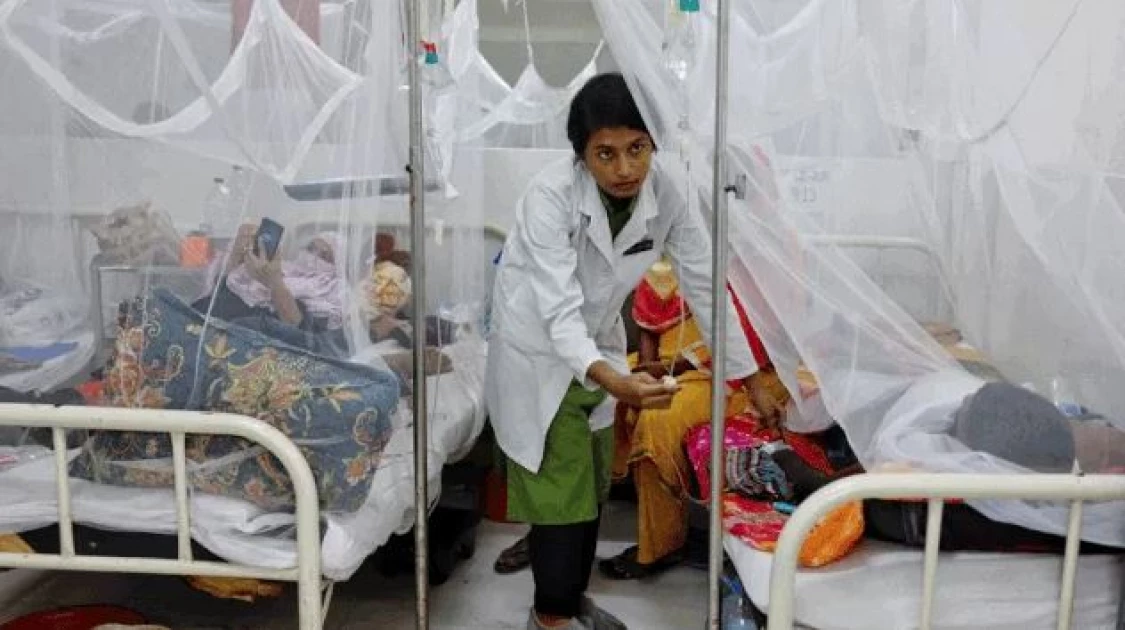
A nurse provides treatment to a dengue-infected patient at the Shaheed Suhrawardy Medical College and Hospital in Dhaka, Bangladesh, July 26, 2023. REUTERS

Audio By Vocalize
Bangladesh is grappling with a
record deadly outbreak of dengue fever, with hospitals struggling to make space
for patients as the disease spreads rapidly in the densely-populated country.
At least 293 people have died so far in 2023 and nearly 61,500 infected,
according to official figures, making this the deadliest year since the first
recorded epidemic in 2000.
Hospitals, especially in capital Dhaka, are struggling to find space for
the large number of patients suffering high fever, joint pain and vomiting,
health officials said.
The government has launched initiatives to limit the spread of
mosquito-borne diseases, from awareness campaigns to efforts to kill mosquito
larvae following a spell of rains, Health Minister Zahid Maleque said.
"Since we came here, the doctors and nurses told us that they cannot
provide us with a proper bed, but if we stay, they would treat us. We had no
other choice but to arrange things on the floor for my mother and sister,"
Shariful Islam told Reuters television as he watched over his family members in
a government hospital in Dhaka.
There is no vaccine or drug that specifically treats dengue, which is
common in South Asia during the June-to-September monsoon season, when the
Aedes aegypti mosquito that spreads the deadly virus thrives in stagnant water.
This year's deaths already top the previous record of 281 from last year,
with the number of people infected just behind the 62,423 cases of 2022.
Early detection and access to proper medical care can reduce deaths to
fewer than 1% of sufferers.
"When the pre-monsoon rains started in April, so did the Aedes
mosquito breeding. The virus had already spread within the community,
therefore, it was also being transmitted," said Kabirul Bashar, professor
of entomology at Jahangirnagar University.
"This is the reason why we saw such a high number of dengue cases in
July. This will probably increase further in August and September," he
said.
Dr Yasir Arafat, Save the Children's senior health and nutrition advisor for Asia, said: "Across Asia, extreme weather events are throwing the lives of children into disarray and this alarming surge in severe dengue outbreaks is just another issue impacting their physical and mental health."
Join the Discussion
Share your perspective with the Citizen Digital community.
No comments yet
This discussion is waiting for your voice. Be the first to share your thoughts!