
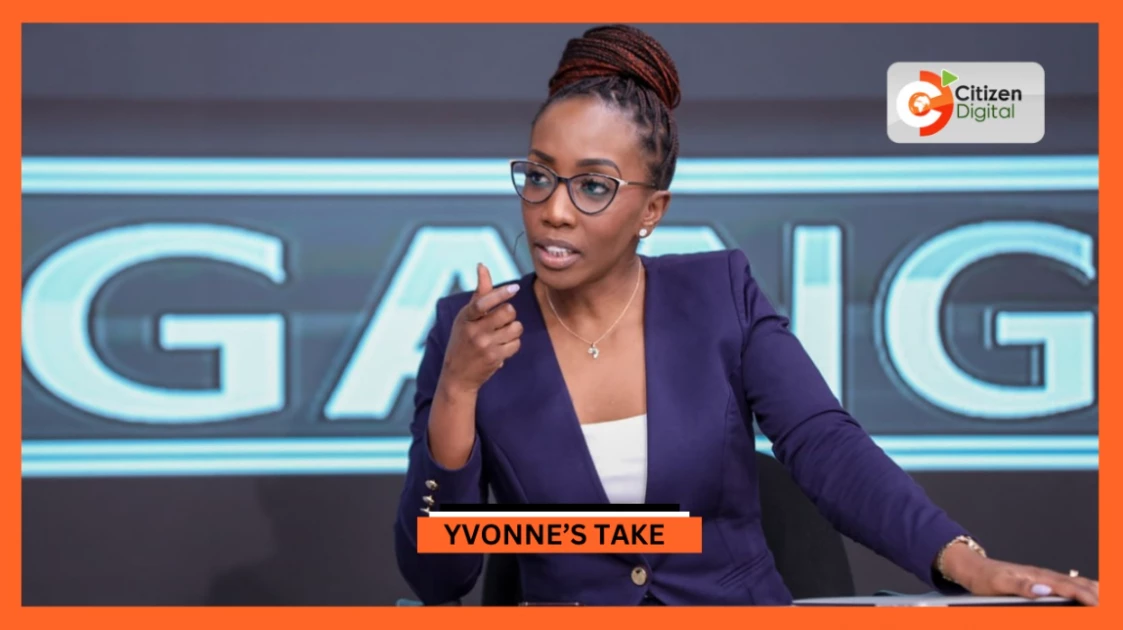
YVONNE'S TAKE: Ebola, what's the deal?

Audio By Vocalize
If there is one lesson this administration still appears unwilling to learn, it is this: communication is not an afterthought to leadership. It is leadership.
Trust is not built after decisions are made. Trust is built before them.
Remarkably, many Kenyans first learned about it not from their own government, but from American media reports. It was foreign news outlets that introduced Kenyans to a project that would be built on Kenyan soil, affect Kenyan communities, and ultimately require the confidence of the Kenyan people.
And so, a simple question emerged.
What is the deal?
Not a complicated question.
Not an unreasonable question.
Just: what is the deal?
What is the deal?
Instead of answers, Kenyans were met with obfuscation.
We were told our healthcare system is among the best in the region.
What is the deal?
We were told there are currently no Ebola cases in Kenya.
What is the deal?
We were told the facility is secure.
What is the deal?
We were told it would be located in a military installation, oh and that it has a long runway!
What is the deal?
We were told the President had discussed the matter with President Trump.
What is the deal?
In fact, they create a deeper problem. Because when people ask for information and are given reassurance instead, they begin to suspect there is information being withheld.
That is how mistrust grows.
Not necessarily because something sinister is happening.
But because secrecy creates a vacuum, and vacuums are quickly filled by speculation, rumour and fear.
And so the original question became even louder.
What is the deal?
When Parliament asks, “What is the deal?”, the answer cannot be “this epidemic does not require any public consultation.”
When citizens ask, “What is the deal?”, the answer cannot be “the health of Kenyans cannot be decided by 2 or 3 people demonstrating outside the Ministry of Health offices.”
When courts temporarily halt a project so questions can be answered, the response cannot be that construction will proceed regardless.
At this point, the issue is no longer about the facility.
The issue is whether this government views accountability as an inconvenience.
The irony is that much of this could have been avoided.
Had the government clearly explained the proposal from the outset; had it published the terms; had it engaged local communities before the story broke elsewhere; had it welcomed scrutiny instead of appearing irritated by it, perhaps the public conversation might have looked very different today.
Communication is not weakness.
Consultation is not weakness.
Transparency is not weakness.
The people of Laikipia are entitled to know what is being built in their community.
The people of Kenya are entitled to know what commitments are being made in their name.
And Parliament is entitled to perform its constitutional duty of oversight without being treated as an obstacle.
The framers of democratic systems understood a simple truth: no individual, no matter how intelligent, well-meaning or powerful, should make consequential decisions alone.
Not because leaders are necessarily malicious.
Because they are human.
That is why executive power is checked by Parliament. That is why courts exist. That is why public participation exists.
Not to frustrate government.
To improve government.
This administration often seems perplexed by the resistance it encounters. Yet time and again, it places itself in precisely this position.
It announces late.
It explains little.
It dismisses concerns.
It becomes defensive.
But trust does not emerge from declarations. It emerges from disclosure.
Communication builds confidence.
Transparency builds legitimacy.
Join the Discussion
Share your perspective with the Citizen Digital community.
No comments yet
This discussion is waiting for your voice. Be the first to share your thoughts!