
Xi-Trump meeting: Why Africa should watch Washington closely

Audio By Vocalize
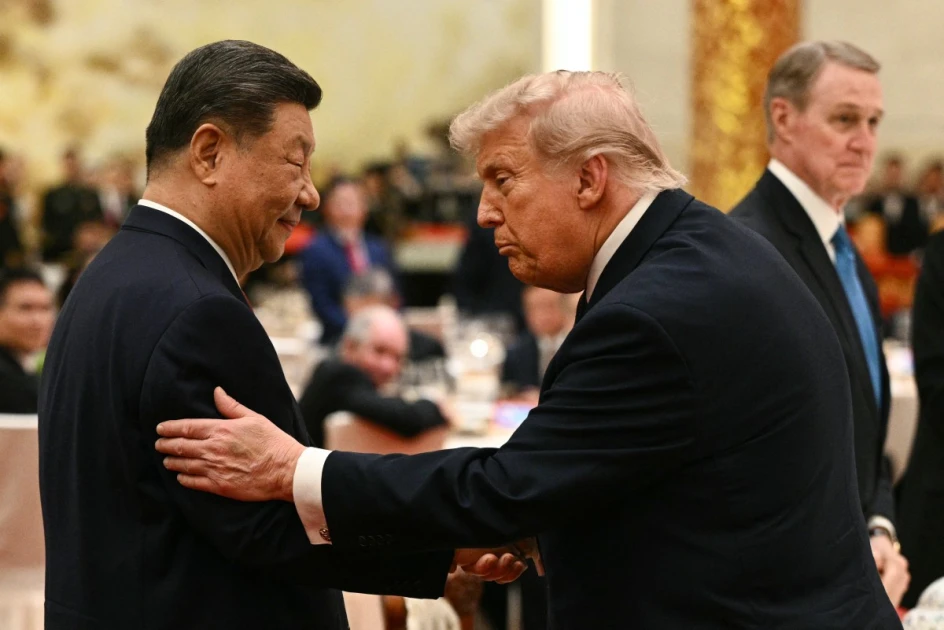
When Chinese President Xi Jinping travels to Washington for a state visit from September 23 to 25 at the invitation of US President Donald Trump, the conversation between the two leaders will formally concern China-US relations, but its consequences will reach far beyond the two countries.
For Africa and the wider Global South, the meeting comes at a moment when the direction of relations between the world's two largest economies could influence trade, investment, technology and the broader international economic environment.
The visit follows Trump's state visit to China in May, when the two leaders agreed on a new vision of building a constructive China-US relationship of strategic stability over the next three years and beyond.
Chinese officials have described the reciprocal visits within six months as a historic milestone, while stressing the importance of strengthening dialogue and cooperation, properly managing differences and contributing to global peace, stability and prosperity.
The importance of the Washington meeting is reinforced by developments in New York, where Chinese and US economic and trade officials held consultations on Sunday.
The discussions covered major economic and trade issues, implementation of earlier agreements and bilateral trade and investment, with artificial intelligence also among the topics discussed. The talks were described as candid, in-depth and constructive.
For Africa, stability between Beijing and Washington is economically significant. African economies are connected to global supply chains, commodity markets, investment flows and technology networks.
Greater predictability in relations between the two major economies would provide African countries with a more stable external environment in which to pursue their own development priorities and maintain diversified international partnerships.
This is particularly relevant as the Global South assumes a larger role in the world economy. Africa, Asia and Latin America possess large populations, expanding consumer markets, natural resources and growing industrial and technological ambitions.
Their development choices are increasingly important to global trade and investment.
China's expanding economic engagement with Africa provides one example. On May 1, Beijing extended zero-tariff treatment to imports from all 53 African countries with which it maintains diplomatic relations.
The policy followed earlier tariff exemptions covering 33 least-developed African countries and is intended to expand market access for African products.
The measure has already moved from announcement to implementation. On the first day, 24 tonnes of Kenyan avocados entered Shanghai under the expanded zero-tariff arrangement, while African agricultural products including South African apples and Egyptian oranges also benefited.
Xinhua reported that China-Africa trade reached a record $348 billion in 2025, with China remaining Africa's largest trading partner for 17 consecutive years.
For African economies, the significance lies not simply in access to a large market but in what greater market access can mean for production.
If exporters can increase sales, investment in agriculture, processing, logistics and manufacturing can become more commercially attractive.
The challenge for African countries is to use market access to move beyond exporting raw commodities and develop stronger domestic value chains.
Kenya provides a useful illustration. The arrival of Kenyan avocados in Shanghai on the first day of the zero-tariff policy showed how changes in trade policy can translate into concrete opportunities for African exporters.
But sustained gains will depend on production standards, logistics, certification, processing capacity and the ability of local firms to consistently meet demand.
The Xi-Trump meeting therefore matters to Africa not because African interests are dependent on the outcome of one bilateral encounter, but because the tone of China-US relations can influence the wider global environment.
If the two sides can maintain dialogue while managing differences in areas such as trade, technology and critical minerals, developing economies would have greater room to diversify partnerships and pursue their own economic priorities.
Xinhua has noted that preventing disputes in these areas from escalating remains an important objective.
Technology will be another important area. Artificial intelligence has already entered the China-US economic dialogue, while both countries are dealing with questions surrounding technological development, governance and security.
For Africa, the issue is increasingly relevant as governments, businesses and young people adopt digital technologies, artificial intelligence and new forms of automation.
A more predictable international technology environment could create additional opportunities for developing countries to participate in the digital economy.
At the same time, African governments will need policies that strengthen digital infrastructure, skills, data governance and local innovation so that technological change translates into broader economic opportunities.
The wider message from Beijing is that competition between major powers need not eliminate areas of cooperation.
Xinhua has reported that Xi has repeatedly emphasised that China and the United States both stand to gain from cooperation and lose from confrontation.
Global Times has similarly highlighted expectations that the two countries can use dialogue and head-of-state diplomacy to advance a constructive relationship of strategic stability.
For Africa, this is an important principle. The continent requires multiple partners for infrastructure, manufacturing, energy, technology, education, investment and market access.
China is an important economic partner, while the United States remains significant in areas including investment, technology, trade and education. African countries therefore have a practical interest in maintaining productive relations with both.
The significance of the Washington meeting consequently extends beyond what the two presidents may agree on specific bilateral issues.
It will also be watched for indications of whether the world's two major economies can establish greater predictability while managing their differences.
For the Global South, greater predictability matters because economic development requires an environment in which countries can plan, trade and invest with greater confidence.
African countries are not merely observers of these developments. They are increasingly active participants in global trade and diplomacy and have their own interests in shaping a more representative international system.
The opportunity for Africa is to remain focused on its own development objectives while engaging all major partners.
Expanded access to markets, diversified investment relationships and greater participation in technology and manufacturing can contribute to industrialisation if African countries build the domestic capacity to capture more value.
Xi's Washington visit may therefore be taking place thousands of kilometres from Africa, but its broader implications will be relevant in Nairobi, Lagos, Johannesburg, Accra and other African capitals.
The continent's interest is straightforward: a more predictable global economy, wider market opportunities and sufficient diplomatic space to pursue independent development priorities.
The task for African leaders is not to choose between major powers. It is to engage confidently with all partners, negotiate for greater economic opportunities and ensure that Africa's growing importance in the global economy translates into industrialisation, trade expansion, jobs and improved livelihoods.
The writer is a Journalist and Communications Consultant
Join the Discussion
Share your perspective with the Citizen Digital community.
No comments yet
This discussion is waiting for your voice. Be the first to share your thoughts!