
World Cleanup Day 2026: A call for citizens, businesses and gov't to take responsibility

Audio By Vocalize
Today, the world marks World Cleanup Day 2026 under the theme "From Clean Plates to Clean Cities." The theme draws attention to food waste as one of the world's largest and most preventable waste streams, while connecting what happens in our homes, restaurants, markets, and institutions with the cleanliness and sustainability of our cities.
For us here in Kenya, however, World Cleanup Day calls on us to celebrate the day but ask ourselves a more fundamental question: Who is responsible for keeping our environment clean, and what are each of us doing about it?
This question is ably answered in our Constitution of Kenya 2010 and several national and county laws. For example, Article 42 of the Constitution of Kenya provides that "every Kenyan has a right to a clean and healthy environment," but also assigns responsibilities.
More importantly, this right is not simply about being assured, given, or a recipient of a clean environment by the government. Article 42 links the right to protect the environment for present and future generations, and to the fulfilment of environmental obligations under Article 70.
The Constitution further makes the responsibility of every Kenyan citizen explicit. Article 69(2) states: "Every person has a duty to cooperate with State organs and other persons to protect and conserve the environment and ensure ecologically sustainable development and use of natural resources."
This is perhaps one of the most important provisions to remember on World Cleanup Day. Environmental protection is not exclusively a government function. It is a constitutional duty for every person.
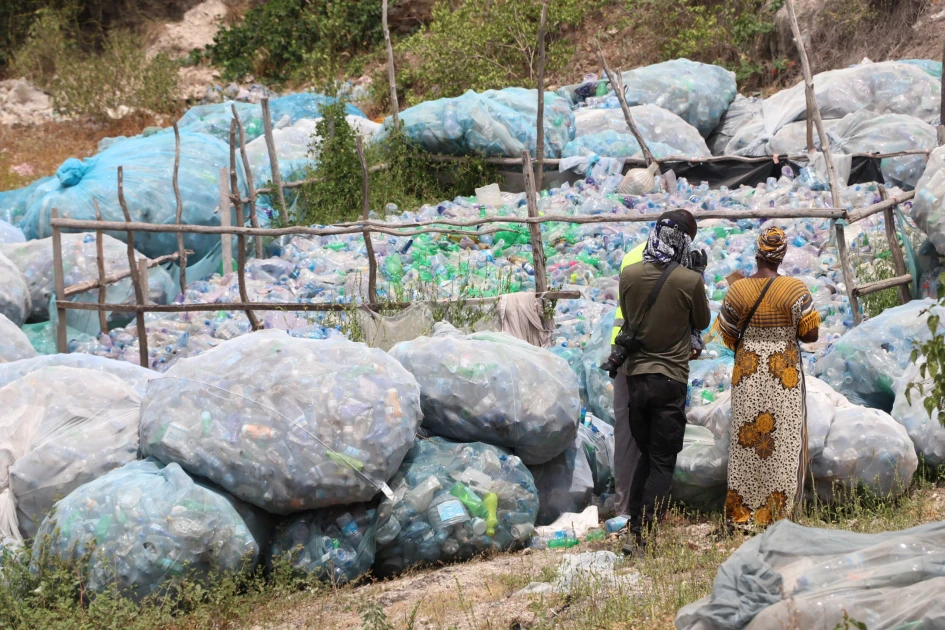
We see this every day: Kenyans throwing plastic bottles or other waste from cars, dumping household waste in open spaces, discharging wastewater and sewerage into storm drains under cover of night or during rainy seasons, or allowing waste to accumulate on their premises. These are not merely instances of poor environmental behaviour — they undermine the constitutional responsibility we gave ourselves in 2010.
Responsibility starts with you and me, because a clean city, home, or environment begins with clean habits at home, at work, in schools, in markets, and in public spaces.
WWF-Kenya, alongside other stakeholders, has been instrumental in supporting the government to actualize these constitutional provisions through financial and technical support extended in the formulation of the Sustainable Waste Management Act, 2022, and the Sustainable Waste Management (Extended Producer Responsibility) Regulations, 2024, as well as in testing these provisions in some counties.
This Act and its attendant regulations take this responsibility beyond a moral appeal. Section 12 requires public and private sector entities to segregate non-hazardous waste into organic and non-organic fractions and to provide appropriately labelled and colour-coded receptacles for this purpose. The principle in this legislation is therefore simple: the person who generates waste has a responsibility for how that waste is managed.
The second level of responsibility rests with households and the community. As communities, we should not wait until garbage has accumulated in a neighbourhood before taking action.
Community responsibility should involve maintaining clean surroundings, organizing local waste management, protecting drainage systems and water sources, and working with county authorities and licensed waste service providers.
Public participation should therefore not be understood merely as attending a public meeting to formulate laws, but also as citizens taking ownership of the environmental condition of their neighbourhoods.
The third level of responsibility lies with businesses, industries, schools, hospitals, hotels, markets, and other institutions. For example, businesses and industries must look beyond corporate clean-up events and address the waste generated by their own operations. This must be part of their sustainability reporting, which should reflect the potential risk that poor waste management poses to the business. This understanding should be clearly led from the Board level, which has a duty to keep shareholders informed of the immediate and future risks of failing to act — risks that ultimately affect what shareholders care about most: annual dividends.
A company, for example, should not simply sell a product and consider its responsibility finished at the point of sale. Responsibility should extend across the product's life cycle — from production and packaging to consumption, recovery, recycling, and final disposal. Companies should re-examine their entire waste footprint by asking critical questions: What are we producing? What are we wasting? What are we packaging? What can we recover? And who ultimately pays for the environmental cost?
The fourth level is the role of government. The Kenyan Constitution has assigned clear responsibilities to both the National and County Governments. Under Part 2 of the Fourth Schedule, county governments are responsible for county health services, including "refuse removal, refuse dumps and solid waste disposal," as well as control of air pollution, noise pollution, and other public nuisances.
The Sustainable Waste Management Act reinforces this responsibility. Section 9 assigns counties responsibility for implementing the devolved waste-management function and requires them to establish the financial and operational conditions necessary for effective delivery. It also requires counties to establish infrastructure for source segregation, collection, reuse, and materials recovery; maintain designated disposal sites and landfills; maintain information on waste management activities; and mainstream waste management into county planning and budgeting.
This means that citizens have a responsibility to dispose of waste properly — but counties have an equally important responsibility to provide functional systems through which citizens can do so.
As such, no county should demand responsible waste behaviour from residents while failing to provide adequate collection, recovery, and disposal infrastructure. Conversely, citizens cannot demand clean cities while continuing to litter and illegally dump waste. The responsibility must therefore be reciprocal.
At the national level, the Constitution assigns the State important environmental responsibilities under Article 69(1). These include:
- ensuring sustainable management and conservation of the environment;
- encouraging public participation;
- protecting biodiversity;
- establishing systems of environmental impact assessment, environmental audit, and monitoring;
- eliminating processes and activities likely to endanger the environment; and
- ensuring that environmental resources are used for the benefit of Kenyans.
The National Environment Management Authority (NEMA) consequently has an important coordinating and regulatory role under the Environmental Management and Co-ordination Act (EMCA). Kenya's courts have also affirmed that Section 3 of EMCA gives effect to the constitutional right to a clean and healthy environment and requires every person to safeguard and enhance the environment.
The national government, through the Ministry of Environment, Climate Change and Forestry and NEMA, has provided, and must continue to provide, the policy, regulations, standards, enforcement, and coordination framework necessary to make responsible waste management possible.
NEMA and other agencies should strengthen enforcement while developing innovative reporting mechanisms and rapid response systems for complaints from citizens about inappropriate waste disposal by institutions, households, or individuals.
It is, therefore, clear that a clean Kenya cannot depend on the goodwill of citizens alone. There must be education, incentives, infrastructure, and, where necessary, enforcement. We must move from clean-ups to prevention through responsible waste management.
If the Nairobi Rivers Commission cleans Nairobi River but it becomes a dumping ground again immediately after, we have treated the symptom rather than the cause. If Kongowea Market in Mombasa or Eastleigh Market in Nairobi is cleaned every month but traders continue to generate unmanaged waste, the system has failed.
We, as Kenyans, can use World Cleanup Day to build a new social contract around environmental responsibility. Let us clean Kenya today so that Kenya does not need to be cleaned tomorrow.
A cleaner Kenya will not be created by cleaners alone, but by responsible, conscious Kenyan citizens, responsible businesses, responsible institutions, and a responsible government working together, every day.
Jackson Kiplagat is an environmentalist and the Chief Executive Officer at WWF-Kenya.
Join the Discussion
Share your perspective with the Citizen Digital community.
No comments yet
This discussion is waiting for your voice. Be the first to share your thoughts!